Central Flying Service Launches In-House MX Tailwinds Maintenance Visibility Platform for Customers
Why It MattersAs maintenance providers digitize shop-floor data, visibility tools built on existing management software let owners, operators, pilots and maintenance directors work from one current record instead of separate updates.
What happened
Little Rock, Arkansas-based Central Flying Service has added MX Tailwinds, an in-house-developed maintenance visibility platform, to its redesigned website, giving customers real-time access to their aircraft's maintenance status at no extra charge.
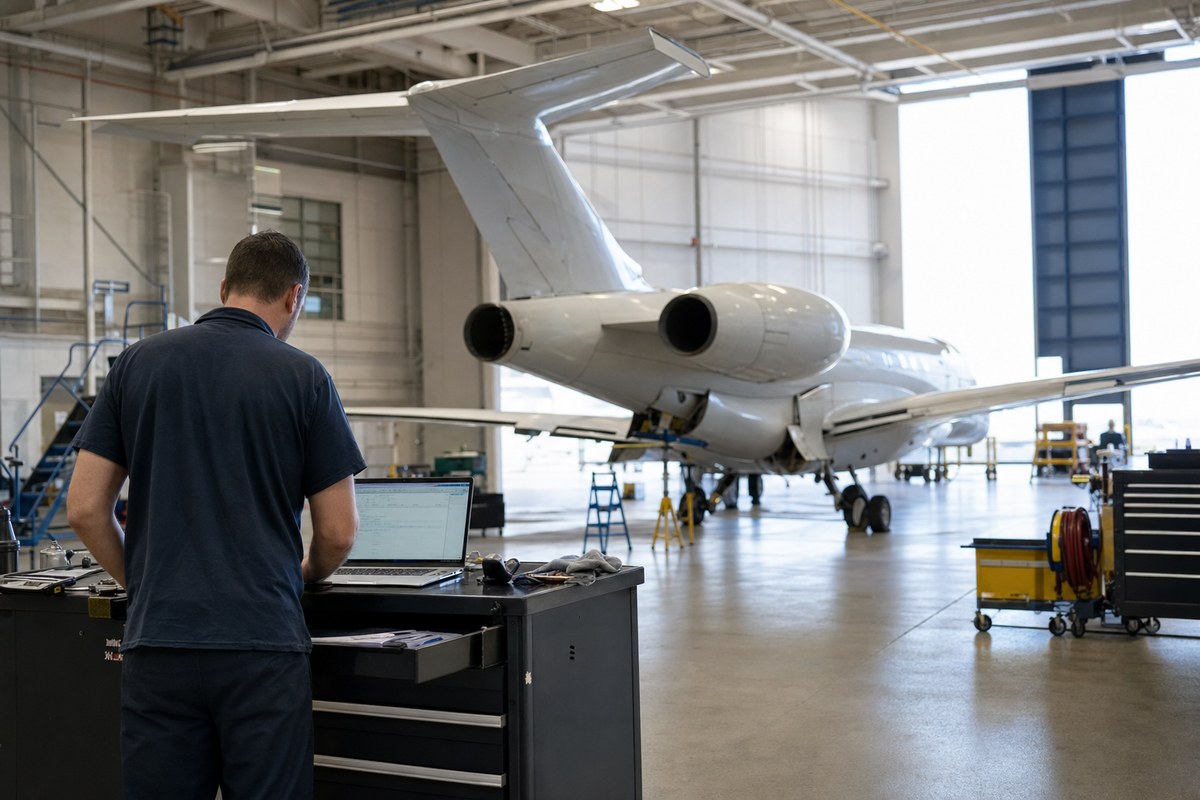
MX Tailwinds integrates with Central Flying Service's Corridor maintenance management software and other platforms including Sage, Microsoft Teams, and its VoIP telephone system. The platform provides what the company describes as "a single, continuously updated picture" of each aircraft's status, covering due items, estimated costs, and upcoming maintenance requirements before they can disrupt a planned trip. It is accessible via a web browser, a mobile app, scheduled reports, or text message updates, and the company's maintenance analysts monitor aircraft activity and upcoming requirements through the platform, contacting customers when a maintenance decision is required.
Central Flying Service president and CEO Phil Jordan said the platform runs on the same data the company's technicians use, so an owner, a pilot, and a manager can each get a current answer for the same airplane. According to the company, MX Tailwinds serves four distinct roles: aircraft owners tracking cost and timing of maintenance events; operators planning trips around aircraft availability; pilots reviewing the technical log before a flight; and directors of maintenance coordinating work schedules. Jordan said the platform uses artificial intelligence and predictive forecasting to process maintenance data — including squawks, work orders, parts, and labor hours — and convert it into forward-looking projections of what will be due, when, and what it will cost. He noted the company has been maintaining aircraft since 1939.
Industry impact & what to watch
This launch belongs to a broader move among maintenance providers to expose their internal management systems directly to customers rather than relaying updates by phone or email. Feeding a single underlying dataset — Corridor's maintenance records here — into owner-facing, operator-facing, pilot-facing, and DOM-facing views lets each party query the same current record instead of reconciling separate reports.
How much this changes day-to-day operations depends on adoption: a free, integrated tool only shifts behavior if owners and operators actually use it instead of calling the shop. The predictive-forecasting claim — projecting due items, timing, and cost from squawks, work orders, parts, and labor data — is the piece worth watching, since its value will show up in whether customers report fewer surprise groundings rather than in the platform's feature list itself.