De-Icing a Boeing 777 Can Cost $25,000 per Application; Winter Season Costs Reach $50 Million per Carrier
Why It MattersWinter operating economics at northern hubs hinge on fluid volume, holdover time and pad placement, making de-icing capacity and logistics a recurring seasonal cost driver rather than an incidental expense.
What happened
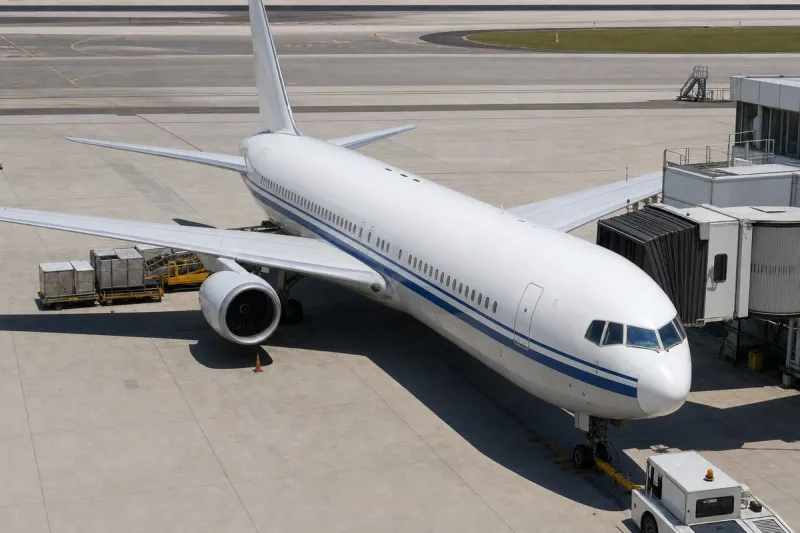
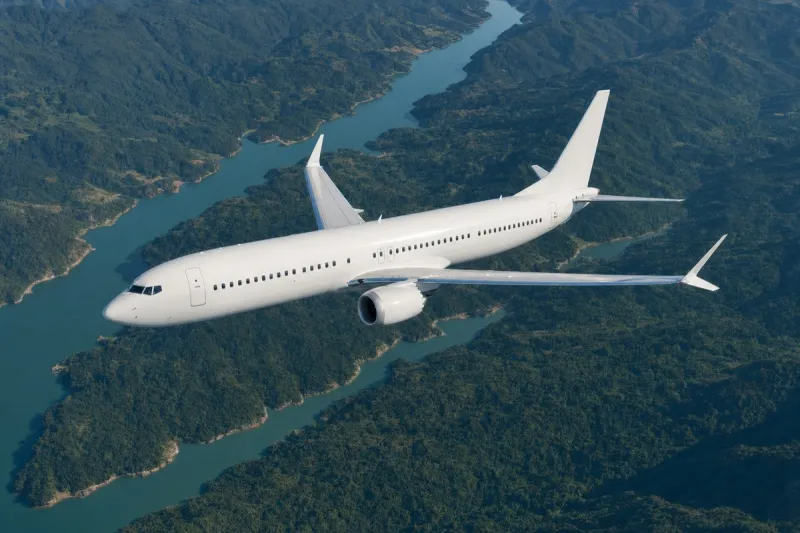
De-icing a single Boeing 777 can cost more than $25,000 per application under severe winter conditions, and major carriers operating northern hub airports can spend $30-50 million on de-icing across a single winter season, according to industry data. The 777-300ER has a wingspan of 212 feet, 7 inches (64.8 meters) and more than 4,600 square feet (427.8 sq meters) of wing area, making it one of the most fluid-intensive widebody aircraft to treat. De-icing fluid prices range from $20 to $75 per gallon depending on fluid type, airport, and demand conditions, with a documented case in Washington, DC reaching $75 per gallon during peak demand — nearly triple the typical rate.
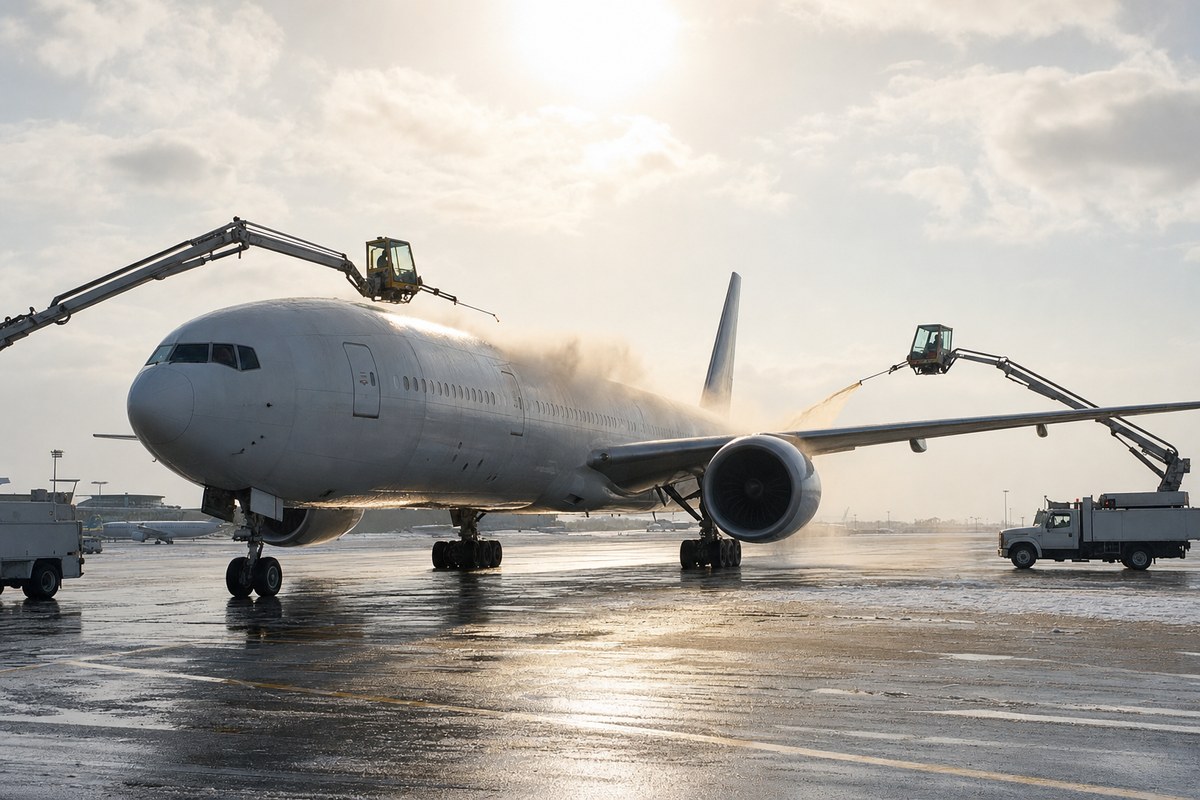
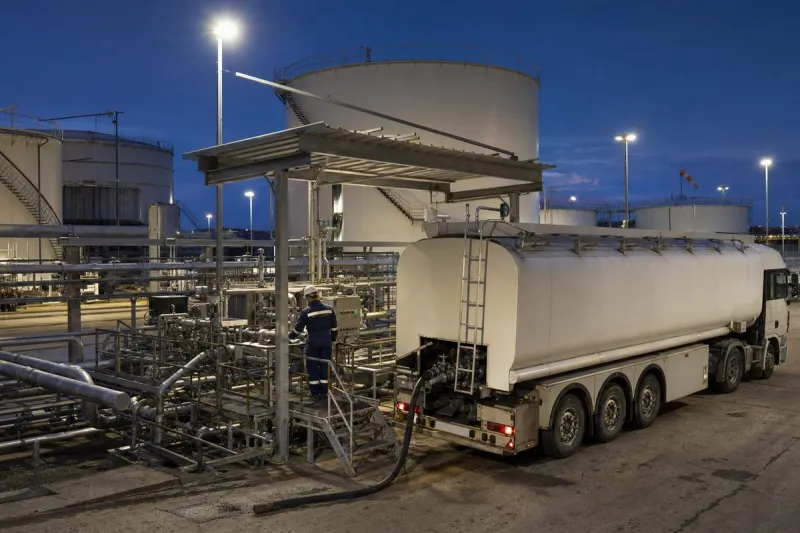
Commercial aviation uses de-icing and anti-icing fluid types with distinct roles. Type I, a heated mixture of propylene or ethylene glycol and water sprayed at 140°F-180°F (60°C-82°C), removes existing ice, snow, and frost and costs less per gallon due to its simpler formulation. Type IV, a thicker green fluid applied cold after Type I, coats surfaces with a viscous layer that prevents reaccumulation before takeoff and sits at the higher end of the per-gallon price range. Type II, a yellow fluid with slightly lower viscosity, is being phased out as Type IV has become the commercial standard. A light single-step de-icing event using a few hundred gallons of Type I keeps fluid costs below $10,000, while a two-step application of Type I followed by Type IV under heavier conditions can reach $15,000-$20,000 or more; severe contamination requiring high fluid volumes can push the cost above $25,000 for a single application on a widebody aircraft, with service fees for trucks and crews charged separately on top of fluid costs.
Narrowbody aircraft such as the Boeing 737 typically consume 400-500 gallons per application, while the largest widebodies such as the Airbus A380 require 800-1,000 gallons, with the 777 falling between these figures depending on contamination severity, ambient temperature, and whether a one-step or two-step process is applied. Hub airports including Chicago O'Hare (ORD), Minneapolis-St. Paul (MSP), Denver (DEN), and Toronto Pearson (YYZ) can de-ice 200-300 departures per day during major winter storms, consuming millions of gallons of fluid per season. NASA research has shown that ice contamination as thin as coarse sandpaper on a wing's leading edge can reduce lift by up to 30% and increase drag by up to 40%, which underscores why the FAA's clean aircraft concept, codified in 14 CFR 121.629, prohibits takeoff with any ice, snow, or frost adhering to critical surfaces. The regulation was reinforced by accidents including the 1982 crash of Air Florida Flight 90 into the Potomac River after departing Washington National Airport (DCA) with ice-contaminated wings, and the 2009 loss of Air France Flight 447, in which ice crystal contamination of pitot tubes contributed to cascading instrument and crew decision failures.
Holdover time and airfield layout
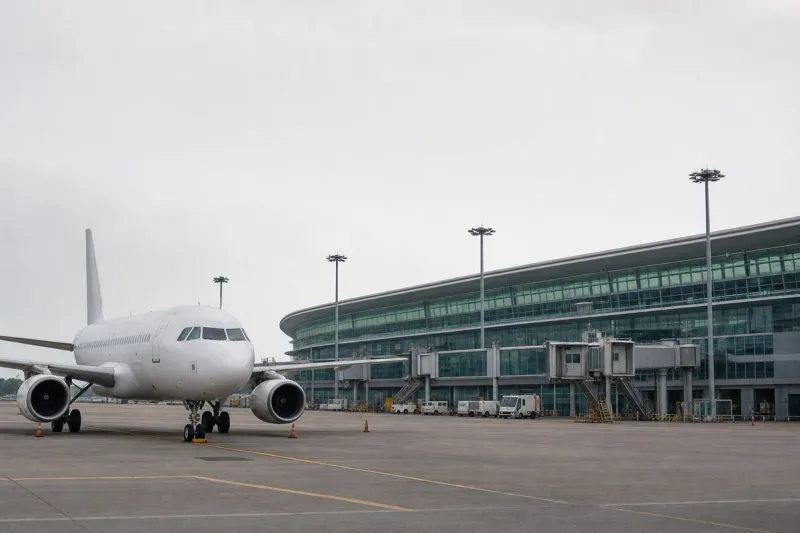
Holdover time — the window during which Type IV fluid continues to protect surfaces — ranges from under 30 minutes in heavy freezing rain to more than an hour in light dry snow. The FAA and Transport Canada publish holdover timetables for each combination of fluid type, temperature, and precipitation, and if the holdover time expires before an aircraft reaches the runway, the crew must return for reapplication. To minimize that risk, many hub airports have relocated de-icing pads to positions near the departure end of active runways.
Industry impact & what to watch
The figures describe a recurring structural cost of winter operations at northern hubs rather than an occasional weather surcharge: fluid pricing that can triple under peak demand, per-aircraft costs that scale with wingspan and wing area, and seasonal totals in the tens of millions per carrier turn de-icing into a planning line item comparable to fuel hedging or crew scheduling. Because holdover time can fall under 30 minutes in heavy freezing rain, the margin between a completed departure and a costly return-to-pad reapplication is set by weather and airfield geometry as much as by fluid choice.
This is why airports have physically moved de-icing pads closer to runway departure ends — the constraint is not just fluid cost but the clock between application and wheels-up. Carriers operating widebodies like the 777 face a double exposure: larger wing area drives higher fluid volumes per event, and any holdover expiry forces a second full application at hub-level pricing. Watch how airlines and airports at ORD, MSP, DEN, and YYZ manage throughput during 200-300-departure storm days, since pad placement and fluid-type mix will keep determining whether seasonal de-icing spend stays near $30 million or climbs toward $50 million per carrier.