South Korean Helicopter Operator HeliKorea Sought Talks With Sanctioned Russian Aviation Entities Over Ka-32 Maintenance, Investigation Finds
Why It MattersSanctions on Russian aerospace suppliers create pressure points for operators of Russian-origin fleets, who may lean on intermediaries to keep aging aircraft airworthy when authorized channels are closed.
What happened
Dallas Analytics published findings on September 2 based on documents and customs records showing that HeliKorea, one of South Korea's largest private helicopter operators and maintenance providers, proposed a visit to Russia's 322 Aircraft Repair Plant (322 ARZ) in Vozdvizhenka, Primorsky Krai, an authorized Ka-32 repair center. The proposal was contained in a December 1, 2025 letter designated HeliKorea letter No. HKL25-118, addressed to 322 ARZ CEO Alexander Shpakov, stating that a HeliKorea delegation planned to travel to Russia between December 15 and December 19 to discuss issues facing the South Korean market.
322 ARZ responded that it was not authorized to negotiate or conclude agreements directly with foreign customers and directed HeliKorea to JSC National Aviation Service Company (NASC), a Russian state intermediary that the United States and Canada have sanctioned since 2023 and which is linked to Russian Helicopters and to Rostec. A source familiar with HeliKorea's operations told Dallas Analytics that the December 2025 delegation did travel to Russia, and that HeliKorea continues to obtain components through third-party intermediaries. HeliKorea did not respond to questions from Dallas Analytics about its dealings with the Russian entities or its sanctions-compliance procedures, and South Korea's Ministry of Trade, Industry and Energy did not provide substantive responses to questions about oversight of such procurement activity.
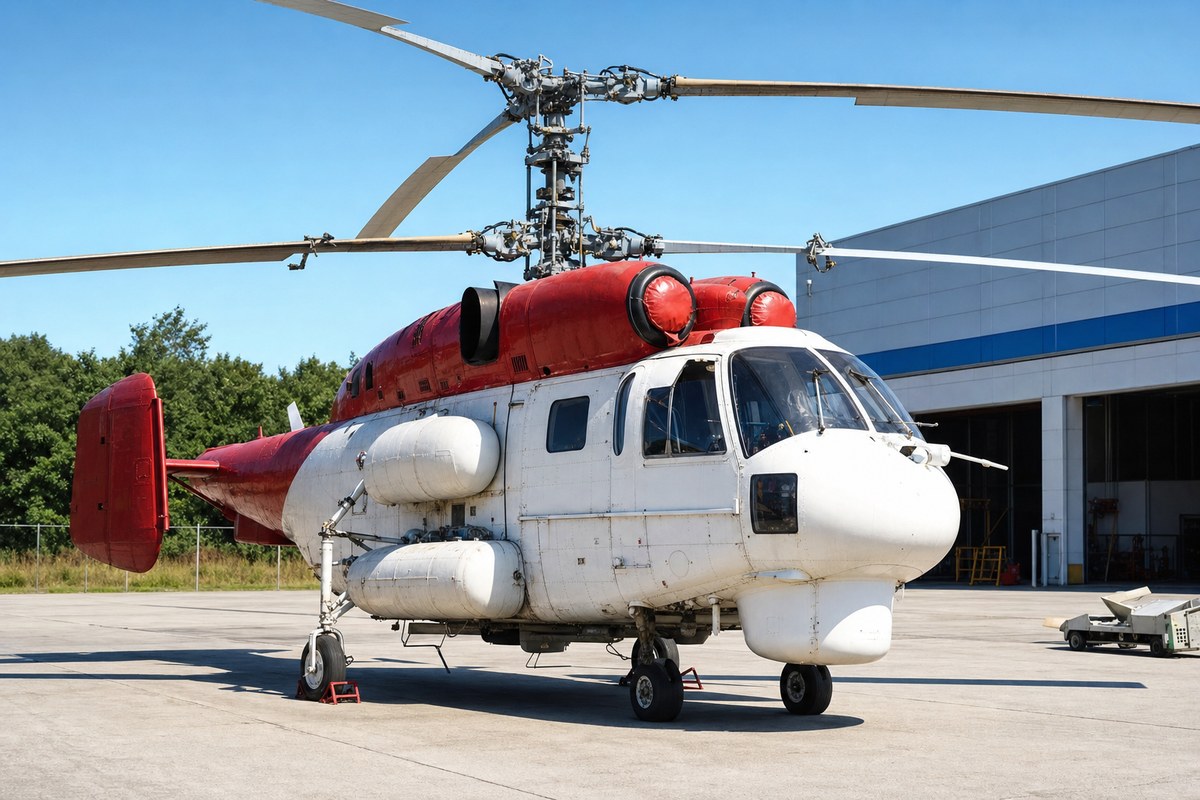
South Korea's Ka-32 fleet originated from a 1991 loan of approximately $1.47 billion that Seoul extended to the Soviet Union, part of which Russia later repaid with military equipment under the Brown Bear Project after the USSR's collapse. Ka-32 deliveries began in 1993 through LG International, with aviation reference data cited by Dallas Analytics indicating that 36 helicopters arrived between 1993 and 2000 for the Korea Forest Service, maritime authorities and regional firefighting organizations, and the fleet later expanded with newer Ka-32A11BC aircraft. The Ka-32 is a Soviet-designed twin-engine helicopter derived from the naval Ka-27, using Kamov's coaxial rotor arrangement, able to carry approximately 3.7 metric tons internally or up to 5 metric tons as an external sling load, with a maximum takeoff weight of around 12.7 metric tons with an external load.
Industry impact & what to watch
This case illustrates how sanctions on a country's aerospace supply chain do not necessarily stop operators from seeking support — they redirect the path through which that support arrives. When a factory-authorized repair center like 322 ARZ cannot deal directly with a foreign customer and instead points that customer toward a sanctioned state intermediary, the sanctions regime shifts the transaction rather than eliminating it, leaving compliance officers and export-control authorities to determine what actually moved through that channel.
For fleets built around a single foreign-origin type, this exposes a structural dependency: the Korea Forest Service relies on the Ka-32 as a backbone of its wildfire response, and Dallas Analytics notes that deteriorated access to Russian components and technical support since the full-scale invasion of Ukraine has already forced parts of the fleet out of service, reducing available helicopters during wildfire emergencies. An aging fleet with no alternative parts source concentrates risk on whatever maintenance channel remains open, sanctioned or not.
Dallas Analytics itself cautions that the documents do not establish the full scale of HeliKorea's transactions with Russian entities and do not prove that parts are being procured for the wider Ka-32 fleet. What would settle the question is whether South Korea's Ministry of Trade, Industry and Energy discloses what oversight it applies to this procurement activity, and whether HeliKorea addresses its sanctions-compliance procedures directly.