Business Aviation Records Safest Q1 in Years as Fatal Accidents Fall 50% to Five
Why It MattersRunway excursions remain the dominant hazard even as fatal outcomes fall, showing that safety gains from data monitoring and training programmes reduce severity faster than they eliminate the underlying incidents.
What happened
Business aviation recorded its safest opening quarter in recent memory in the first three months of 2026, with fatal accidents falling from 12 to five and fatalities dropping from 46 to 23 compared with Q1 2025, a 50% year-over-year decline that occurred even as overall flight activity increased.

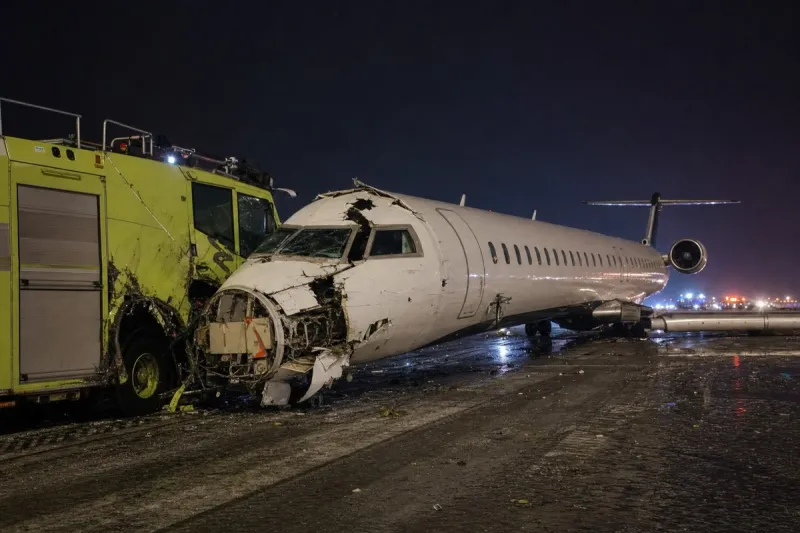
Runway excursions remained the leading hazard category, with 18 incidents recorded in Q1 2026, and none of those 18 excursions resulted in fatalities. The International Business Aviation Council's IS-BAO programme, a voluntary safety-management standard requiring structured risk assessment and independent auditing, reported record enrolment.
Flight data monitoring programmes, in which operators record and analyse flight parameters to identify unsafe trends before they cause accidents, have expanded rapidly across the business aviation fleet over the past two years. Safety bodies continue to press for strict adherence to stabilised approach criteria, requiring aircraft to be on speed, on glidepath, and configured for landing by 1,000 feet on an instrument approach, identifying this single discipline as capable of preventing the majority of excursion incidents.
Industry impact & what to watch
The gap between the incident count and the fatality count is the story here: 18 runway excursions produced zero deaths, while total fatal accidents nearly halved. That combination points to layered defences — better data monitoring, more realistic simulator training for abnormal and emergency scenarios, and wider IS-BAO adoption — catching the consequences of an event even when the event itself still happens.
This is how safety improvement typically shows up across an operating fleet: severity falls before frequency does, because training and monitoring programmes are built to contain the outcome of a runway excursion or an unstabilised approach rather than to prevent every occurrence outright. Structural gains in training, technology, and safety culture take longer to show up as fewer incidents than as incidents that stop killing people.
Industry observers caution that one major accident in a later quarter could materially alter the full-year statistics, since a sample of five fatal events is small enough for a single occurrence to swing the year-over-year comparison sharply. Whether the excursion count itself declines, and whether stabilised-approach discipline tightens enough to reduce the 18 figure rather than just its consequences, is what the next few quarters will show.