Five Key Tasks Flight Crews Complete Before an Aircraft Enters North Atlantic Airspace
Why It MattersDiverging oceanic-control procedures across Gander, Shanwick and Reykjavik push North Atlantic operators toward region-specific crew training and checklists rather than one universal crossing procedure.
Crossing the North Atlantic follows a structured sequence of cockpit tasks that crews must finish before reaching the Oceanic Entry Point, and the 2026 edition of NAT Doc 007 has introduced differences between oceanic control areas so that a single universal procedure no longer applies to every crossing.
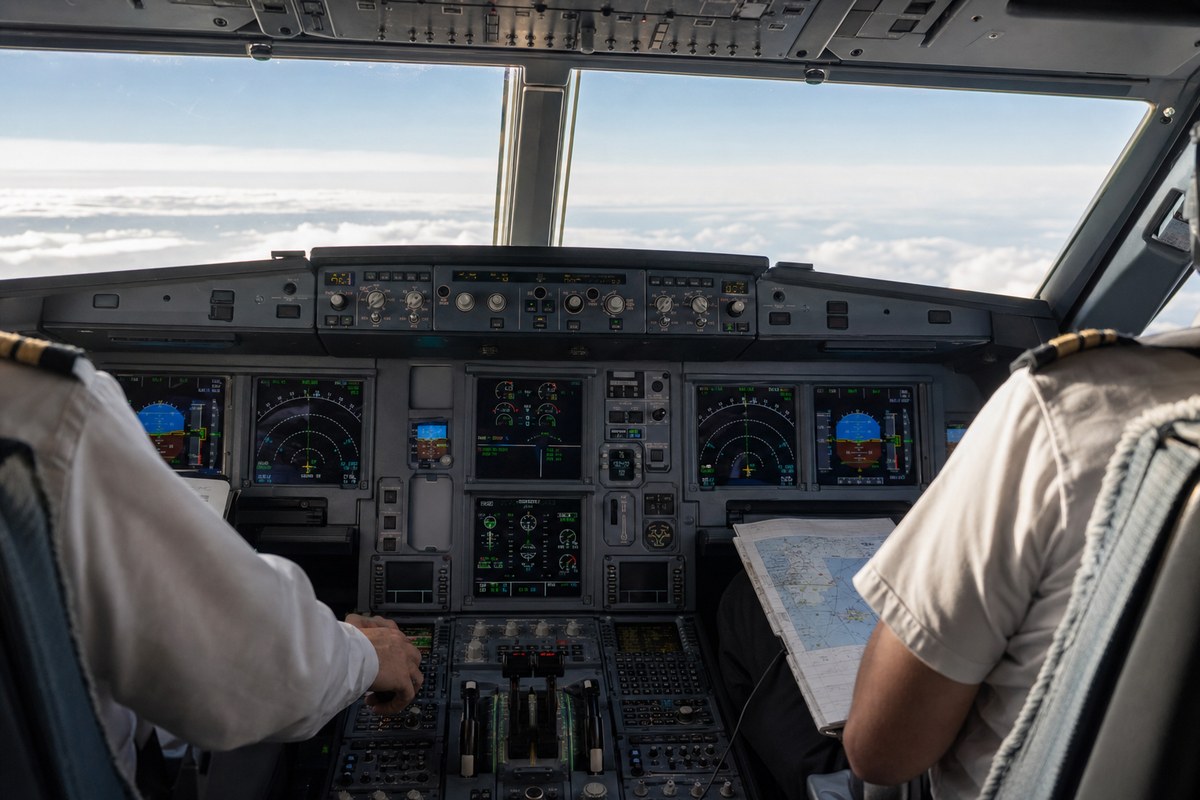
Oceanic clearance coordination begins 60 to 90 minutes before the Oceanic Entry Point. Under the 2026 procedures, Gander uses a Route Clearance for planning rather than a separate oceanic clearance request, since it now operates under Oceanic Clearance Removal; Shanwick (EGGX) still issues traditional oceanic clearances, while Reykjavik (BIRD) no longer requires a Route Clearance at all. Aircraft equipped with Controller Pilot Data Link Communications log on to the appropriate oceanic authority ahead of entry.
Both pilots independently verify every waypoint against the Master Computer Flight Plan, treated as the authoritative document, checking the flight management system, expanded latitude and longitude coordinates, and the magnetic course and distance between waypoints, with NAT guidance citing tolerances of ±2 degrees and ±2 nautical miles as an example. The 2026 edition flags potential errors involving half-degree waypoints, ARINC 424 coding, and CPDLC route amendments that may supply incomplete coordinate data.
Communications preparation includes HF radio checks before oceanic entry, SELCAL checks at each Oceanic Control Area boundary even for aircraft with datalink equipment, SATCOM data checks where applicable, and CPDLC/ADS-C logon before the boundary. The aircraft must cross the Oceanic Entry Point at its assigned oceanic flight level, with any climb or descent from the domestic clearance coordinated with domestic air traffic control beforehand, or an alternative level requested while still in domestic airspace if the assigned level cannot be reached. After crossing into oceanic airspace, crews confirm the navigation system remains aligned with the cleared route and may select a Strategic Lateral Offset of up to two nautical miles to the right of the route centerline for added lateral separation.