Hutchinson City Council Deadlocks Over Plan to Take Over Airport FBO from Wells Aircraft
Why It MattersThe dispute illustrates how a single expiring FBO contract can force a municipality to weigh fuel-margin economics, staffing capacity and political risk against an incumbent operator's entrenched service relationship.
What happened
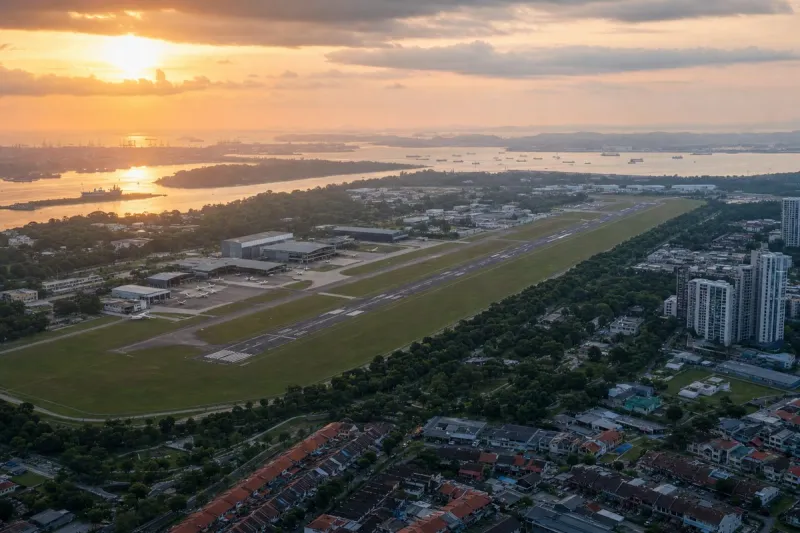
The Hutchinson, Kansas City Council spent nearly five hours on September 1 debating a proposed 2027 budget without reaching agreement, with a plan for the city to take over fixed-base operations (FBO) at Hutchinson Regional Airport from Wells Aircraft emerging as the central sticking point. The current agreement with Wells Aircraft expires at the end of August 2027.

The proposed budget includes approximately $2.2 million in additional funding tied to the city-operated FBO. About $2 million of that would be used to purchase aviation fuel during the final months of 2027, and Finance Director Angela Richard said roughly $160,000 in startup costs would be needed for ground-support equipment and courtesy vehicles. City projections indicate the $2 million fuel purchase could generate approximately $2.2 million in sales revenue, with a first full year of city operations beginning in 2028. The plan would expand airport staffing from the current two employees to as many as eight, with staff saying new employees would divide time between FBO duties and airport administration.
Airport Director Alek Stang said taking over the FBO would give the city greater control over customer service, quality assurance and fuel revenue, describing recent years at the airport as "a process of triage." Wells Aircraft President Don Rogers pushed back, telling the council, "If you want to take over the fueling today, you're going to lose your butt, and I'll step aside right now." He disputed expectations of meaningful fuel-sale profitability, warned of liability risks from potential misfueling, and argued the city should first address maintenance issues including weeds and debris near runways and taxiways. His accountant, Randy Porter, also raised concerns to the council.
Council Member Darrin Truan questioned whether the city could manage eight staff members when it had struggled to maintain three. Council Member Goss opposed the plan on principle, saying the city would be displacing a private business operating in Hutchinson for decades, calling it "the basic mechanism of socialism," and raising liability, financial risk, and request-for-proposals concerns. Vice Mayor Greg Fast proposed retaining the funding while directing the city to solicit proposals from private operators, including Wells Aircraft, noting the contract must be renewed by August regardless. Richard said the council could approve the funding now and later reduce or eliminate it, though doing so would require a formal budget amendment.
Industry impact & what to watch
Municipal FBO takeovers of this kind turn on a narrow set of assumptions: that fuel volume and margin will match projections, that new staff can be hired and trained before a contract lapse, and that service quality improves enough to justify displacing an incumbent operator. Hutchinson's case shows how quickly those assumptions collide with political and operational pushback once real numbers — a $2 million fuel purchase, $160,000 in startup costs, a jump from two to eight employees — are put in front of a council that has struggled with smaller staffing levels before.
The airport-operating segment generally rests on this kind of build-versus-buy choice: a municipality can run fueling and ground services itself to capture margin and control quality, or renew with a private operator that already has trained staff, equipment and a customer relationship in place. Wells Aircraft's warning about misfueling liability and runway-area maintenance points to the operational risks a city assumes the moment it takes direct control, risks a private operator with decades of experience may already have absorbed into its pricing.
The near-term milestone is the August 2027 contract deadline, which forces a decision regardless of how the budget vote lands. Vice Mayor Fast's proposal to solicit competing proposals, including from Wells Aircraft, would test whether the incumbent can retain the business under new terms rather than the city assuming operations outright, and Finance Director Richard's confirmation that budgeted funds can later be reduced or eliminated leaves the council room to reverse course before commitments become irreversible.