UK Think-Tank Urges Government to Fast-Track Special Use Airspace at Regional Airports for Drone and AAM Hubs
Why It MattersRegional airports with spare capacity are positioning airspace and planning flexibility, rather than passenger volume, as their route to relevance in the emerging drone and AAM logistics market.
What happened
The Good Growth Foundation (GGF), a think-tank, has published a report calling on the UK government to fast-track a Special Use Airspace (SUA) designation that would let financially struggling regional airports develop into drone and advanced air mobility (AAM) hubs. The report centres on Lydd Airport in Kent, recommending it be established as a centre of excellence for third-generation air traffic control and aerospace research and development, and proposes it as a blueprint for additional hubs elsewhere in the country.
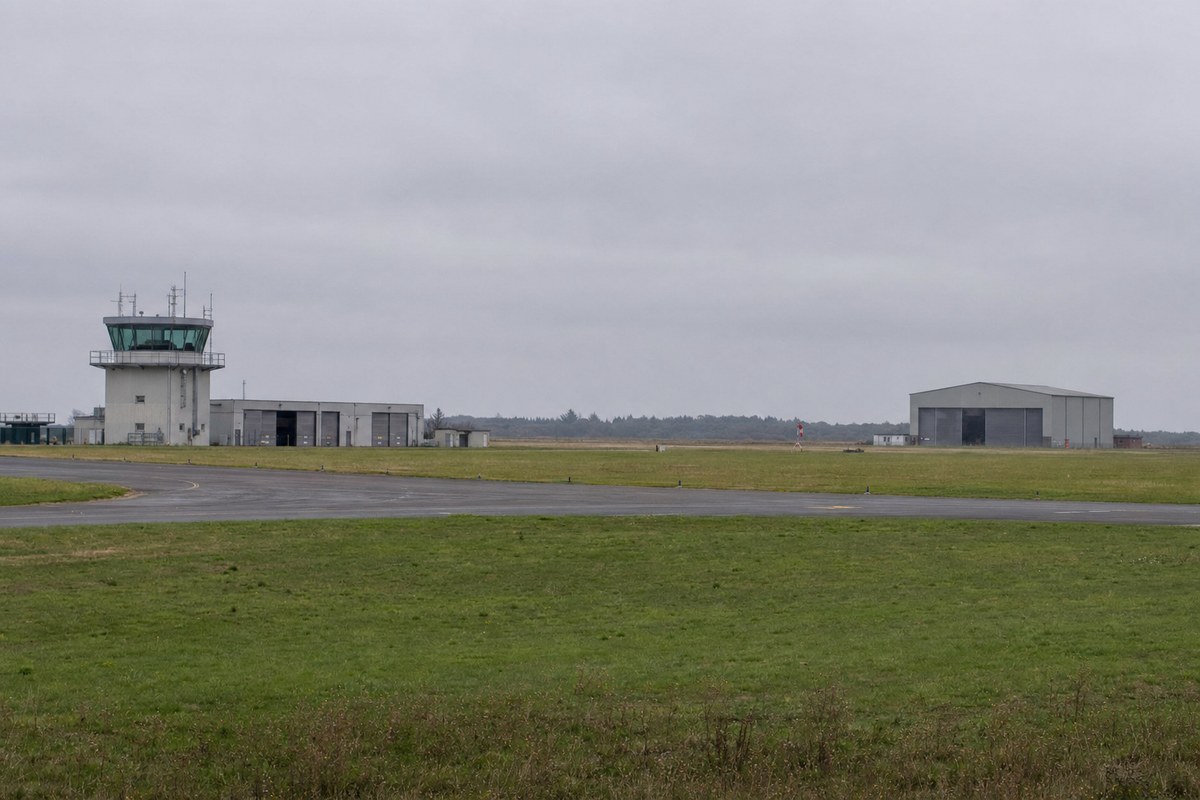
Lydd is a licensed UK airport that already runs Home Office programmes including maritime security work and the integration of drones with conventional flight. GGF states that a commercial SUA designation at Lydd would provide a regulatory framework allowing the airport to bypass standard planning and airspace change processes, and could generate real-time operational evidence to support the UK Civil Aviation Authority's roadmap for beyond visual line of sight (BVLOS) operations. The report says advanced air mobility operator SkyComm Vertiports has identified Lydd as a primary site for the UK's first fully integrated regional aerial logistics corridor, with backing that includes funding from the Qatari Royal Family, and that SkyComm's model offers up to 100% upfront capital funding for vertiport infrastructure.
Beyond Lydd, GGF names four other candidate airports for SUA designation: Humberside Airport as a drone inspection and logistics specialist centre; Doncaster Sheffield, cited for its established freight infrastructure; Cotswold Airport (Kemble), noted for a low-congestion environment suited to testing and certification; and Cornwall Airport Newquay, cited for available space and infrastructure. GGF's report warns that "regulatory inertia" is stalling progress and that investment capital will move to European competitors if the UK government does not act quickly. It urges the government to grant a commercial SUA designation alongside 24-hour active management of the Home Office's existing SUA at Lydd, adopt the airport as a national blueprint for future aviation, and recognise its potential to anchor a high-tech economic cluster.
Industry impact & what to watch
This proposal belongs to a broader push across secondary and struggling regional airports to find a commercial future beyond scheduled passenger traffic, using spare runway capacity and low-congestion airspace as an asset for drone and AAM operators rather than a liability. Airports named in the report, Lydd, Humberside, Doncaster Sheffield, Cotswold and Cornwall Newquay, are each pitched around a different structural advantage: existing SUA and Home Office activity at Lydd, freight infrastructure at Doncaster Sheffield, testing conditions at Cotswold, and available land at Newquay.
How this segment actually develops depends on whether regulators are willing to grant airspace carve-outs ahead of, rather than after, a fully built BVLOS framework. GGF's argument is explicitly that Lydd could supply the operational evidence the CAA needs for its BVLOS roadmap, meaning the airport's usefulness to regulators and its case for special status are tied together rather than sequential.
What happens next depends on the UK government's response to the SUA request and on whether SkyComm Vertiports' financing, including the funding tied to the Qatari Royal Family, converts into a built vertiport at Lydd. Progress or delay on the commercial SUA designation, and any parallel moves at Humberside, Doncaster Sheffield, Cotswold or Newquay, will indicate whether this becomes a template other regional airports can follow or a single-site experiment.