FAA Reports FY2025 Progress on Don Young Alaska Aviation Safety Initiative with $25 Million Allocated
Why It MattersPersistent federal funding tied to a multi-year congressional authorization signals that remote-region charter safety upgrades, from weather sensors to communications coverage, depend on sustained infrastructure spending rather than one-time grants.
What happened
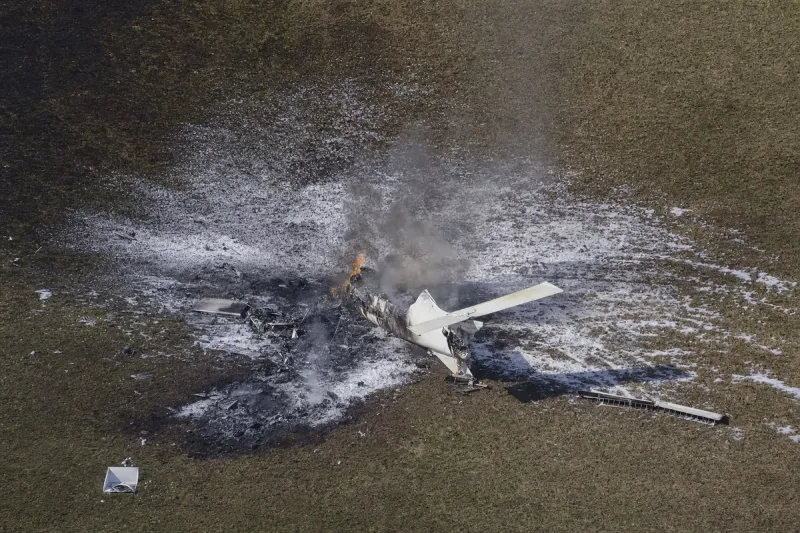
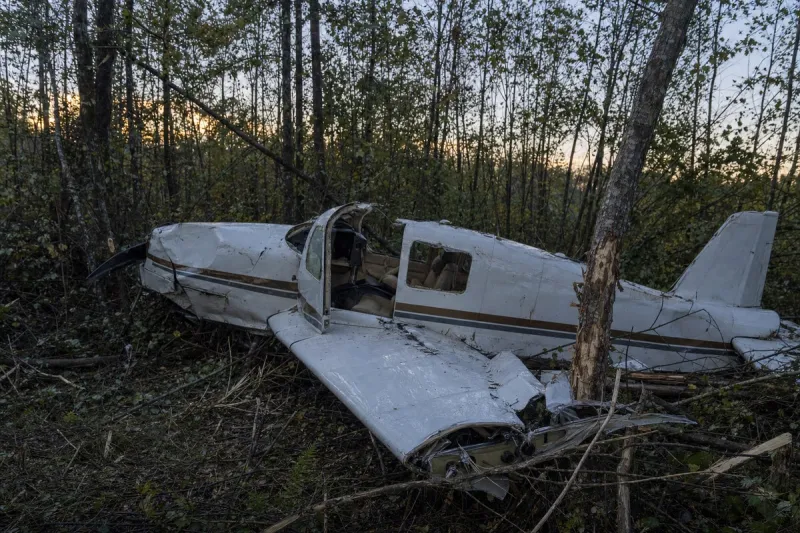
The Federal Aviation Administration submitted its annual FY2025 report to Congress on the Don Young Alaska Aviation Safety Initiative (DYAASI), detailing progress on strengthening aviation safety across Alaska, particularly among 14 CFR Part 135 on-demand and charter air operators. DYAASI was formally established under the FAA Reauthorization Act of 2024, building on the earlier Federal Aviation Administration Safety Initiative (FAASI), and addresses operational challenges unique to Alaska — severe weather conditions, limited communications infrastructure, and remote geography — that contribute to a higher aviation accident rate in the state compared to the rest of the United States.
In FY2025, the FAA allocated $25 million from its Facilities and Equipment (F&E) budget to support DYAASI program activities, and Congress authorized $25 million per year from FY2025 through FY2028. An additional $120 million was appropriated under the Working Families Tax Cuts Act (P.L. 119-21), with $40 million of that figure directed toward FY2026 and beyond, to be reflected in future annual reports. Implementation is coordinated by the FAA's Alaska Regional Administrator through a cross-organizational DYAASI Tiger Team, drawing on the Air Traffic Organization, Aviation Safety, and Office of Airports, among other FAA Lines of Business.
Key program goals include improving the availability and reliability of aviation weather information, addressing telecommunications and communications coverage gaps, supporting navigation infrastructure improvements, and collaborating with stakeholders to prioritize future safety actions, with related modernization tied to the Brand New Air Traffic Control System initiative. Among concrete FY2025 actions, DYAASI funding supported the redesign and relocation of an Automated Weather Observing System at Crooked Creek Airport (CJX), which had been damaged by flooding; a contract was awarded on February 20, 2026, with construction expected complete by mid-August 2026 and the new AWOS-C system projected operational by September 2026. The initiative traces its origins to a September 2019 National Transportation Safety Board safety panel on Part 135 operations in Alaska, which led to NTSB Safety Recommendation A-20-11 in 2020 urging the FAA to establish a safety-focused working group for Alaska aviation. Stakeholders include the Alaska Air Carriers Association, Alaska Airmen's Association, Aircraft Owners and Pilots Association, University of Alaska Anchorage, National Weather Service, and the Alaska Department of Transportation and Public Facilities. The program also coordinates with other remote U.S. aviation environments, including Hawaii, Puerto Rico, American Samoa, Guam, the Northern Mariana Islands, and the U.S. Virgin Islands.
Industry impact & what to watch
Alaska's Part 135 charter and on-demand operators fly into weather and terrain conditions that the FAA itself links to a higher accident rate than the rest of the country, and the response has been a standing, funded working group rather than a single rulemaking. Multi-year congressional authorization — $25 million a year through FY2028, plus a separate $120 million appropriation — gives the initiative a budget line that survives from one fiscal year to the next, which matters for infrastructure work like weather stations and communications coverage that cannot be built in a single cycle.
The Crooked Creek AWOS replacement shows how these dollars translate into ground-level fixes: a single damaged weather sensor at one remote airport becomes a contract, a construction timeline, and a target operational date, all tracked in the annual report to Congress. That granularity is what distinguishes an infrastructure-focused safety initiative from a policy statement — the FAA is answerable for specific stations, specific dates, and specific dollar allocations.
What happens with the $40 million earmarked for FY2026 and beyond, and how the Tiger Team prioritizes future navigation and communications projects with stakeholders like the Alaska Air Carriers Association, will show up in next year's report to Congress.