FAA to Impose Temporary Flight Restrictions Around Miami for G20 Summit, December 12–16
Why It MattersMulti-layered summit TFRs show how general aviation, charter and drone activity around a major host city is rationed through ATC gateways, discrete codes and Secret Service-supported exceptions rather than simple closure.
What happened
At the request of the Department of Homeland Security, the Federal Aviation Administration will establish airspace restrictions for the G20 Summit, hosted in Miami, Florida, from December 12 through December 16. NOTAMs will be issued depicting a series of 14 CFR §99.7 "Special Security Instructions" and 14 CFR §91.141 "VIP" Temporary Flight Restrictions.

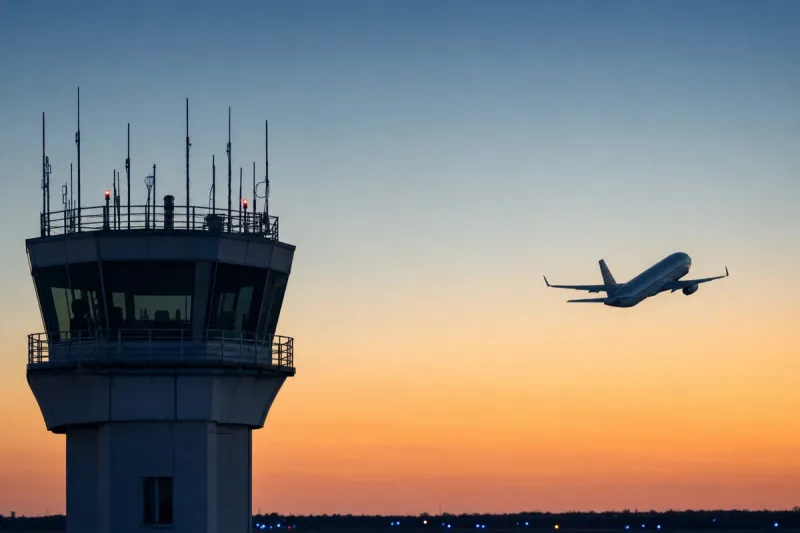
Under 14 CFR §99.7, flight operations are prohibited within a 2 NM radius of 254915N/0802039W (the DHP VOR/DME 016-degree radial at 1.3 NM), up to but not including 7,000 ft AGL. Exceptions apply only to approved law enforcement and military aircraft directly supporting the U.S. Secret Service, or aircraft authorized by ATC in consultation with the Air Traffic Security Coordinator via the Domestic Events Network. Aircraft must squawk an ATC-assigned discrete beacon code and maintain two-way radio contact with ATC.
Under 14 CFR §91.141, restrictions apply within a 12 NM radius "inner core" and a 32 NM radius "outer area," both centered on 254946N/0801715W and extending up to but not including 17,999 ft MSL. In the inner core, only approved law enforcement and military aircraft supporting the Secret Service may operate. In the outer area, operations are limited to aircraft arriving at or departing local airfields and, workload permitting, ATC-authorized transits; all such aircraft must be assigned a discrete beacon code and remain in two-way radio communication with ATC.
Drone rules and excluded operations
All unmanned aircraft system operations are prohibited under §99.7 within a 9 NM radius of 254946N/0801318W (the VKZ VOR/DME 326-degree radial at 5.9 NM), up to but not including 2,000 ft AGL. Emergency and life-saving flights (medical, law enforcement, firefighting) around Miami International Airport and Doral must coordinate with Miami TRACON at (305) 869-5432 before departure.
Flight training, practice instrument approaches, aerobatic flight, glider, parachute, ultralight, hang gliding and balloon operations are not authorized within the TFRs.
UAS flights within the restricted airspace are allowed only if pre-approved by the FAA System Operations Support Center (202-267-8276) before TFR activation, with a minimum of 48 hours for a decision, and if they meet the other listed conditions, such as direct support of an active national defense, homeland security, law enforcement, firefighting or search-and-rescue mission.
Enforcement and penalties
UAS operators who do not comply are warned that DHS, the Department of Justice and the Department of Defense may take security action, including interference, disruption, seizure, damage or destruction of drones deemed a credible threat.
Violators may be intercepted, detained and interviewed by law enforcement or security personnel. They face FAA administrative action including civil penalties and suspension or revocation of airman certificates, and possible criminal charges under 49 U.S.C. 46307. The U.S. Government may use deadly force against an airborne aircraft determined to pose an imminent threat. The FAA recommends that operators check NOTAMs often for mandatory airspace restrictions.
Industry impact & what to watch
Event TFRs of this kind work as layers: a small, tightly controlled core, a larger VIP ring with an inner prohibition and an outer area that admits only local arrivals and departures, and a separate drone cylinder at much lower altitude. The practical effect on business aviation is that access to the Miami area becomes a matter of ATC assignment and timing, not of ordinary flight planning.
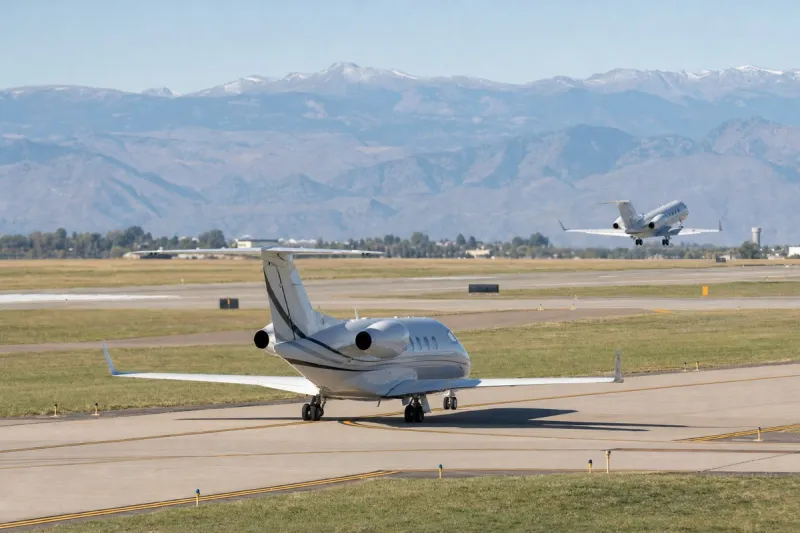
For charter, fractional and private operators, the exceptions are narrow. Aircraft in the outer area need a discrete beacon code and two-way radio contact, and transits depend on controller workload. Positioning flights, training and other discretionary activity fall outside what is permitted, so demand tends to compress onto the approved arrival and departure movements at local airfields.
The NOTAMs themselves are the next milestone, since they will carry the authoritative coordinates, times and any gateway airport procedures. Operators planning around December 12–16 will want to verify those details against the NOTAM text rather than this advisory.