Aviation Safety Data Shows Private Jets and Charter Flights Among Safest Forms of Travel
Why It MattersThe figures reinforce the charter and business-jet segment's safety positioning against ground transport and scheduled airlines, a point operators are likely to keep using in marketing.
Data compiled in July 2026 from publicly available aviation industry research indicates that private business jets and chartered flights rank among the safest forms of transportation, with accident incidence described as extremely low across all categories measured. By passenger miles, automobile travel carries a fatal accident risk of 2–24 per 100 million passenger miles, versus roughly 0.4 per 100 million passenger miles for buses and passenger rail. On a flight-hour basis, small planes and general aviation record about 0.26 per 100,000 flight hours, business and private jets about 0.3 per 100,000 flight hours, scheduled private airline flights about 0.2 per 100,000 flight hours, and scheduled commercial airlines about 0.7 million per boarding.

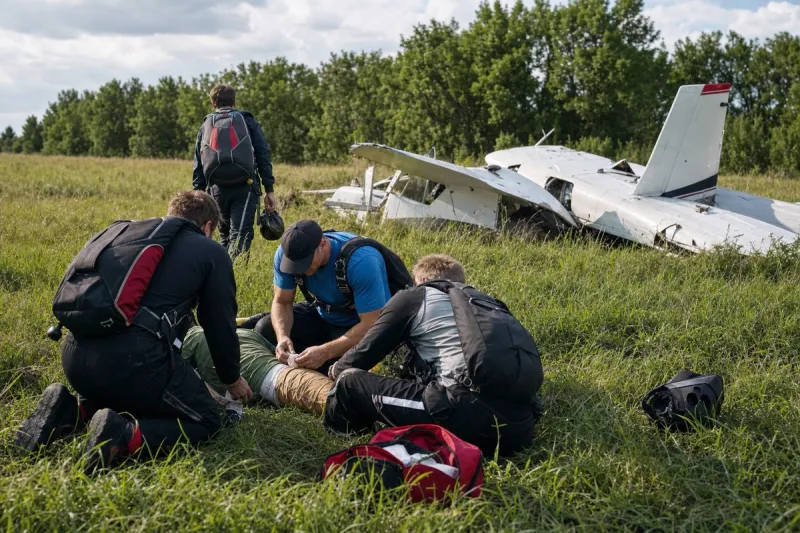
Across aviation categories overall, nearly 75% of accidents involve owner-flown aircraft operating under Part 91 regulations, while charter and air taxi operations under the stricter Part 135 requirements account for fewer than 1 accident per 100,000 flight hours. Pilot error is cited as the leading cause of aviation accidents overall, a factor described as significantly less prevalent in professionally crewed charter flights.
Historical figures show between 1,233 and 1,275 accidents recorded in 2017–2018, with general aviation accounting for 97% of aviation fatalities in those years. Reported figures for 2019 show approximately 640, 120 and 77 across categories, and 2020 data show figures of 1,085 and 205. By 2023–2024, a figure of 21 was recorded in the business and private jet segment.
Overall, the risk of death or injury on a charter or commercial flight is described as negligible relative to leading causes of death such as heart disease, cancer and motor vehicle crashes, and broadly comparable to the statistical risk of death from a lightning strike or bicycle accident.