Cessna Citation II (Model 550): History, Specs, Variants and Operators
Why It MattersThe long production run and multiple variants show sustained light-jet demand across private, charter, government and research operators over several decades.
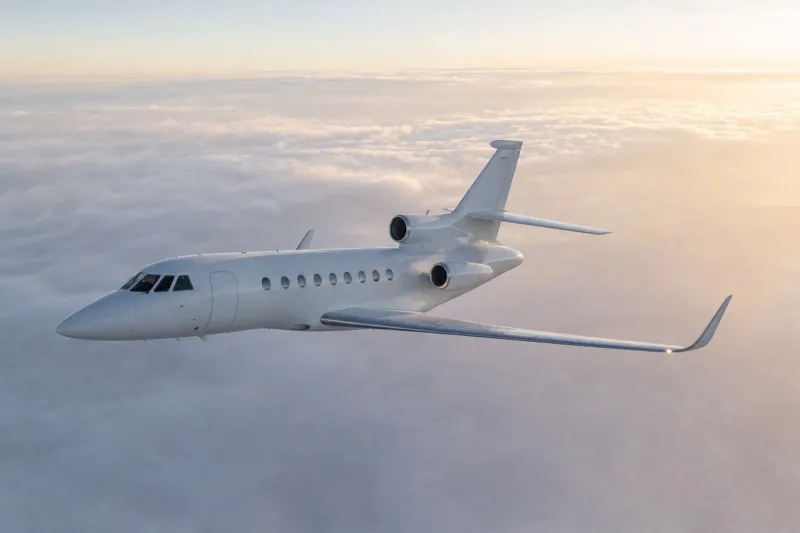
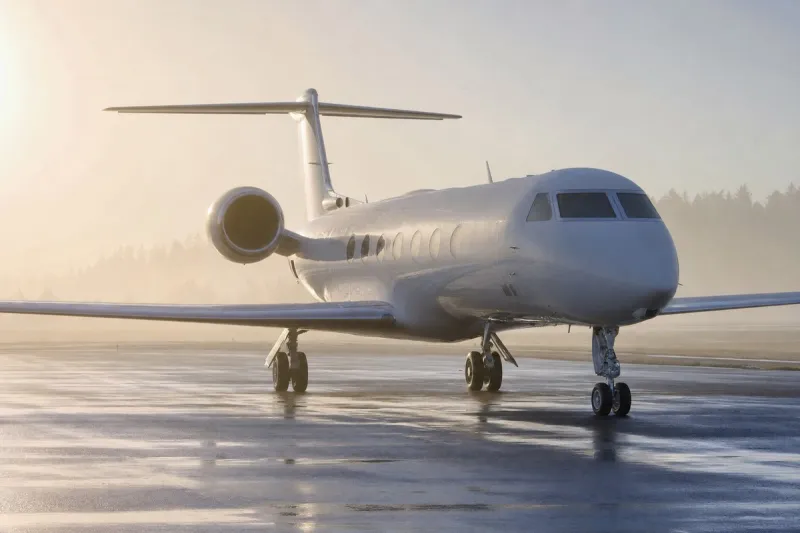
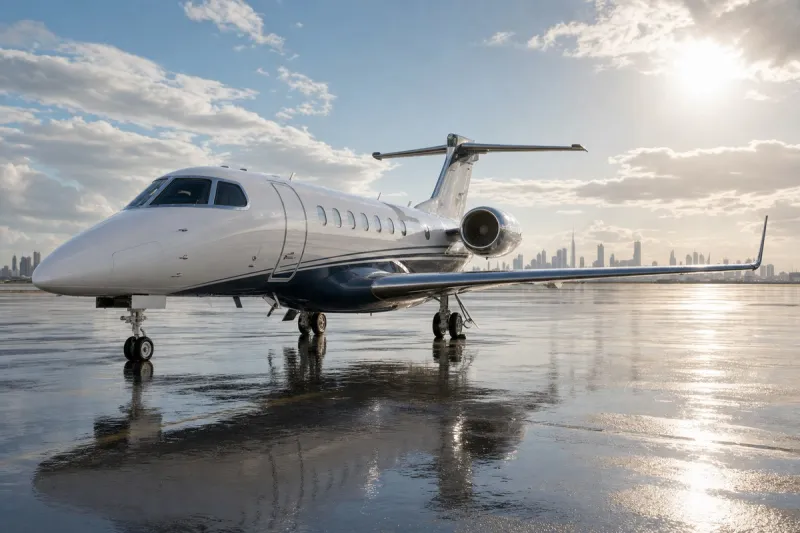
The Cessna Citation II (Model 550) was created by stretching the Citation I fuselage by 3 ft 9 in (1.14 m), extending the wingspan by 5.1 ft (1.6 m), increasing fuel capacity by roughly a third and fitting Pratt & Whitney Canada JT15D-4 turbofans producing 2,500 lbf each, a 600 lb thrust gain per engine over the Citation I's JT15D-1. It first flew on January 31, 1977, received FAA certification in March 1978, and Cessna ultimately built 1,184 jets across the entire 550 family, comprising the Citation II, the single-pilot II/SP, the S/II and the Citation Bravo.
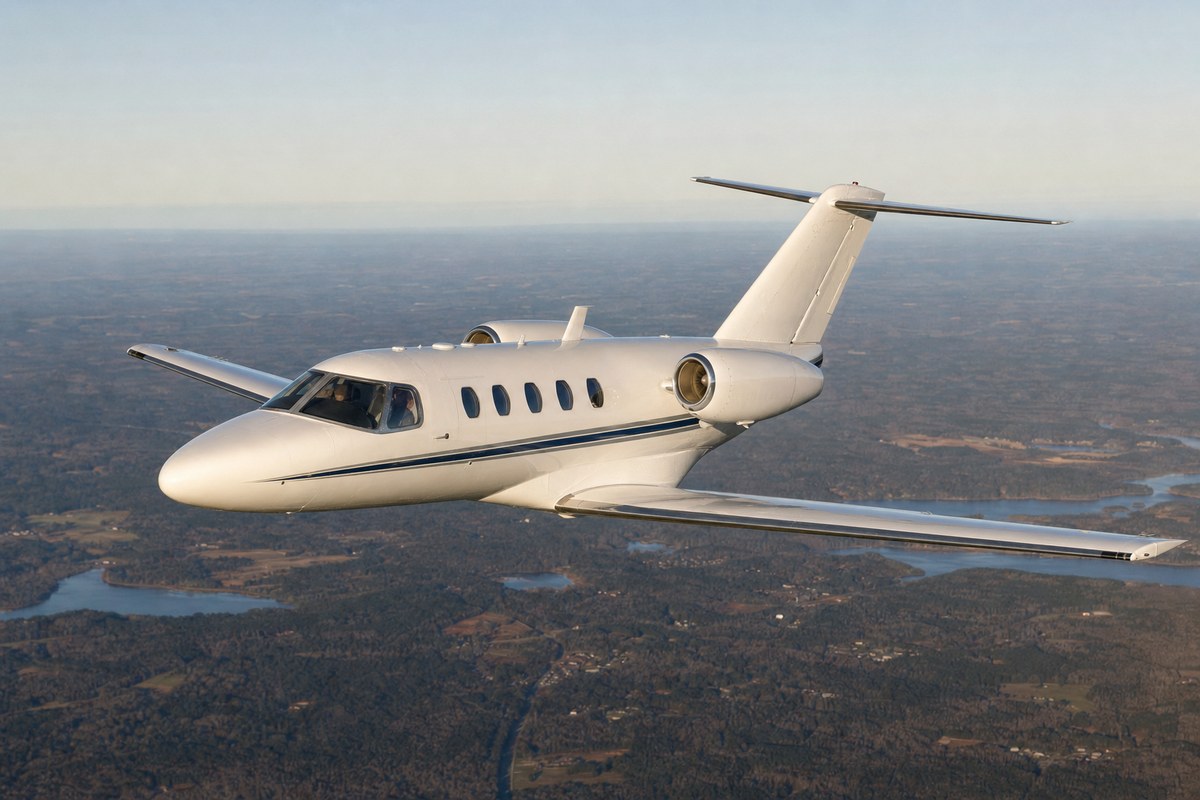
Certified under FAR Part 25 transport-category rules, the Model 550 carries up to two pilots and 11 passengers, though eight seats is the standard layout. Early aircraft (S/N 550-0001 to 550-0626) have a maximum takeoff weight of 13,300 lb, while later aircraft (S/N 550-0627 to 550-0800) are certified at 14,100 lb. AOPA's buyer guide lists a cruise speed of 375 kt and a maximum range of 1,200 nm with NBAA IFR fuel reserves, while TU Delft, which operates a Citation II as a research aircraft, publishes a maximum cruise speed of 385 kt true airspeed. Many online sources quote a cruise speed of 403 kt and a range near 2,000 nm for the "Citation II," but those figures belong to the Citation S/II (Model S550), not the standard Model 550.
The Citation II/SP (Model 551) was the single-pilot version, certified under FAR Part 23 with maximum takeoff weight capped at 12,500 lb; Cessna delivered 688 of the II and II/SP combined. The Citation S/II (Model S550) was announced in October 1983, first flew on February 14, 1984, and was certified in July 1984, introducing a supercritical airfoil with swept wing roots, sealed aileron and flap gaps, fluid deicing instead of pneumatic boots, an additional 120 US gal (450 L) of fuel and JT15D-4B engines, reaching a cruise speed of 403 kt; range figures span 1,378 nm with a 45-minute reserve to approximately 2,000 nm with NBAA IFR reserves depending on source. The S/II's new price was $3.3 million against the II's $2.6 million, and Cessna re-introduced the II in late 1985. The U.S. Navy purchased 15 T-47As (Model 552) in 1984 to train radar intercept officers, featuring a 5 ft (1.5 m) shorter wingspan, hydraulically boosted ailerons, JT15D-5 engines of 2,900 lbf each, a cockpit roof window and AN/APQ-167 radar, operated on civil registrations by Training Air Squadron VT-86 at NAS Pensacola; on July 20, 1993, a fire accidentally started by a roofing contractor at Forbes Field in Topeka destroyed ten of the fifteen T-47As. The Citation Bravo (Model 550 Bravo) first flew on April 25, 1995, was certified in August 1996, entered service in February 1997, replaced the JT15D engines with Pratt & Whitney Canada PW530A turbofans delivering 15% more takeoff thrust and 23% more thrust at altitude, and added Honeywell Primus EFIS avionics and trailing-link main landing gear; production ended in late 2006 after 336 Bravos were delivered, and the Citation CJ3 succeeded it in Cessna's lineup.
Beyond private owners and charter operators, government and military users are numerous. U.S. Customs and Border Protection operated ten Citation IIs equipped with fire-control radar, initially the F-16's AN/APG-66(V) and later the Selex ES Vixen 500E, in Panama, Honduras, Colombia, Peru, Venezuela, Mexico and Aruba. The Spanish Navy is among more than a dozen military operators worldwide, air ambulance operators include Tyrol Air Ambulance in Austria, and the research aircraft registered PH-LAB is jointly owned and operated by Delft University of Technology and the Dutch aerospace laboratory. New, the Citation II listed at approximately $2.6 million in the mid-1980s; used asking prices have ranged from $499,000 to $2.65 million depending on variant and condition, and AOPA recorded a range of $760,000 to $1.7 million in 2011. For the Bravo, Business & Commercial Aviation estimated engine overhaul cost, due every 4,000 hours, at approximately $1 million. Sierra Industries received an FAA supplemental type certificate in September 2008 for a Williams FJ44 re-engine conversion called the Super II, and by June 2012 the company had re-engined 59 Citation IIs, with Flying magazine reporting the converted aircraft to be 25% more fuel-efficient than the original JT15D-powered version.