FAA Proposes Raising Altitude Thresholds for Pilot Oxygen Mask Requirements in Commuter, On-Demand, and General Aviation Operations
Why It MattersThe proposal shows how regulators use updated pressurization safety data to trim operating costs across commuter, on-demand, and general aviation fleets without changing safety margins.
What happened
The Federal Aviation Administration has issued a notice of proposed rulemaking, docket number FAA-2026-12145, scheduled for publication in the Federal Register on September 24, 2026, that would raise the altitudes at which pilots must wear oxygen masks in pressurized aircraft. The proposal is mandated in part by Section 834 of the FAA Reauthorization Act of 2024.

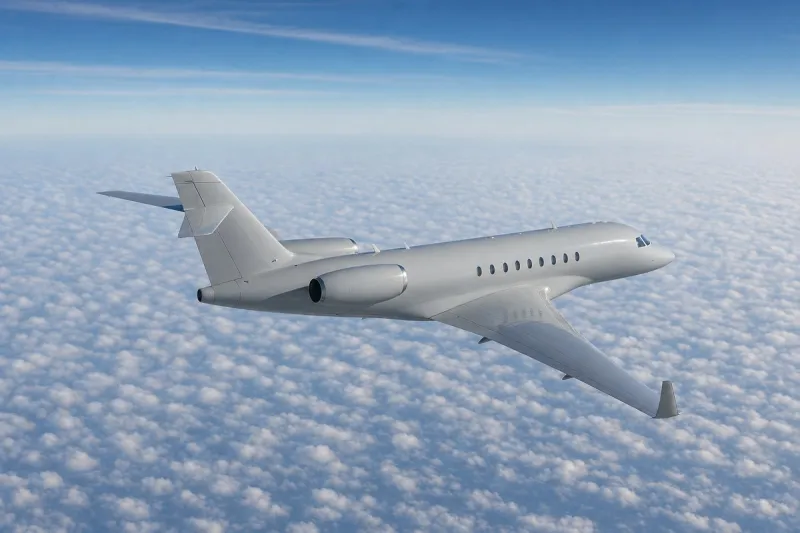
For commuter and on-demand operations governed by 14 CFR Part 135, the FAA proposes to amend § 135.89(b)(3) to raise the threshold at which at least one pilot at the controls must wear an oxygen mask from Flight Level 350 to FL410. The agency also proposes to amend § 135.89(b)(4) to raise the altitude at which a single pilot operating alone on the flight deck must wear a mask, from the current FL250 to FL350. For general aviation operations under 14 CFR Part 91, the FAA proposes to amend § 91.211(b)(1) so that, where quick-donning oxygen masks are available, pilots may operate at any certified altitude without wearing a mask; in aircraft not equipped with quick-donning masks, one pilot at the controls would still be required to wear a secured and sealed mask above FL350. The proposal would bring Part 91 requirements into closer alignment with International Civil Aviation Organization Annex 6, Part II Standards and Recommended Practices.
The FAA states that pressurization events in modern business aircraft are rare at higher altitudes and that the changes would reduce regulatory and economic burdens on operators. The agency estimates that oxygen tank servicing costs between $100 and $400 per fill-up. Across approximately 4.7 million Part 91 and Part 135 turbojet and multi-engine turboprop operations annually, the FAA estimates that for every one-percentage-point reduction in operations requiring oxygen servicing, operators would save between $4.7 million and $18.6 million per year in oxygen servicing fees. Comments may be submitted electronically through the Federal eRulemaking Portal, by mail to Docket Operations at the U.S. Department of Transportation in Washington, DC, or by fax to (202) 493-2251.
Industry impact & what to watch
The proposal fits into a broader pattern of the FAA revisiting decades-old prescriptive thresholds once operational data shows the underlying risk has changed, here citing rare pressurization events in modern business aircraft as justification for loosening a longstanding mask-wearing rule. Oxygen servicing costs function as a recurring line item across Part 91 and Part 135 turbojet and turboprop fleets, so even a small percentage-point shift in how many flights require servicing translates into a meaningful aggregate savings range across the roughly 4.7 million annual operations the FAA counted.
The alignment with ICAO Annex 6, Part II standards also signals an effort to reduce divergence between U.S. general aviation rules and international practice, which could matter for operators flying mixed domestic and international schedules under differing mask requirements.
What happens next depends on the comment period following the September 24, 2026 Federal Register publication, and on whether operators, pilot groups, or safety advocates raise concerns that could alter the specific flight-level thresholds proposed for Parts 135 and 91 before a final rule is issued.