Bird Strikes, Blade-Offs and Water Walls: How Commercial Jet Engines Are Certified in 2026
Why It MattersEngine certification standards keep tightening as operational failures surface new risks, showing that a type certificate reflects accumulated in-service lessons as much as original design limits.
What happened
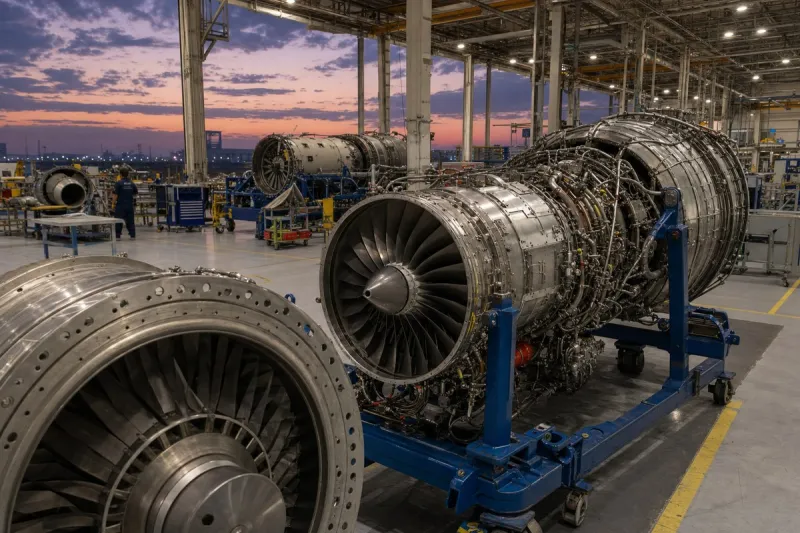
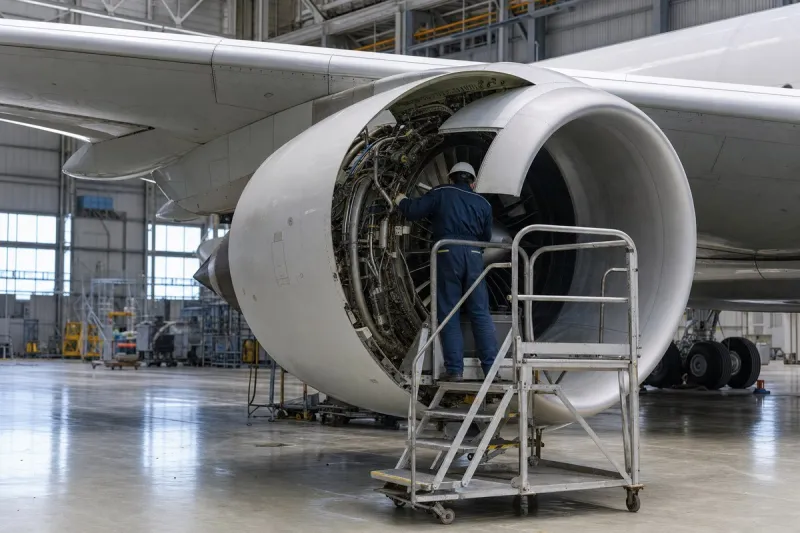
Commercial turbofan engines must clear a defined battery of ground tests before they can be certified to power passenger aircraft, under rules the FAA sets out in 14 CFR Part 33 and EASA mirrors through CS-E. The requirements cover bird ingestion, fan blade-off, extreme weather exposure and a prolonged endurance run, each governed by its own regulatory part.
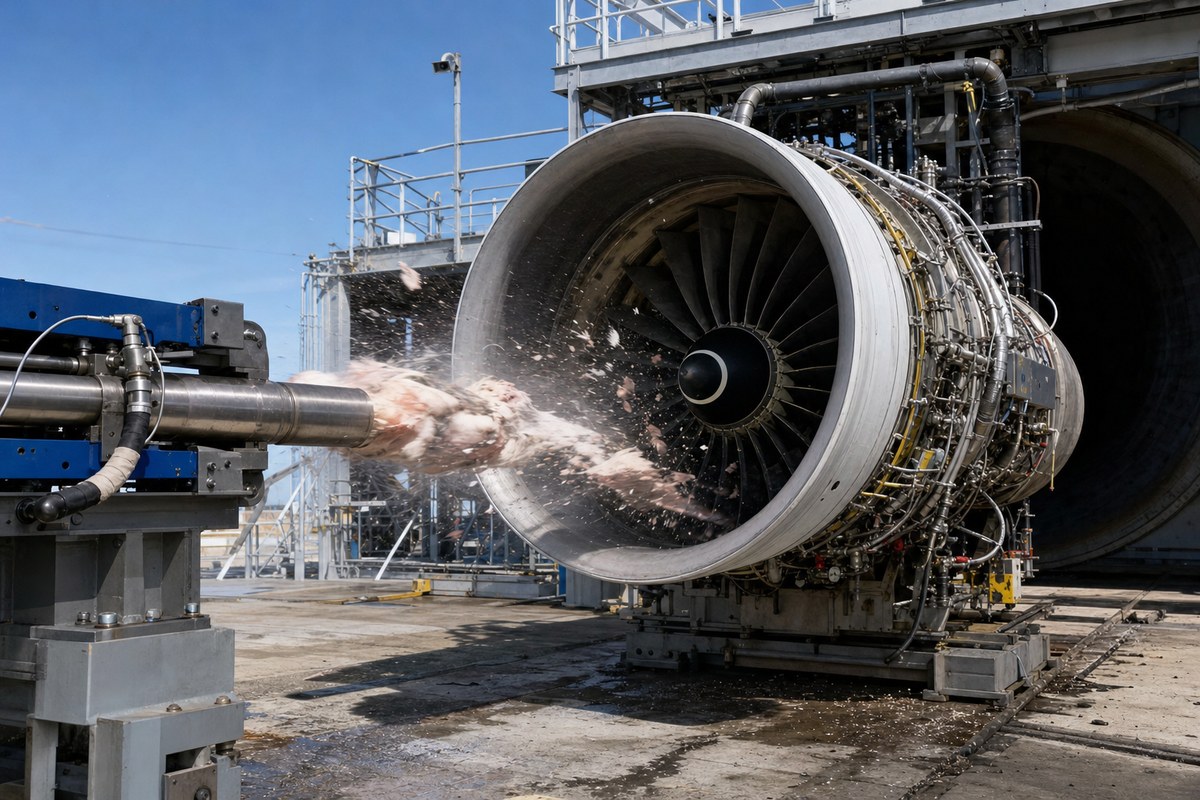
Under Part 33.76 and Advisory Circular 33.76-1B, compressed-air cannons fire birds into an engine's inlet while it runs at 100% of maximum rated takeoff power with the fan spinning at 2,000–3,500 RPM. Small and medium flocking-bird tests require the engine to keep producing required thrust for at least 20 minutes without flameout, while large flocking-bird tests at speeds up to 230 mph (370 km/h) demand structural integrity without uncontained failure. The fan blade-off test, under Part 33.94, is carried out at facilities such as GE Aerospace's outdoor site in Peebles, Ohio, where a small linear explosive charge embedded in a blade's root retention groove is detonated at full takeoff power, severing the blade in a fraction of a millisecond and launching it into the surrounding fan casing at speeds exceeding 600 mph (965 km/h).
Extreme weather testing under Part 33.78 and its Appendix A uses high-pressure spray manifolds called water walls to deluge the engine with thousands of gallons of water per minute at takeoff power to verify flame stability, alongside ice-ball tests firing solid ice spheres up to 2 inches (5.08 cm) in diameter into the spinning fan. The final mechanical validation step, mandated by Part 33.87, runs a single test engine through 25 separate six-hour operating blocks — 150 hours total — at redline exhaust gas temperatures, maximum continuous shaft speeds and overspeed limits exceeding normal flight envelopes.
The GE9X, described as the largest commercial turbofan ever produced, went through a five-year certification programme under Part 33 using eight dedicated ground and flight test engines, logging nearly 5,000 hours of operating time and 8,000 test cycles, including severe crosswind tests at GE Peebles and high-altitude flight trials on a Boeing 747 testbed, before receiving FAA approval. In 1970, Rolls-Royce attempted to certify the three-shaft RB211 turbofan using Hyfil, a carbon-fibre composite intended to reduce fan blade weight; the composite blades shattered completely during bird ingestion testing, forcing a redesign back to titanium fan blades that delayed the Lockheed L-1011 TriStar programme and contributed to serious financial difficulties at Rolls-Royce.
Why standards keep changing
High-altitude ice crystal icing events in previous decades caused unpredicted power loss in several modern engines, prompting the FAA and EASA to update Part 33 to mandate core icing tests. The change shows certification rules are not fixed at a single baseline but get revised as in-service experience surfaces failure modes the original ground tests did not anticipate.
Industry impact & what to watch
The GE9X programme and the Rolls-Royce Hyfil failure sit at opposite ends of the same process: one engine accumulated nearly 5,000 hours and 8,000 cycles across eight test units before clearing every Part 33 hurdle, while the other failed outright when a material choice could not survive bird ingestion testing. Both outcomes are reached through the same fixed sequence of bird strike, blade-off, water wall, ice ball and 150-hour endurance trials, which means certification timelines and costs hinge less on an engine's thrust class than on how early its design choices are tested against these specific failure modes.
The core icing mandate added after unpredicted power loss events illustrates how the segment actually evolves: standards harden in response to documented in-service incidents rather than being set once and left alone, so an engine certified today is tested against failure modes that earlier generations were not. That dynamic puts pressure on manufacturers to anticipate the next operational edge case rather than simply meet the current rule text, since meeting today's Part 33 or CS-E baseline is no guarantee against a future revision triggered by fleet experience.
What determines whether a new engine programme runs five years like the GE9X or stalls like the RB211 is largely how early its materials and blade architecture are validated against bird ingestion and blade-off conditions, since those are the tests that have historically forced redesigns. Future core icing rule changes, and any further revisions prompted by new in-service findings, remain the clearest signal of where certification requirements go next.