Avcon Receives FAA STC for Honeywell MKV-A EGPWS on Bombardier and Learjet Aircraft
Why It MattersHoneywell's phase-out of the Mark V pushes Bombardier and Learjet operators, who must carry TAWS or EGPWS under FAA rules, toward the MKV-A, making STC-backed drop-in replacements the practical route.
What happened
Avcon Industries, Inc., a subsidiary of Butler National Corporation (OTCQX: BUKS), has received Federal Aviation Administration (FAA) Supplemental Type Certificate (STC) approval for installing the Honeywell Aerospace MKV-A Enhanced Ground Proximity Warning System (EGPWS). The announcement was made from Olathe, Kansas, on Oct. 13, 2026.
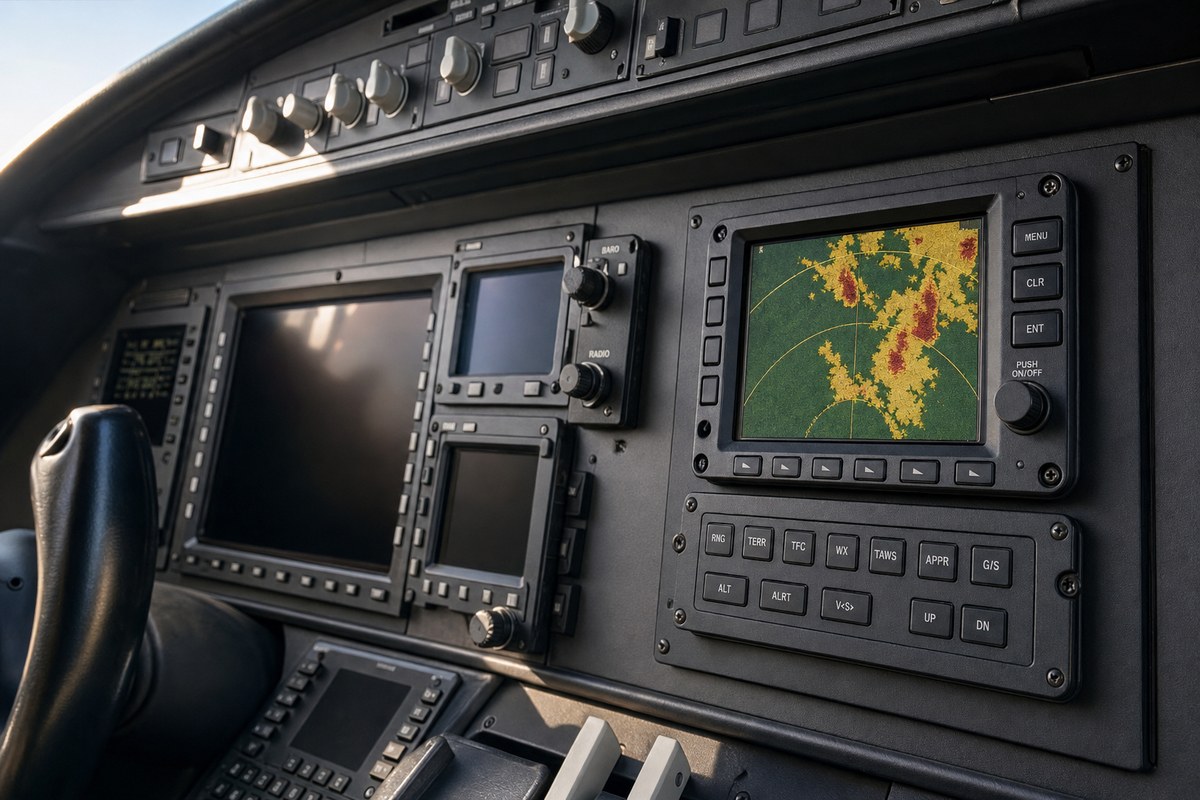
Honeywell Aerospace is phasing out its Mark V EGPWS and is offering the MKV-A as the next-generation replacement. The MKV-A offers higher-resolution databases, enhanced safety and situational awareness, and resilience to GPS jamming and spoofing. It will be available as a drop-in replacement for an operator's existing MKV, with options to upgrade capabilities later. The installation uses existing avionics racks and is designed to minimize installation effort. All equipment associated with the modification is anticipated to be sourced from Honeywell Aerospace.
In 2000, the FAA mandated EGPWS or Terrain Awareness and Warning Systems (TAWS) equipment on turbine-powered airplanes configured with six or more passenger seats. FAA regulations require all Bombardier and Learjet airplanes, except certain Model 23/24 airframes, to have a TAWS or EGPWS system installed.
Marcus Abendroth, President of Avcon, said the company is committed to supporting customers with FAA-approved solutions to obsolescence and that the form, fit and functional MKV-A replacement should minimize replacement effort. Operators may complete the modification at Avcon's New Century, Kansas, facility or at their own qualified avionics modification center. STC licensing and FAA STC information is available from Avcon.
Industry impact & what to watch
Mandated safety equipment that its maker retires creates a forced-upgrade cycle. Bombardier and Learjet operators cannot simply run the Mark V indefinitely without a path forward, because the FAA requirement for TAWS or EGPWS stays in force while the original hardware goes out of production. An STC is what turns a manufacturer's new box into something an operator can legally install on a specific airframe, so the approval is the gating item rather than the hardware itself.
The drop-in design matters to how this segment buys. Reusing existing avionics racks keeps the work within reach of a qualified avionics shop rather than a major downtime event, which is the kind of scope that fits an owner's maintenance calendar. The option to add capability later also lets an operator meet the replacement need first and defer feature spending.
The next milestone to follow is the licensing of the STC and how widely installers take it up, since Avcon says operators can use its Kansas facility or their own qualified center. Honeywell's supply of MKV-A computers will set how quickly the fleet can move.