Mesa Proposes Flat $4.14-per-1,000-Pound Landing Fee at Falcon Field After Legal Review
Why It MattersWeight-based fees applied equally to every aircraft type show how an airport sponsor can try to raise revenue while answering FAA objections to rules that limit particular kinds of operations.
What happened
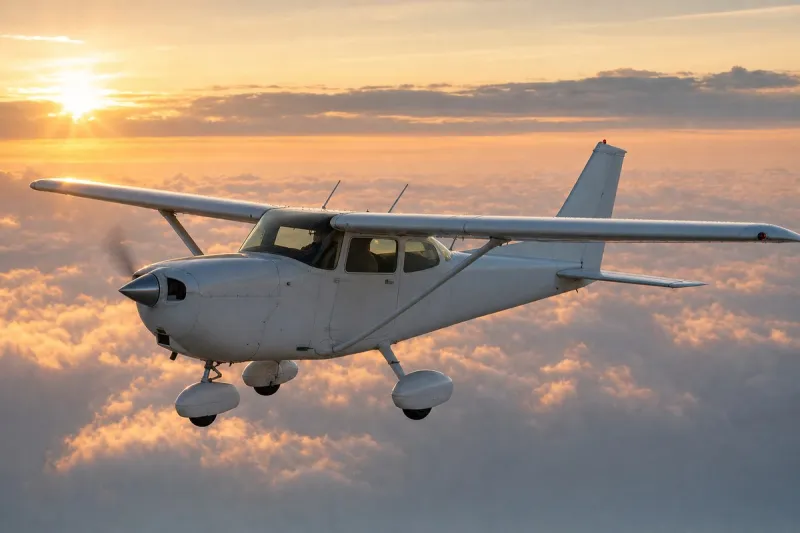
The city of Mesa, Arizona, has proposed a revised landing fee schedule for Falcon Field Airport after a legal review prompted by federal litigation and FAA scrutiny. Under the proposal, all aircraft, including fixed-wing aircraft, rotorcraft, drones and eVTOLs, would pay $4.14 per 1,000 pounds of maximum landing weight. For a 2,500-pound aircraft, the fee would be $10.35 per landing.
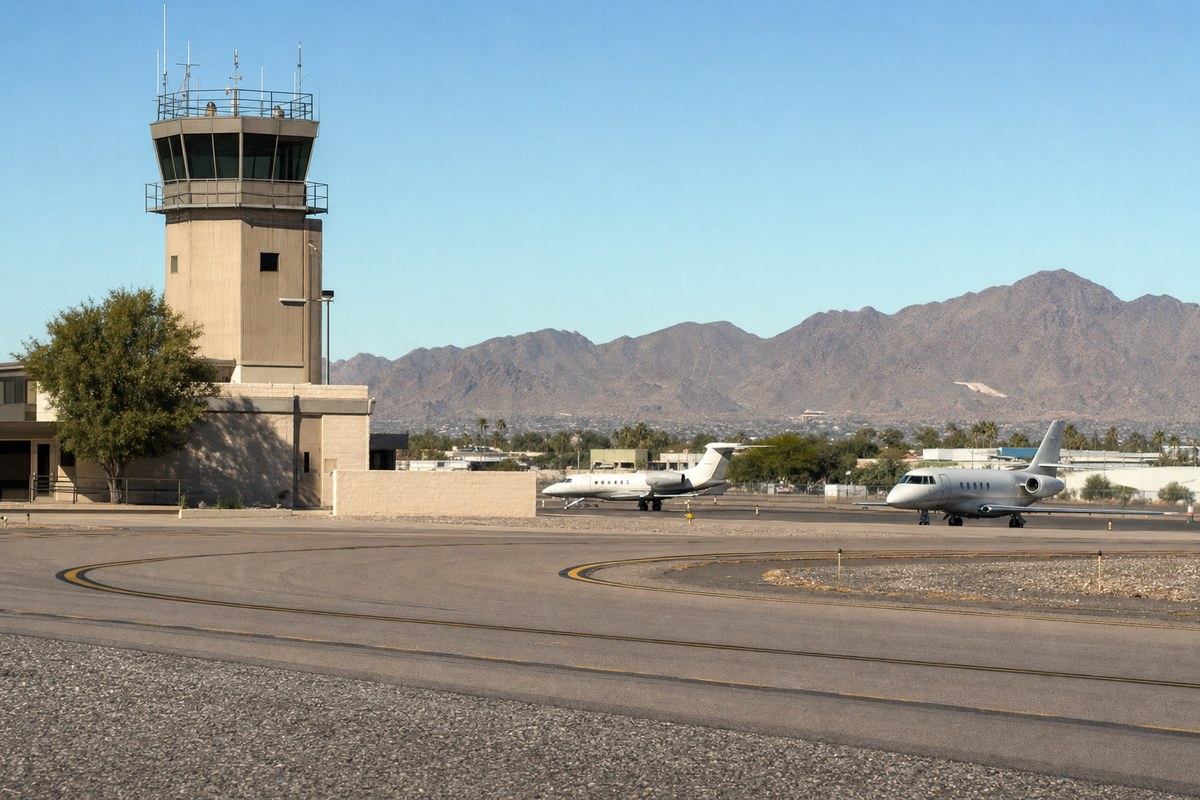
The schedule replaces the previously approved fees of $20.35 per landing for based fixed-wing aircraft weighing 6,000 pounds or less and $24.35 for comparable itinerant aircraft. The earlier plan included 10 free monthly landings for based aircraft, an allowance that appears to be absent from the revised proposal. AVweb contacted Mesa to confirm whether it has been eliminated and how touch-and-go operations would be billed, but had received no response as of Monday afternoon. The revised schedule also proposes exemptions for aircraft weighing less than 1,000 pounds and for emergency landings.
According to the city's Oct. 9 financial report, Falcon Field faces approximately $2.6 million in net airfield costs for fiscal year 2026-27. The revised landing fees are expected to generate approximately $2.5 million annually. Mesa says the additional revenue is needed to address rising operating costs and deferred maintenance as proceeds from a $4.6 million airport land sale in 2006 approach exhaustion.
The revisions follow a federal lawsuit filed by CAE Aviation Academy and Thrust Flight challenging the original fees. A federal judge denied the schools' request for a preliminary injunction, although the underlying litigation remains pending. Separately, the FAA requested a delay in implementation while reviewing complaints about the program. "Any attempt to limit operations or specific types of operations, through landing fees, is not permissible," the FAA said in an April 13 letter to Mesa officials. The city then retained aviation law firm Anderson & Kreiger LLP to review the fee structure.
The revised proposal is now subject to a 60-day public notice period, and Mesa plans additional consultation with airport users before bringing the changes to the City Council for consideration on Dec. 8. If approved, the city intends to proceed with implementation and collection of the landing fees.
Industry impact & what to watch
The shift from a per-landing charge split by based and itinerant status to a single weight-based rate is the kind of change an airport sponsor makes when its fee design is challenged. A uniform formula applied to every aircraft type is easier to defend against the FAA's position that landing fees cannot be used to limit particular operations, and it also brings drones and eVTOLs into the same schedule as conventional aircraft.
For flight schools and other high-frequency users, the economics of a fee like this depend on how often an aircraft lands and how heavy it is. Training operations that log many short sorties are the ones most exposed to any per-landing charge, which is why how touch-and-go operations are billed, and whether any monthly free-landing allowance survives, will matter more to those users than the headline rate.
The next settled points are the 60-day notice period and the Dec. 8 City Council consideration. The pending federal lawsuit and the FAA's review of the program remain open, so the schedule's final form, and whether it is implemented, is still undetermined.