GE Aerospace Plans to Nearly Double In-Country Supplier Spend in India by 2030
Why It MattersEngine makers are tying India supply-chain depth to the country's fleet expansion, so local sourcing, maintenance capacity and certification capability are becoming part of how engine programs compete for Indian airline demand.
What happened
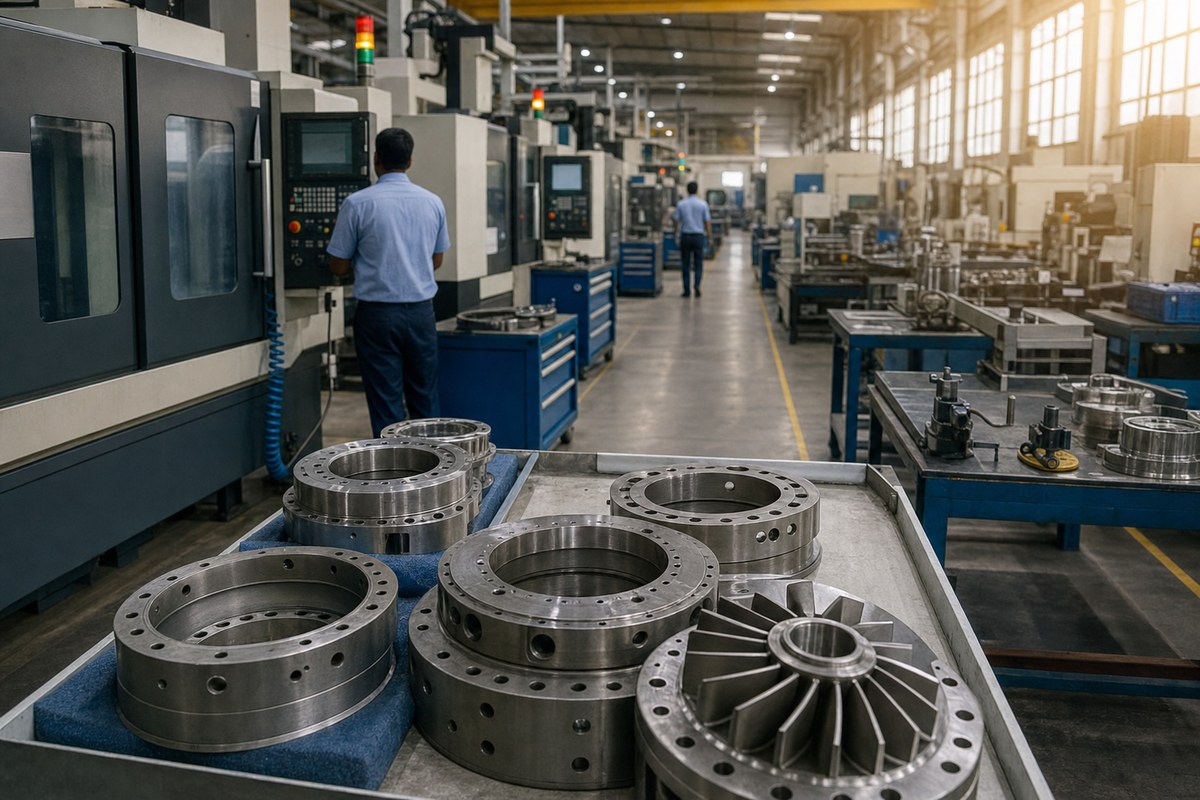
GE Aerospace said on October 12, 2026 in New Delhi that it plans to nearly double its in-country supplier spend in India between 2025 and 2030, to help meet growing demand in the country's aviation industry. The company spent roughly USD $200 million on its Indian supply chain in 2025 and plans to double that figure by 2030.
The announcement coincided with the release of an Ernst & Young (EY) report, Powering Progress: GE Aerospace's Economic Impact in India, described as the first comprehensive assessment of the impact of GE Aerospace's four decades in India across commercial aviation, defense and engineering.
The report states that engines made by GE Aerospace and its partners power the majority of commercial airline operations in India, with a fleet of more than 1,400 engines as of December 2025. Indian carriers posted the world's highest passenger load factor at 88.2% and aircraft utilization of 12 to 14 hours per day. Indian domestic airlines generated approximately USD $19 billion in revenue in FY26, and the aviation ecosystem sustains an estimated 370,000 direct jobs.
Government of India estimates project annual domestic passenger traffic reaching 1.1 billion by 2040, up from 340 million in FY26, with airports growing from 163 to more than 350 by 2047. India and South Asia will need 3,300 additional aircraft, or 6,600 additional engines, by 2044. GE Aerospace and its partner engines are expected to power most of the approximately 1,500 new aircraft already on order with Indian carriers, an opportunity the report values at more than USD $5.5 billion for India's maintenance, repair and overhaul industry.
Vikram Rai, CEO, South Asia, GE Aerospace, said the commitment in India goes beyond selling engines.
Manufacturing, defense and engineering footprint
GE Aerospace's Pune facility was established with an initial investment of USD $200 million, and the company has invested nearly USD $55 million there since 2024 in automation, precision manufacturing and workforce development. The supplier network includes 17 major domestic partners, including small and medium-sized enterprises. Since 2015, roughly 5,000 production associates have graduated from the Pune apprenticeship program, which enrolls 400 to 500 new apprentices each year.
In defense, GE Aerospace has partnered with Hindustan Aeronautics Limited (HAL) since 1986 on LM2500 naval engines and F404-IN20 engines for the Tejas Mk1. A 2023 memorandum of understanding covers potential domestic manufacture of F414 engines for the Tejas Mk2, pending final agreements and approvals. The company also signed a five-year Performance Based Logistics contract with the Indian Air Force for Apache helicopter engines and a separate agreement for an in-country F404-IN20 depot facility.
The Bengaluru Technology Centre, established in 2000 with an investment of USD $200 million, has secured more than 1,000 aviation patents and contributed to the design, development and certification of the GE9X. Its engineers hold key design responsibilities for the GE90, GP7200, GEnx and GE9X engines and play a role in the CFM RISE program, which aims to improve fuel efficiency by 20%.
Industry impact & what to watch
The pairing of a supplier-spend target with an economic-impact study shows how engine makers position themselves in a fast-growing market: local sourcing, in-country maintenance and engineering talent become part of the case for powering the next wave of aircraft orders. With roughly 1,500 aircraft already on order with Indian carriers and an MRO opportunity the report values at more than USD $5.5 billion, the supply chain and the aftermarket are being treated as one commercial story.
For Indian suppliers and MRO providers, a doubling of spend from roughly USD $200 million implies more qualification and capacity-building work, since the 17 major domestic partners named so far are a small base against the ambition. For airlines, engine choice increasingly carries an industrial-policy dimension alongside fuel burn and utilization economics.
The nearest concrete milestone on the defense side is the F414 program: the 2023 memorandum of understanding for domestic manufacture of Tejas Mk2 engines remains pending final agreements and approvals, and its outcome will show how far the in-country commitment extends beyond commercial aviation.