Can a Private Jet Land at Any Airport? Runway Length, Fire Category, and Permits All Play a Role
Why It MattersAirport-aircraft compatibility checks across runway performance, fire category, approach procedures and permits function as a recurring operational gate that shapes which destinations private aviation can actually serve.
What happened
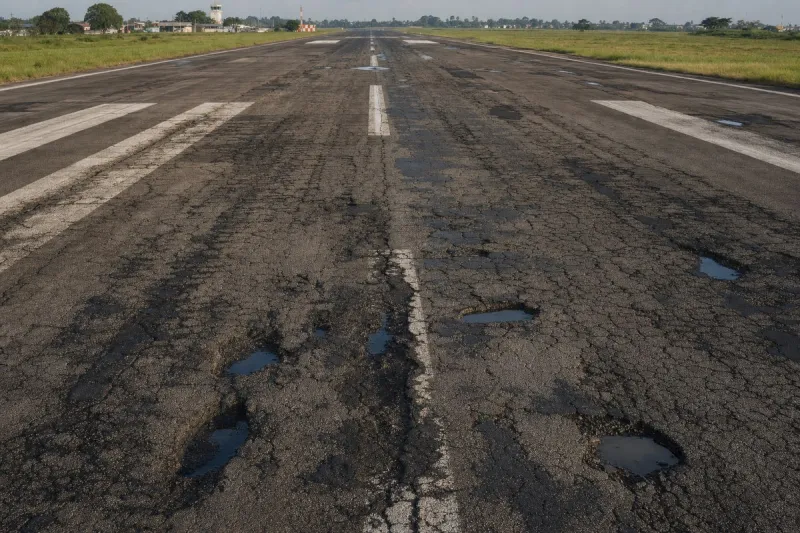
Private aviation can reach airports that commercial airlines do not serve, but compatibility between a given aircraft and a given airport depends on several technical and operational parameters that must be verified before a flight is confirmed. Runway performance requirements vary by aircraft type: a midsize jet such as the Cessna Citation Latitude generally requires a runway of more than 1,100 metres under favourable conditions, while the Pilatus PC-12 is known for shorter-field capability. Runway length alone does not determine compatibility — aeronautical documentation separately defines Take-Off Run Available (TORA), Take-Off Distance Available (TODA), Accelerate-Stop Distance Available (ASDA), and Landing Distance Available (LDA), each of which can differ from the physical runway length, with environmental factors such as altitude and temperature also playing a role.

A second parameter is the airport's Rescue and Fire Fighting Services (RFFS) category. ICAO classifies aerodrome fire-fighting capability on a scale of 1 to 10, based primarily on aircraft length and maximum fuselage width. Under EASA rules, Category 1 covers aircraft up to 9 metres long with a maximum fuselage width of 2 metres, while Category 10 covers aircraft from 76 up to 90 metres long with a maximum fuselage width of 8 metres. As reference points, the Cirrus SR22, at approximately 7.9 metres, falls into Category 1.
Flight procedures can add further restrictions even where runway and infrastructure already match. London City Airport requires a 5.5-degree glide path, steeper than the 3-degree standard, because of its urban setting and surrounding obstacles, and operators must hold specific approvals while their aircraft carry certified steep-approach data and procedures to operate there. Beyond these technical points, an airport must also be operationally available: some require Prior Permission Required (PPR), others are coordinated through slot systems or restrict operating hours, and NOTAM status, ground handling, fuel, parking, and de-icing availability must all be confirmed. International flights additionally require customs and border-control services to be available at the chosen airport within the required time frame.
Industry impact & what to watch
This points to a broader pattern in private aviation: the aircraft's performance envelope is only one half of the access question, and the airport's own classification and administrative posture form the other half. A jet that can physically land on a given runway can still be turned away by a fire category mismatch, a missing steep-approach certification, or an unavailable customs slot.
The segment works on layered clearances rather than a single runway-length check — distance figures like TORA and LDA, ICAO fire category, approach procedure certification, and operational permissions such as PPR or slot coordination all have to align independently. A shortfall in any one of them can rule out an airport regardless of how the others compare.
What determines actual access going forward is how consistently operators cross-check these layers for each specific aircraft-airport pairing, since none of the individual parameters substitutes for the others.