Guide to Documentation Requirements for International Private Flights
Why It MattersPrivate flight compliance depends on coordinating multiple independent approvals issued by different authorities on different timelines, making single-point verification and early data collection central to avoiding operational disruption.
What happened
International private flights require coordinated preparation across four documentation categories: passenger paperwork, aircraft records, crew credentials and regulatory filings, with requirements varying by nationality, airport, aircraft registration, purpose of travel and whether the operation is classified as private or commercial.
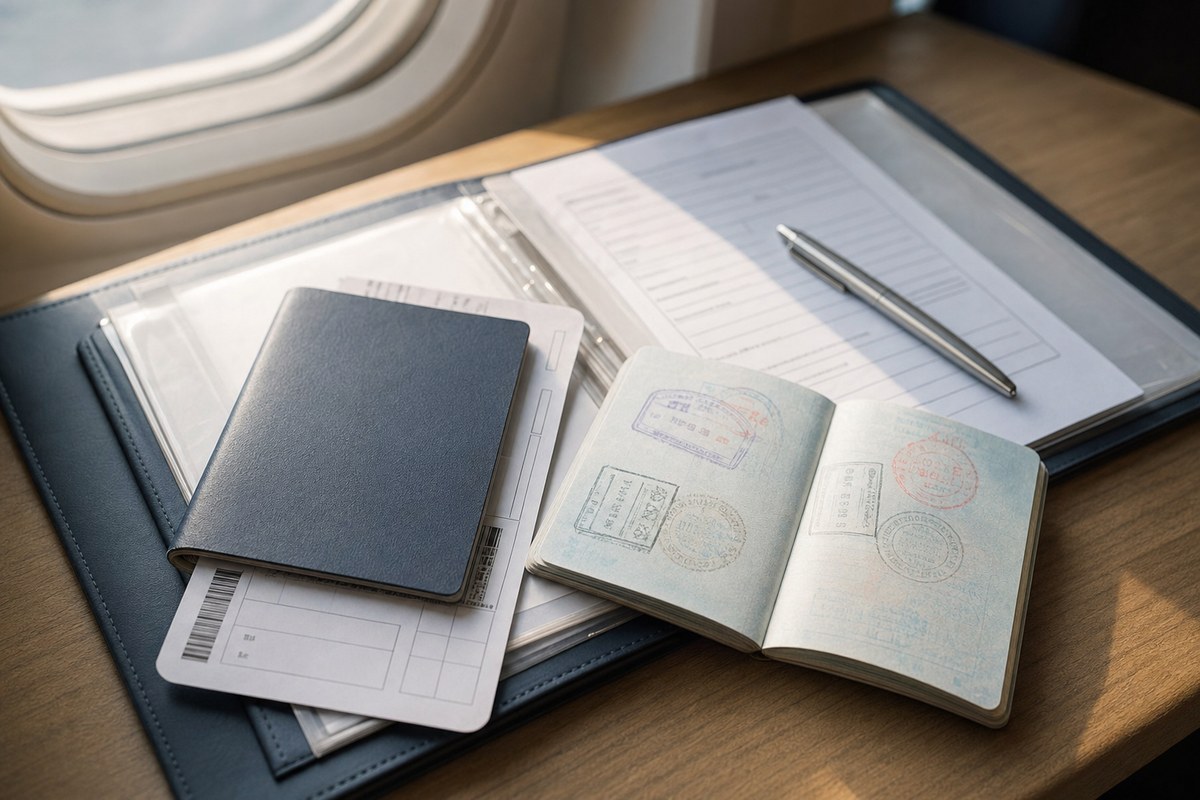
Passenger documentation must include a valid passport with sufficient remaining validity — commonly three or six months beyond the intended departure date — plus any applicable visa, electronic travel authorisation, residential address and destination address. Names, dates of birth and document numbers must match the passport exactly, since discrepancies can cause rejected advance-passenger submissions or delays at the airport. Where a child travels with one parent or another adult, consent documentation should be carried for jurisdictions that require evidence of parental authority.
The aircraft must carry a certificate of registration, certificate of airworthiness, radio station licence, noise certificate, insurance certificate and aircraft operating documents, while crew licences, medical certificates and passports must be current and appropriate for the aircraft type and operation. Operators should confirm whether journey logs, weight-and-balance records and minimum equipment lists are required in hard copy, electronically or both.
Most international private flights require advance notification beyond what is carried on board. Flights to or from the United Kingdom may require a General Aviation Report, while other states require a General Declaration, advance passenger information or a local electronic submission; flights involving the United States commonly require electronic advance passenger reporting before departure. A landing slot is not a landing permit and neither replaces customs clearance, and operators must distinguish between airport permissions, air traffic slots, parking confirmations, overflight permits and diplomatic or landing permits, each issued by different parties on different timelines. Carrying passengers between two domestic points within a foreign country can be restricted for foreign operators, affecting multi-stop itineraries and onward travel after an international arrival. Cash, controlled medicines, firearms, hunting equipment, high-value goods, pets and certain food products can trigger declarations, permits or restrictions, with pet travel requiring attention to microchip standards, rabies vaccination timing, animal health certificates and tapeworm treatments that vary by route — an animal cleared for entry into one European country may not satisfy return conditions for Great Britain.
Industry impact & what to watch
This guidance describes a pattern common across business aviation: compliance is not one approval but a stack of separate permissions — airport access, air traffic slots, parking, overflight, customs, passenger data filings — each controlled by a different party with its own timeline and its own tolerance for last-minute change. A single mismatch, such as a tail-number change after a permit is issued or a passenger swap after a filing deadline, can unwind clearances that were otherwise in place.
The segment works because operators and handlers front-load the parts that take longest to fix: passport validity windows, visa and ETA requirements, pet health certificates with route-specific timing, and advance passenger data that some authorities will not accept changes to close to departure. Firm cut-off times and resubmission rules mean the cost of a late correction is not a fee but a missed slot or a grounded leg.
What remains to be tested on any given itinerary is whether historic traveller and aircraft data still holds — passport renewals, new visa regimes and shifting pet-travel conditions between countries can invalidate a profile that was accurate on the previous trip. The practical check is whether a named person has reconfirmed every category against the current rules for that specific route before departure, rather than relying on a file built for an earlier one.