Bombardier Vision Flight Deck Brings a Tailored Collins Fusion Avionics Suite and Dark-and-Quiet Design to Global Jets
Why It MattersSoftware-centred avionics let manufacturers push cockpit capability to aircraft already in service through controlled service bulletins, shifting retrofit value from hardware swaps toward serial-number-specific software eligibility.
What happened
Bombardier has set out how the Bombardier Vision flight deck is designed and which aircraft it covers. The company has operated in the commercial, business and special mission aviation market since 1986, and its Global family of ultra-long-range and large-cabin jets has followed the Global Express, which reached the market 13 years later.
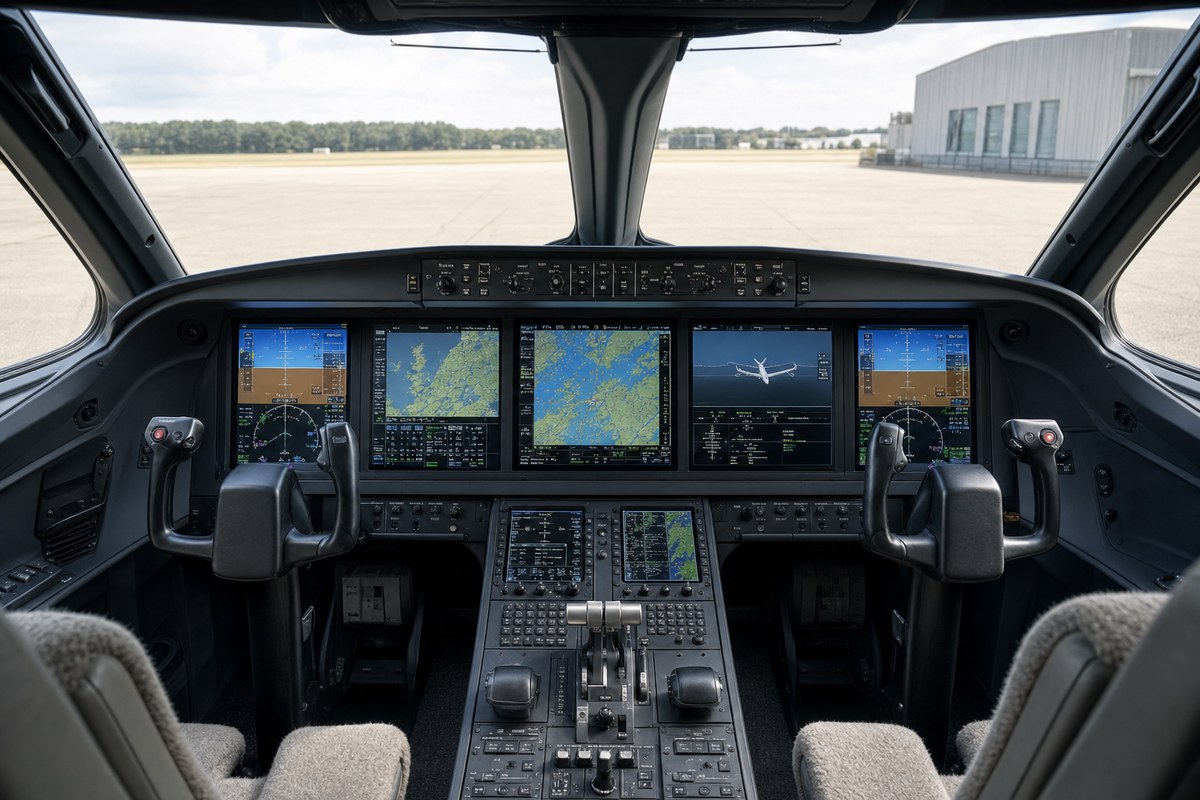
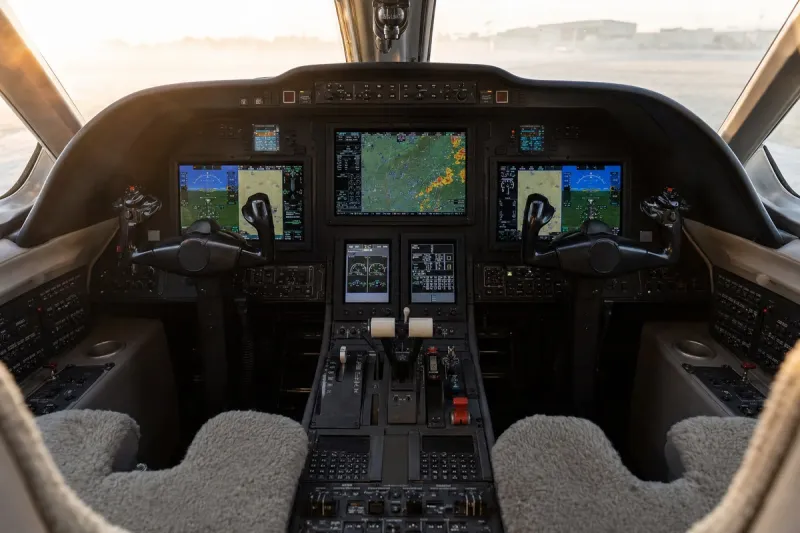
The flight deck is built on human-factors input into cockpit layout, automation concepts, crew interface and system requirements, an approach carried across subsequent Global models. Bombardier defines it around three ideas: advanced technology answering operational or safety needs, automation aimed at reducing workload and human error, and a third principle the overview text does not complete.
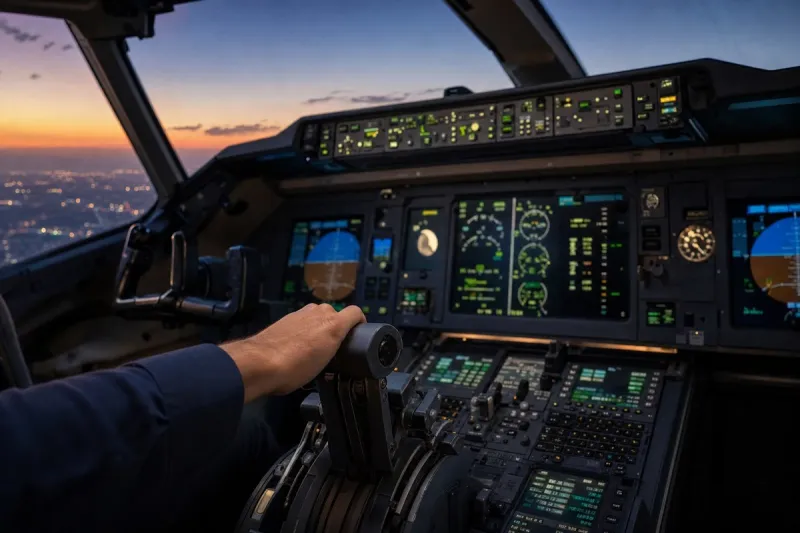
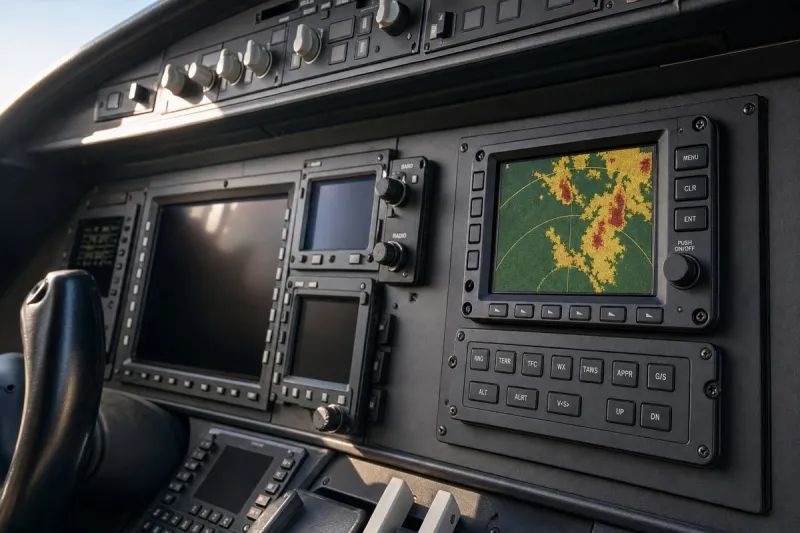
The cockpit follows a dark-and-quiet philosophy. When systems operate normally, the overhead panel stays largely unlit and unnecessary aural alerts are absent, so a lit annunciator or alert stands out. Normal rotary-control positions are aligned at 12 o'clock, normal toggle positions are forward and normal push-button annunciators are dark, allowing a short scan to confirm configuration. Essential systems are controlled through physical knobs, pushbuttons and toggle switches grouped by system, with differing shapes and textures to aid identification by touch.
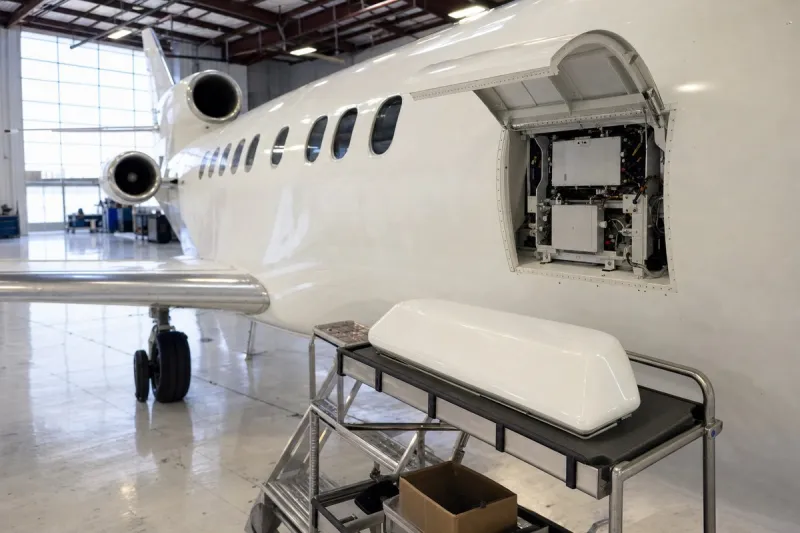
The overview covers new-delivery Global 5500 and Global 6500 aircraft and the optional Advanced Avionics Upgrade (AAU) program for in-service Global 5000, 5500, 6000 and 6500 jets. The flight deck is a tailored version of Collins Aerospace's Fusion avionics and introduces the True Combined Vision System, which blends an infrared image with synthetic imagery. Because Collins designed the avionics to be largely software-based, Bombardier offers mostly software updates through the Service Bulletin process, with applicability controlled by prerequisites per aircraft serial number.
Industry impact & what to watch
A cockpit that is largely software-based changes how capability reaches a fleet. Where earlier avionics generations meant box-by-box hardware replacement, a software-led suite lets a manufacturer distribute new functions through service bulletins to jets already operating. For owners of Global 5000 and 6000 aircraft, that makes the upgrade question one of eligibility and sequencing rather than wholesale cockpit replacement.
The serial-number gating matters in practice. Because applicability is controlled by prerequisites per aircraft, two jets of the same model can face different upgrade paths, and the value of an in-service Global will increasingly depend on which service-bulletin steps it has already completed. Buyers comparing used examples are likely to treat upgrade status as a line item alongside airframe hours and maintenance history.
The dark-and-quiet philosophy also reflects a wider cockpit-design direction in large-cabin jets: fewer routine cues, with exceptions made conspicuous. The next facts that would sharpen the picture are the specific prerequisites by serial number and the full list of AAU features, which the overview refers to but which determine what an individual operator actually receives.