Fokker F28 Fleet Scrapped in Saskatoon; Three Aircraft Saved for Preservation
Why It MattersThe scrapping marks the near-total loss of a historic regional-jet type, leaving preservation efforts to secure the only surviving examples of a once-dominant Canadian fleet.
A stored fleet of former Canadian Regional Airlines Fokker F28 Fellowship jets at Saskatoon has been completely dismantled. Three aircraft were rescued by enthusiasts before scrapping was completed; the remainder have been cut up.
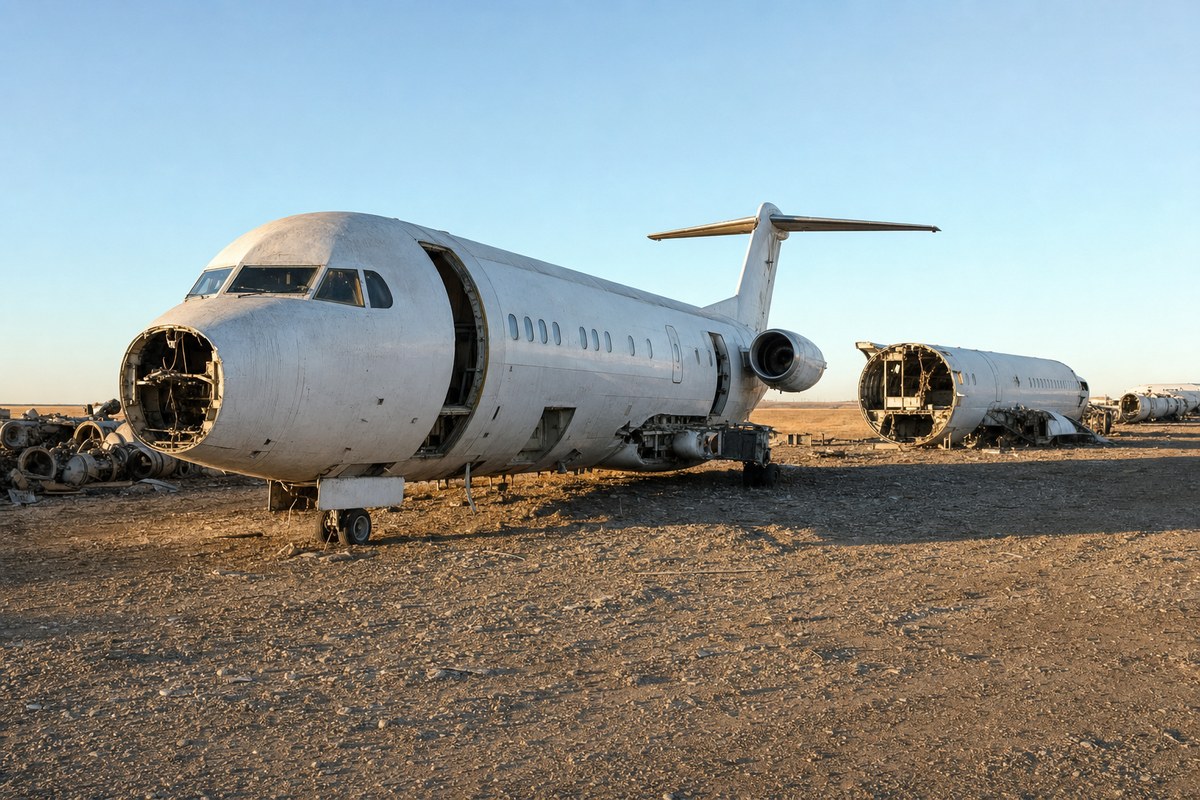
Canadian Regional Airlines, the regional arm of Canadian Airlines, operated what was at one point the world's largest F28 fleet, using the rear-engined twin-jet to serve small communities across Canada that larger jets could not reach. After Air Canada acquired Canadian Airlines in 2000, the F28s became surplus and were flown to Saskatoon, where they remained parked for close to two decades.
The Time Air Historical Society in Alberta carried out the preservation effort over several years, moving aircraft overland by flatbed trailer. One Fokker F28-1000 was brought to Lethbridge; a second was relocated to a society board member's property in Vulcan County, Alberta, where restoration was planned. Those two aircraft, along with a third saved by other means, account for the survivors.
The F28 holds a particular place in Canadian aviation history because of a 1989 accident. On 10 March 1989, Air Ontario Flight 1363, a Fokker F28-1000, took off from Dryden Regional Airport in Ontario with snow and ice on its wings, remained airborne for 49 seconds, failed to climb above the trees beyond the runway, and crashed, killing 24 of the 69 people on board. The federal government appointed Justice Virgil P. Moshansky as commissioner of inquiry in late March 1989, and his investigation identified systemic failures including competitive pressure following deregulation, a refuelling stop at an airport without de-icing equipment, inadequate crew training on wing-ice hazards, and Transport Canada's failure to detect deficiencies in the carrier's operations before approving its expansion into larger aircraft.