Dubai Airports cuts 2026 passenger forecast to 70 million after Gulf airspace closure
Why It MattersThe episode shows how a major connecting hub's growth trajectory can be reset by regional airspace risk even as underlying demand and recovery momentum remain intact.
What happened
Dubai Airports has lowered its 2026 passenger traffic forecast to 70 million, down sharply from an earlier target of 100 million, Chief Executive Paul Griffiths told Reuters on Thursday. He attributed the cut to nearly two months of travel disruption caused by the war between the United States and Iran and the resulting closure of Gulf airspace, and said the original 100 million target is now expected to be reached by the end of 2027 instead.
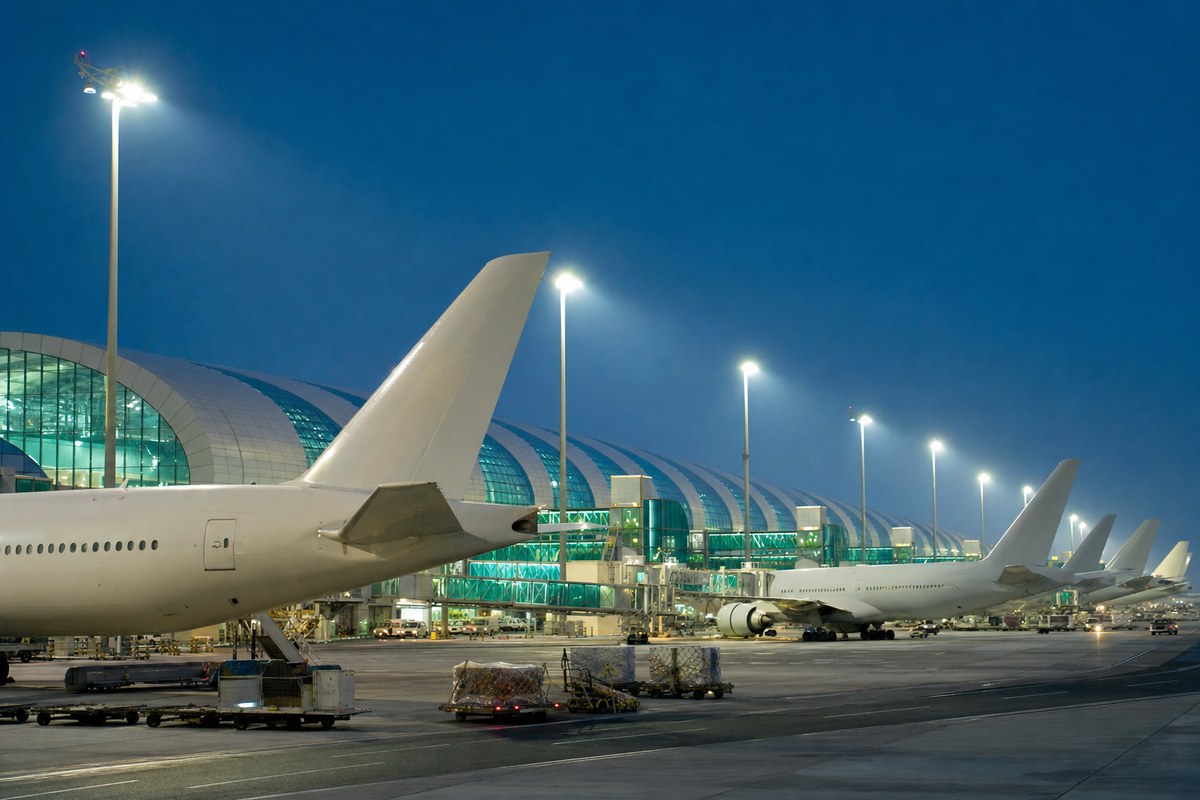
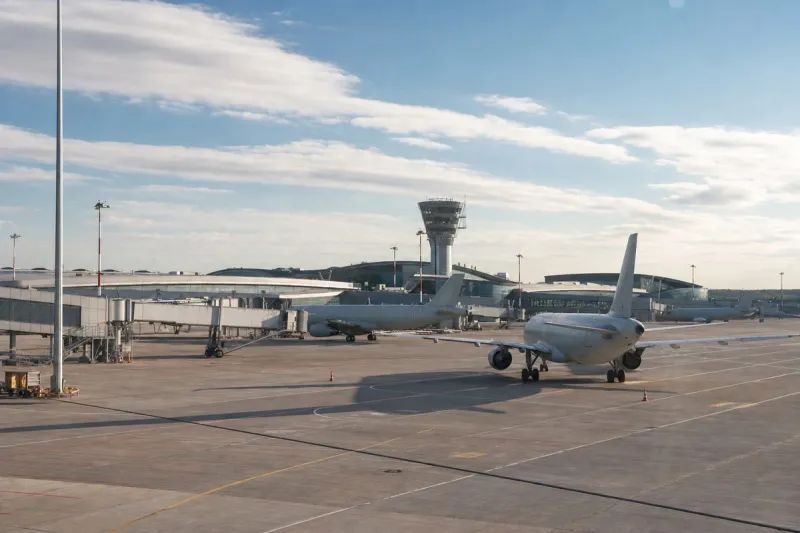
Dubai International Airport, described as the world's busiest hub for international passenger traffic, handled 18.6 million passengers in the first quarter of 2026, down from 23.4 million in the same period a year earlier. Griffiths said operating capacity had since recovered to 84% of pre-war levels, while passenger traffic had returned to 78%. He said both the connecting market and the point-to-point market had "very strong momentum" and expected them to keep performing strongly.
Griffiths pointed to advances in smaller, longer-range aircraft as a potential driver of further growth by letting airlines launch nonstop services to more destinations. Dubai currently has direct connections to 240 cities, a number he expects to rise by mid-2027. The composition of passenger traffic has changed little since before the war, with India, Saudi Arabia and Britain remaining among Dubai International's key markets. Griffiths also said lessons from the conflict could shape the design of Dubai's new airport, with planners considering changes to make it more resilient to future crises.
Industry impact & what to watch
A geopolitical shock that closes regional airspace for weeks can knock years off a hub's growth path even when the underlying travel demand has not disappeared — the gap between 18.6 million and 23.4 million first-quarter passengers shows disruption hitting volume directly, while Griffiths's description of strong connecting and point-to-point momentum suggests the demand side recovered faster than the traffic figures did.
For a connecting hub, capacity and traffic recovering to 84% and 78% of pre-war levels respectively is the real signal to watch, since a hub's competitiveness rests on how quickly it restores both flight frequency and passenger flow after an airspace disruption, not just one of the two. The retargeted 100-million milestone, now pushed to the end of 2027, becomes the marker against which that recovery pace gets judged.
The mention of redesigning the new airport for resilience to future crises points to a structural shift some hubs may weigh: building in slack capacity or routing flexibility against low-probability, high-impact regional conflicts rather than optimizing purely for peak throughput. Whether Dubai's key source markets — India, Saudi Arabia and Britain — hold steady as that redesign takes shape, and whether smaller long-range aircraft actually expand the 240-city network by mid-2027, are the concrete markers to track next.