Nine Countries Allowed to Delay EU Entry-Exit System Checks After Queues and Software Failures
Why It MattersBorder-technology rollouts that outpace staffing and software readiness push enforcement risk onto airlines and airports, which then lobby for extended derogations rather than absorb queue disruption.
What happened
France, Belgium, the Netherlands, Germany, Greece, Malta, Portugal, Italy and Switzerland have been informally permitted by the European Commission to postpone full enforcement of the EU Entry-Exit System (EES) border checks, after the scheme caused long queues and software difficulties at border crossings.
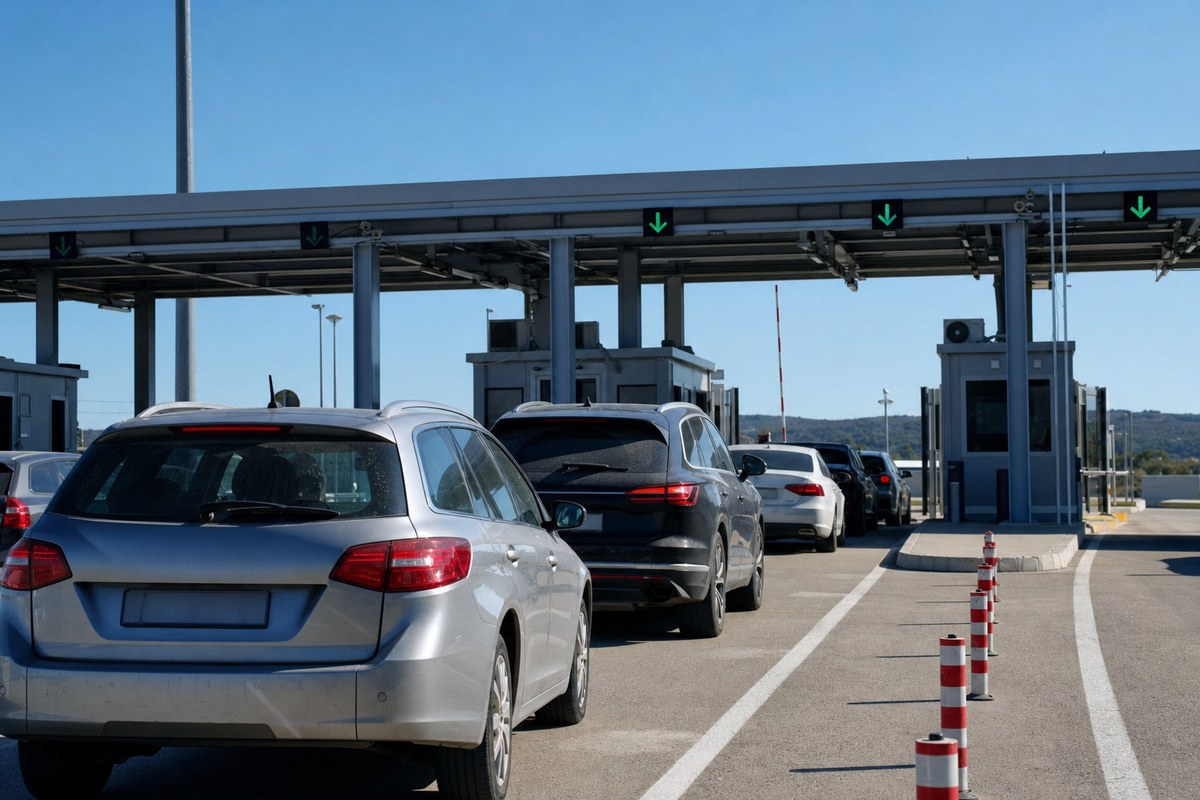
The EES was rolled out from October last year, requiring non-EU travellers, including British nationals, to provide fingerprints and a facial scan each time they entered the 29-country Schengen area. Full enforcement had been expected by April. Countries were subsequently granted a 150-day grace period allowing them to suspend the checks over the summer to avoid travel disruption. That grace period expired on 6 September, but the nine countries told the European Commission they would not enforce the new controls until the technology and systems were functioning correctly.
Ryanair called on the European Commission to "urgently extend the EES derogation until at least April 2027" to allow airports and border authorities sufficient time to increase staffing and ensure the system can operate efficiently. Ryanair's chief operational officer Neal McMahon said: "The EU's handling of EES has been a shambles from start to finish. Airlines, airports and border authorities repeatedly warned Brussels that the rollout was not ready, that it would increase processing times and that it would create excessive queues."
The UK government said it had provided £10.5 million to improve infrastructure at the Port of Dover, Eurotunnel and Eurostar, and a further £20 million to increase passport-checking and vehicle-holding capacity at the Port of Dover, to help minimise disruption for British travellers.
Industry impact & what to watch
This is a case of a border-security technology mandate being imposed on a timetable the operational side of the system, staffing, terminal capacity, software integration, could not match, so enforcement slipped informally rather than through a formal rule change. When a biometric check is added at every crossing for every non-EU traveller, the bottleneck shows up wherever queuing space and staff numbers were sized for the old process, which is why airports and ferry and rail terminals absorb the disruption first and loudest.
The pattern to watch is whether the European Commission converts these informal delays into a formal extension, since Ryanair has explicitly asked for one running to April 2027; a formal extension would let airports plan staffing and layout on a known horizon, while continued informal postponement leaves each border point deciding case by case whether it is ready. The UK's separate infrastructure spending at Dover, Eurotunnel and Eurostar shows individual governments are already funding fixes ahead of any EU-wide resolution, which points to uneven readiness persisting across crossing points even after enforcement eventually begins.