ICAO Middle East States Agree Regional Aviation Assistance Framework at Doha Meeting of Directors General
Why It MattersPooled regional assistance and shared contingency machinery show Middle East airspace resilience being built through state coordination bodies, with practical value depending on follow-through by individual civil aviation authorities.
What happened
The International Civil Aviation Organization (ICAO) agreed a new framework for Middle Eastern states, the Middle East Regional Aviation Assistance Framework (MID-RAAF), during the Eighth Meeting of Directors General of Civil Aviation of the Middle East Region (DGCA-MID/8). Qatar hosted the meeting, ICAO organised it, and it ran in Doha from 26 to 28 October. MID-RAAF is intended to support state-led aviation action plans and improve the pooling of resources around shared regional priorities.
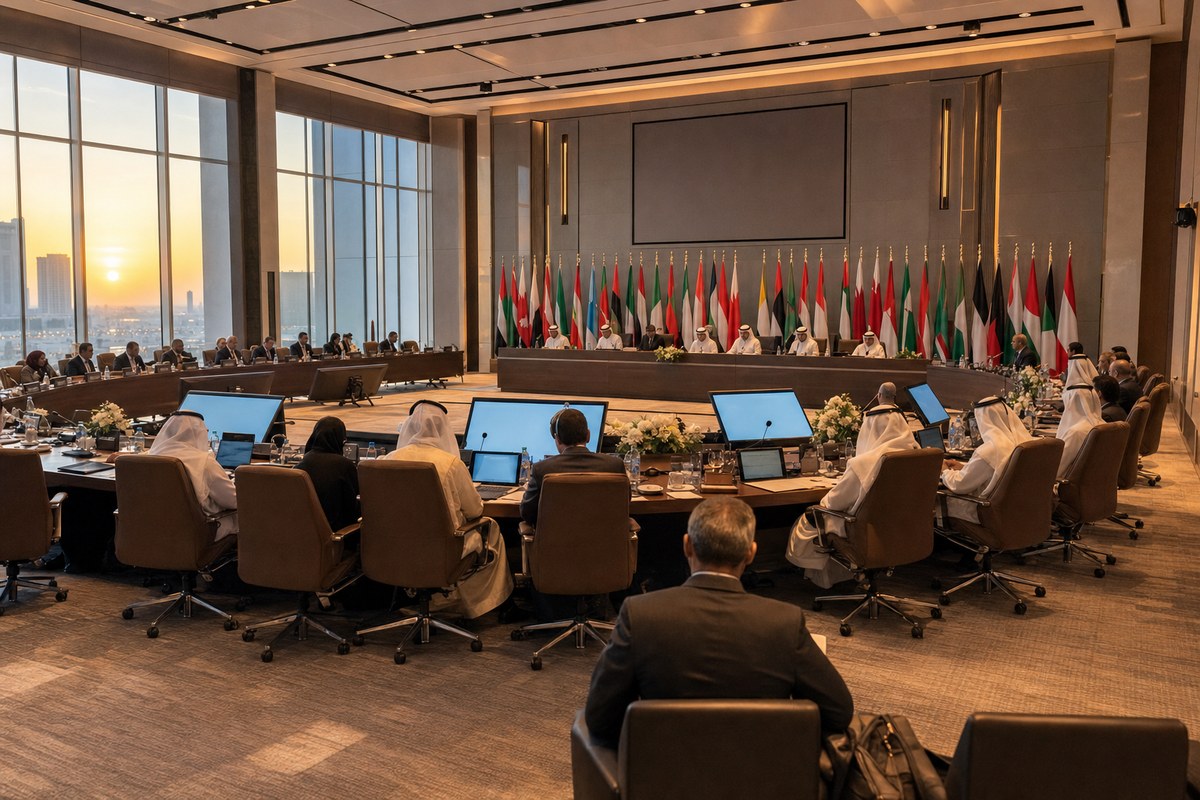
Delegates named contingency planning, timely information-sharing and coordinated responses to airspace closures as essential elements of regional aviation resilience. The ICAO Middle East Contingency Coordination Team was recognised as a central mechanism for supporting safe and orderly operations during disruptions. The meeting also launched the first MID Development Partners Dialogue, bringing regional stakeholders and international development partners together to explore technical assistance, capacity-building and funding opportunities for aviation priorities.
ICAO Secretary General Juan Carlos Salazar said: "Implementation support remains a critical priority in the Middle East Region, reaffirming ICAO's commitment to the goal of No Country Left Behind," and highlighted the need for needs-based assistance delivering measurable benefits to member states.
Delegates also expressed support for the proposed ELEVATE initiative, designed to improve coordination between the Middle East, Asia-Pacific and Europe by optimising route networks, reducing delays and limiting fuel consumption through more efficient air traffic management. Salazar's visit also included bilateral discussions with senior aviation officials from Oman, Saudi Arabia and Iran, covering cooperation, sustainable sector development and regional aviation challenges.
Industry impact & what to watch
Regional frameworks of this kind matter to business aviation mainly through airspace. Charter and fractional operators planning flights across the Gulf and neighbouring states depend on how quickly closures are communicated and how consistently neighbouring authorities coordinate rerouting. Putting contingency planning and information-sharing at the centre of the Doha agenda, and recognising the Contingency Coordination Team as a central mechanism, points to a region treating disruption management as a standing function rather than an ad hoc response.
A framework that pools resources and channels development-partner funding tends to benefit authorities with less capacity first, because assistance is described as needs-based. For operators, the practical gains from such programmes usually arrive indirectly, through better-prepared air navigation services and clearer procedures, long before they show up in published schedules or fees.
The ELEVATE initiative is still described as proposed, and its effect, as delegates framed it, rests on practical cooperation between participating states and on integrating regional air navigation priorities. Route-network optimisation across three regions only produces shorter routings and fuel savings if the states involved align procedures, so the first concrete steps toward that alignment would be the signal to follow.