Global aviation gross CO2 emissions forecast to rise 87% by 2050, driven by 134% passenger traffic growth: IBA
Why It MattersThe forecast shows that fleet renewal and efficiency gains alone cannot offset traffic-driven emissions growth, leaving SAF deployment and policy intervention as the decisive levers for the industry's net-zero trajectory.
What happened
IBA's latest Sustainability Watch analysis, published via its NetZero platform, forecasts that global commercial aviation's gross tank-to-wake CO2 emissions from passenger aircraft will rise 87% between 2025 and 2050, climbing from 843 million tonnes of CO2 (MtCO2) in 2025 to 1,583 MtCO2 in 2050.
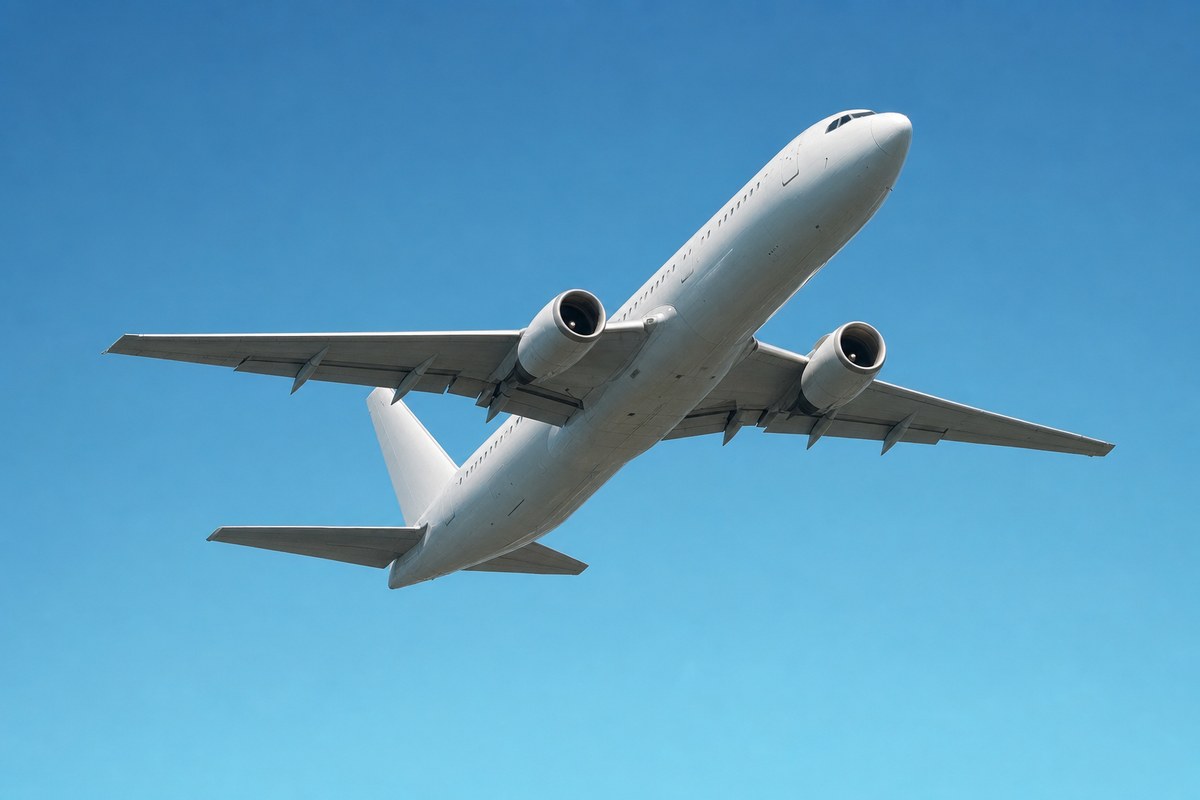
The rise in absolute emissions is primarily attributed to a 134% growth in global passenger traffic, measured in revenue passenger kilometres (RPK), alongside expansion of the commercial aircraft fleet to more than 56,000 aircraft over the period. The figures represent gross emissions and do not account for reductions from sustainable aviation fuels (SAF) or market-based measures; dedicated freighters are excluded from the analysis.
Despite the projected rise in absolute emissions, IBA forecasts a 20% improvement in fleet-wide emissions intensity, with average emissions falling from approximately 91 gCO2/RPK in 2025 to 73 gCO2/RPK by 2050, attributed to fleet renewal and the introduction of more fuel-efficient aircraft. IBA's baseline scenario assumes zero-emission aircraft will not enter the commercial passenger fleet until 2046, and will account for just 0.3% of the global fleet by 2050, with their impact limited to local and regional routes.
Archie Brown, Senior Analyst at IBA, said: "We expect fleet renewal to continue delivering meaningful improvements in emissions intensity through to 2050, but the scale of projected passenger growth means this will not be enough to reduce absolute emissions on its own. Closing the gap between this baseline outlook and the industry's net-zero ambitions will require much greater deployment of sustainable aviation fuel, alongside further operational efficiencies and effective policy intervention." IBA describes the analysis as a benchmark against which airline and industry decarbonisation strategies can be assessed, rather than a net-zero pathway.
Industry impact & what to watch
This forecast illustrates a structural tension in aviation decarbonisation: efficiency improvements at the aircraft level are real but arithmetic works against them once traffic growth outpaces the rate of fleet renewal. A 20% gain in emissions intensity sounds substantial in isolation, yet it is dwarfed by 134% growth in RPK, so absolute emissions still climb.
The baseline also shows how limited a role zero-emission aircraft play in near-term industry planning — entering the fleet only from 2046 and reaching just 0.3% of aircraft by 2050, confined to local and regional routes. That leaves SAF, operational efficiencies and policy measures as the main levers available at scale before mid-century, since airframe technology alone cannot close the gap in this timeframe.
What happens next will depend on how quickly SAF production and deployment scale relative to this baseline, and whether policy intervention shifts the trajectory IBA has modelled. IBA itself frames the analysis as a benchmark for measuring airline and industry strategies against, not a prescribed path to net zero, leaving the actual pace of divergence from this baseline as the open question.