San Diego's Montgomery-Gibbs Executive Airport Urges National Shift to Unleaded Aviation Fuel
Why It MattersThe city's bind between a federal obligation to allow leaded fuel and its push for unleaded shows how general aviation airports must manage the phase-out until the 2031 end date.
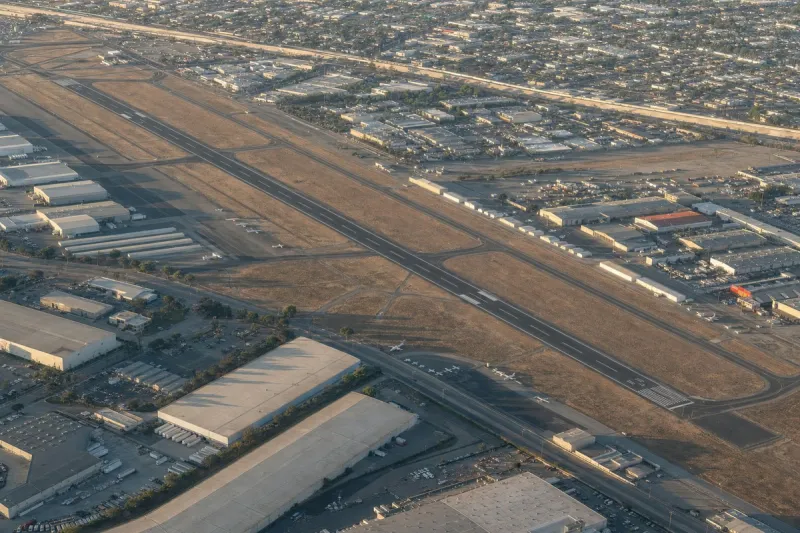
Montgomery-Gibbs Executive Airport in San Diego's Kearny Mesa area, the nation's third busiest public general aviation airport with more than 370,000 takeoffs and landings a year, is advocating for a national transition to unleaded aviation fuel. The airport has operated since 1937 and has provided flight training for Army Air Corps cadets. In 2024, in partnership with CrownAir Aviation, it became the first airport in the region, and one of the first in the U.S., to offer unleaded fuel for piston aircraft, and airport staff are working with pilots and flight schools to promote it.

The FAA has vowed to end the use of lead-based fuel at all airports by Jan. 1, 2031. Until then, the City of San Diego, as the operator of a federally obligated airport, is required to allow its use. Requiring a switch before 2031 could jeopardize federal funding designated for airfield safety improvements, and currently available unleaded fuels are incompatible with some piston aircraft and may pose safety risks. The city has run educational campaigns on the benefits of unleaded fuels, including longer engine life, and is looking to develop incentives to make its unleaded fuel cost competitive.
Jorge Rubio, A.A.E., Economic Development Deputy Director and Chief of Airports, has given recommendations to the Eliminate Aviation Gasoline Lead Emissions (EAGLE) Executive Team: a national education campaign for pilots, financial incentives to help aircraft owners obtain the supplemental type certificates needed to use the fuels, wider fuel distribution and availability, and a centralized platform for pilots to share operational data. He also helped develop two FAA-sponsored guides, published by the National Academies of Sciences, Engineering, and Medicine, for general aviation airports.
The FAA classifies the airport as a National Asset and a reliever airport for San Diego International Airport. It supports air ambulance, law enforcement and fire rescue operations as well as training for aspiring commercial pilots, mechanics and airport professionals, and supports about 1,400 local jobs and roughly $180 million in annual economic activity.