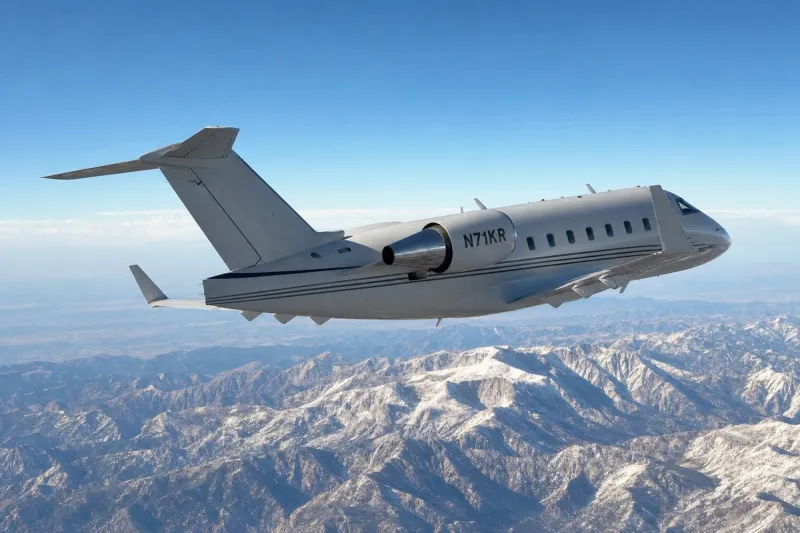
Exxon Mobil Gulfstream G650ER N100A Lands in Houston After 9-Hour, 49-Minute Flight From Madrid
Why It MattersA single-aircraft corporate flight department running a transatlantic round trip in two days shows how ultra-long-range jets let large corporates move executives between continents without airline schedules or tech stops.
What happened
Exxon Mobil's Gulfstream G650ER, registration N100A, landed at George Bush Intercontinental Airport in Houston on October 25 after a 9-hour, 49-minute flight from Madrid. It departed Adolfo Suárez Madrid–Barajas Airport at 15:47 UTC the same day.
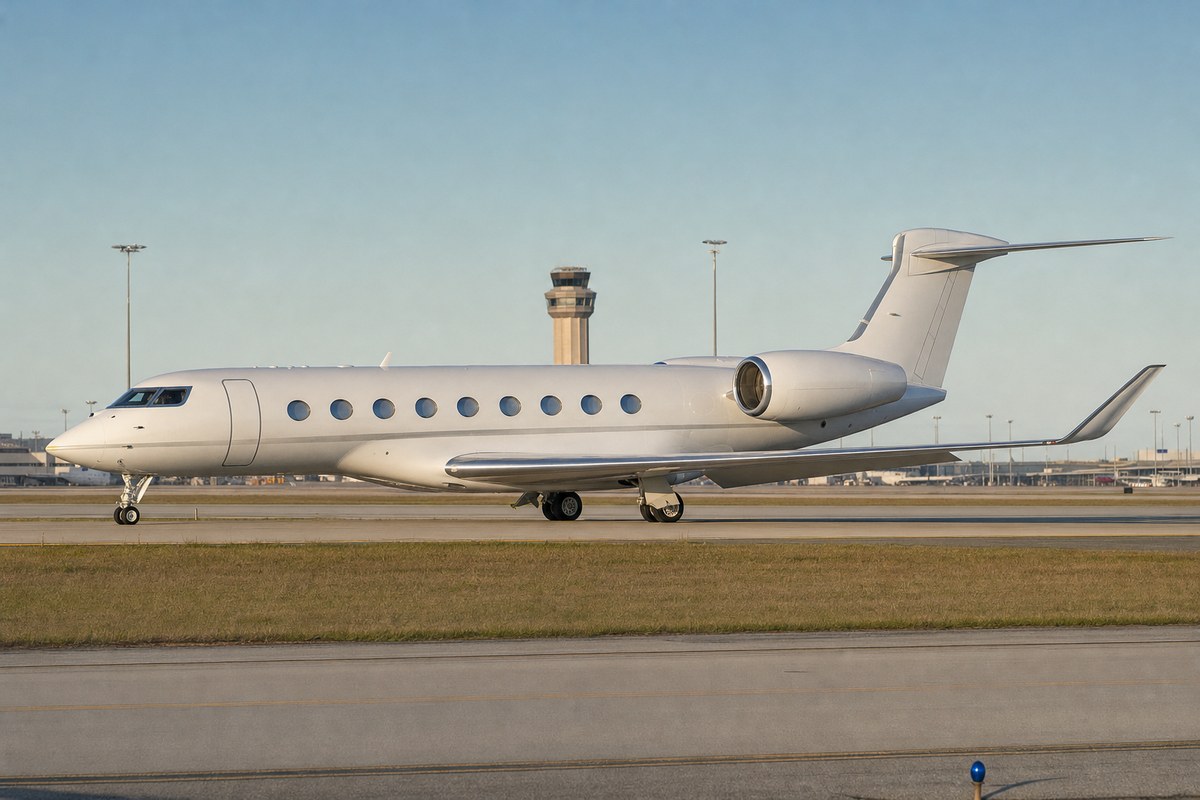
The great-circle distance between the two airports is 4,341 nautical miles (4,996 miles), and the aircraft used 58 percent of its range on the leg. It averaged a ground speed of 442 knots and reached a highest altitude of 47,025 feet. Estimated fuel burn was about 4,617 US gallons, with CO2 emissions estimated at about 44,351 kilograms.
The departure runway at Madrid–Barajas is 14,271 feet long at an elevation of 1,998 feet; the arrival runway in Houston is 12,001 feet long at 97 feet elevation. The G650ER has a range of 7,500 nautical miles, a top speed of Mach 0.925 and a ceiling of 51,000 feet, and typically seats 12 passengers, up to 19.
The return flight closed a trip that began with a Houston-to-Madrid leg on October 23, which took 8 hours and 22 minutes. Short hops within Spain followed, including Madrid to Valdepeñas on October 23 and Palma del Río to Madrid on October 25. Before departing, the aircraft had been on the ground in Madrid for about two hours after its previous tracked landing there.
This was the 16th Houston landing in a 38-flight window running from July 11 to October 25, 2026; the previous one was on October 9, 16 days earlier. Houston is the home base of N100A, Exxon Mobil's only corporate jet. In the 30 days before the flight the aircraft visited six airports in two countries and flew about 8,498 nautical miles. Houston was the most common destination in that window with 15 landings, ahead of Stonewall and London with two each, and the Houston-to-Madrid leg of October 23, at 4,342 nautical miles, was the longest. A ConocoPhillips Embraer ERJ-145XR landed at Houston about two hours before N100A. Exxon Mobil, led by CEO Darren Woods, is headquartered in Spring, Texas.
Industry impact & what to watch
The pattern on display is the standard use case for an ultra-long-range jet at a large corporate. A Houston-Madrid-Houston rotation fits inside two days, with the return leg consuming a little over half the aircraft's published range. That margin is what allows a flight department to treat a transatlantic sector as a single non-stop block rather than planning around fuel stops or weather alternates.
It also illustrates how lean some corporate flight departments are. One airframe covered roughly 8,500 nautical miles in 30 days, mostly between its home base and a single foreign destination, with short positioning hops on the ground in Spain. For manufacturers and operators in this segment, utilisation like that is typical of a jet assigned to executive travel on demand: long sectors, tight turnarounds, and a small number of airports visited repeatedly.
The fuel and emissions figures attached to the leg are estimates, but they show why the corporate-jet segment keeps drawing scrutiny alongside sustainability reporting. A single transatlantic sector at these numbers is the unit that fuel-offset and sustainable aviation fuel programmes for business aviation are priced against. Nothing in the flight data points to a specific purpose for the trip, so the next datapoint worth tracking is simply N100A's next long-haul rotation and whether it repeats the Madrid routing.