AI Agent Skyler Tells Business Aviation Symposium: 'AI Doesn't Replace Humans'
Why It MattersThe event signals that business aviation treats AI as a decision-support layer for tasks like charter matching rather than an autonomous replacement for operational judgment.
What happened
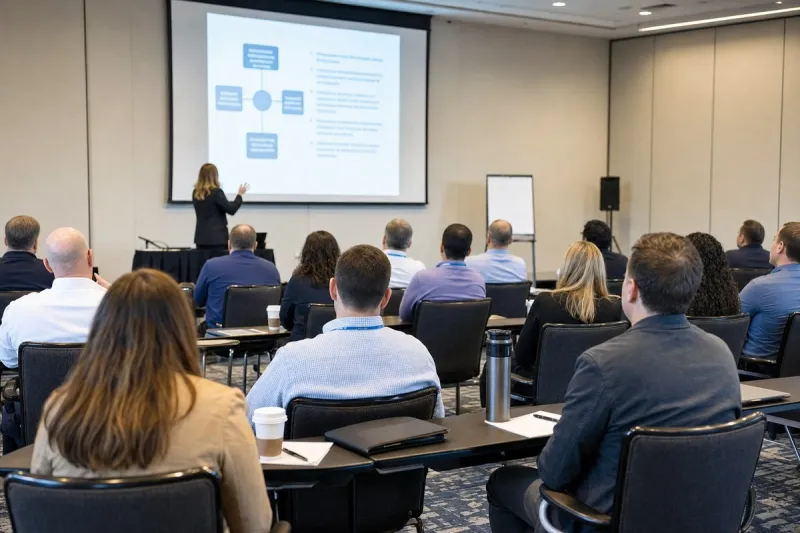
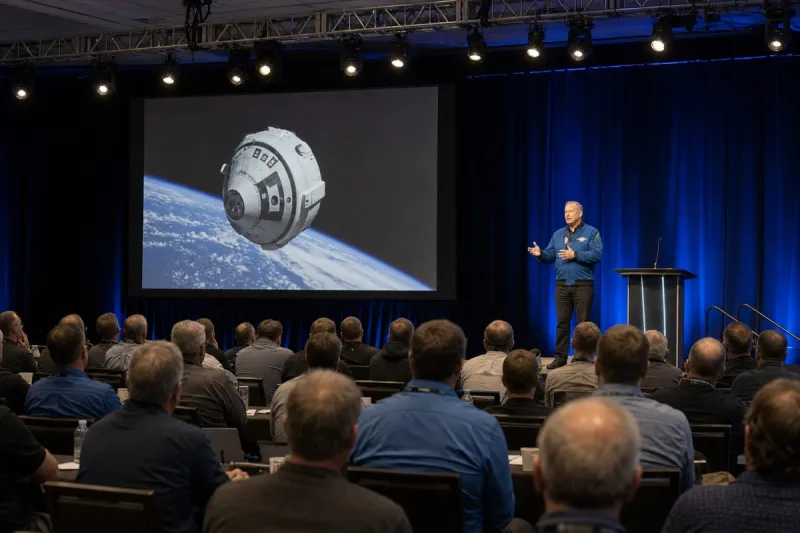
An AI agent named Skyler appeared alongside Tuvoli president and CEO Greg Johnson and Embry-Riddle Aeronautical University (ERAU) College of Business dean Joe Gibney for a live keynote at the AI Symposium for Business Aviation, held on ERAU's Daytona Beach, Florida campus. The event was co-hosted by Tuvoli, ERAU, and the National Air Transportation Association (NATA).
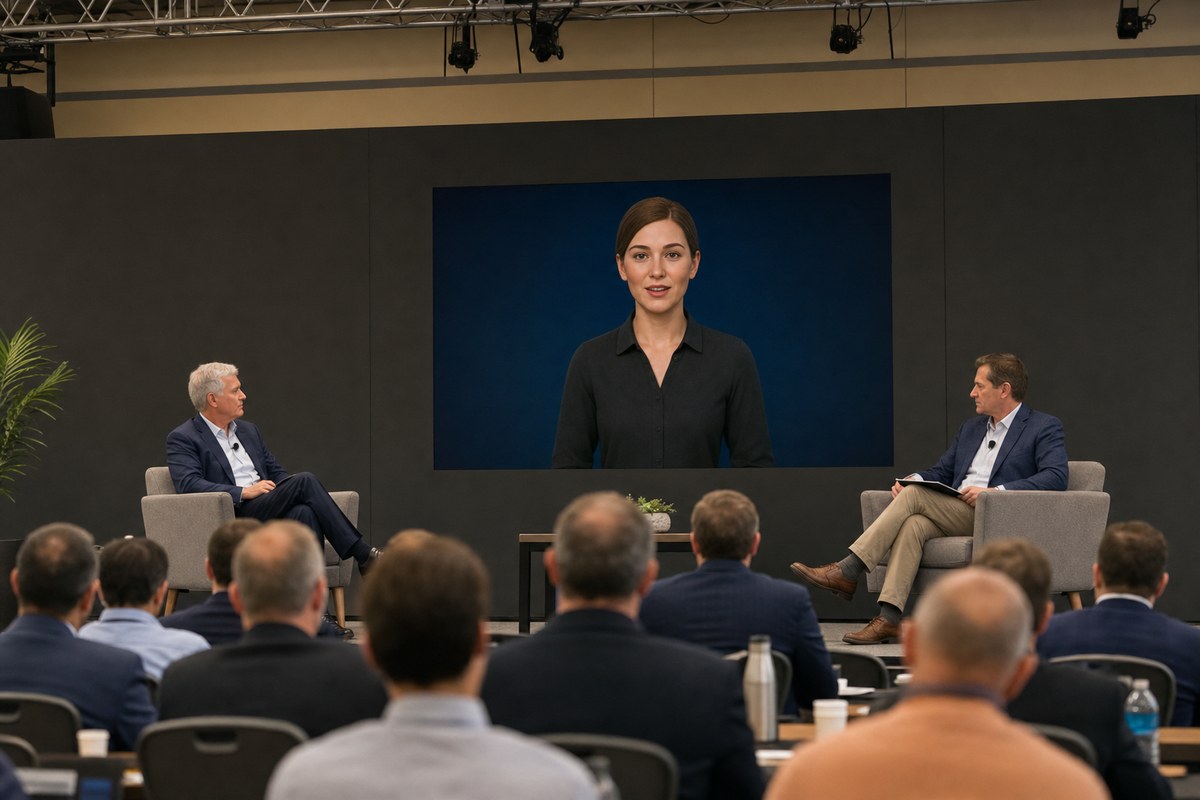
Asked what the industry most misunderstands about AI, Skyler said, "Many believe that AI is just another software feature," and added that AI "doesn't replace humans." Skyler cautioned attendees to "never let AI make the final decision, especially on aviation safety, legality, and customer trust," and urged them to "listen, question, and challenge" AI outputs. Skyler predicted that air charter sales will change the most quickly as AI takes hold, pointing to the technology's ability to locate charter crew and aircraft availability and to identify and resolve conflicts.
Johnson said he hopes the inaugural event will help attendees — including aircraft operators, technology experts, and college students — embrace emerging AI capabilities and shape what comes for the industry. Gibney said students from ERAU and other universities were specifically included because "they don't know what isn't possible" and will therefore push boundaries in developing AI applications for business aviation.
Industry impact & what to watch
Framing an AI agent as a co-presenter alongside a charter-technology CEO and a business-school dean signals how the segment wants AI positioned: as a tool that surfaces options and flags conflicts, with a human retained for the safety, legality, and trust calls. Skyler's own warning against letting AI make final decisions reinforces that boundary rather than blurring it.
Air charter sales are the segment Skyler singled out for the fastest change, since matching crew and aircraft availability and resolving scheduling conflicts are exactly the kind of high-volume, rules-based tasks AI tools are built to accelerate. That is consistent with how charter brokering already works: it depends on real-time visibility into fleet and crew status, which is where automation adds the most measurable value first.
The inclusion of college students in the symposium's design, explained by Gibney as a way to bring in people unconstrained by assumptions about feasibility, points to where new applications may originate rather than from established operators. Whether that translates into deployed tools depends on what Tuvoli, ERAU, and NATA build on from this inaugural event.