Piper Warrior vs. Piper Archer: How Two PA-28 Variants Compare on Specs, Cost and Training Suitability
Why It MattersThe two-tier PA-28 lineup illustrates how flight schools balance operating cost against payload and performance when standardizing primary and instrument training fleets.
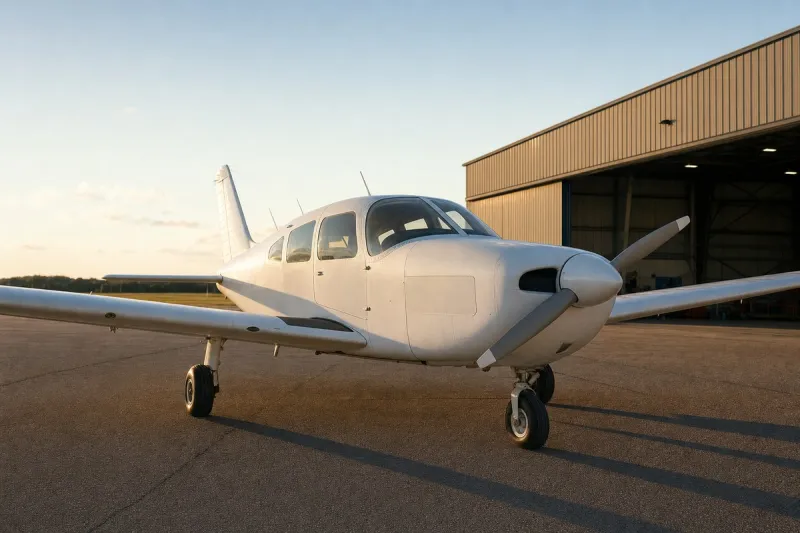
The Piper Warrior (PA-28-161) and Piper Archer (PA-28-181) are the two surviving four-seat, fixed-gear variants of the Cherokee family, sharing the same semi-tapered wing, tail, fuselage, cabin, fixed tricycle gear and 48 usable gallons of fuel. The main difference lies in the engine: the Warrior uses a four-cylinder Lycoming O-320 producing 160 horsepower, while the Archer carries the longer-stroke O-360 producing 180 horsepower. Piper introduced the semi-tapered wing in the mid-1970s, fitting it first to the 160 hp Warrior and then, a couple of years later, to the 180 hp Archer II.
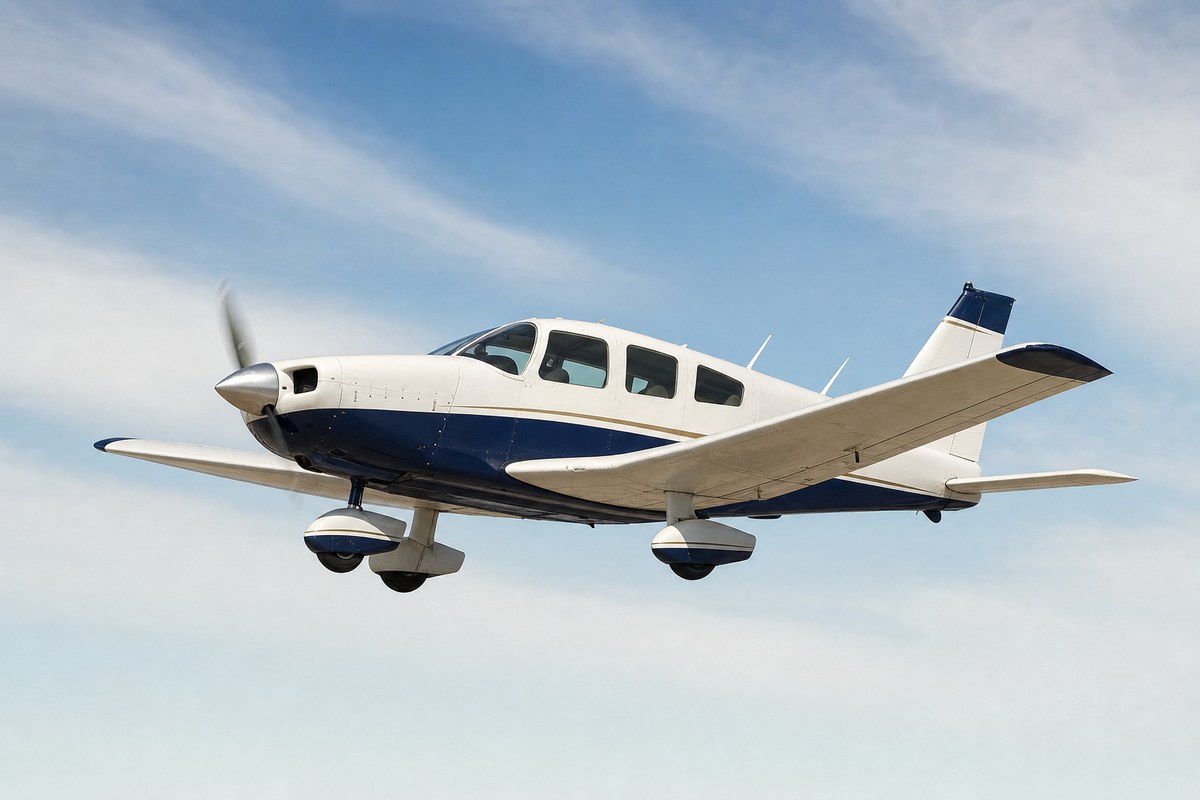
The Archer is certified to a higher maximum takeoff weight of approximately 2,550 lb against roughly 2,440 lb for a Warrior III, and cruises at about 125 to 130 knots true airspeed at 75 percent power, a few knots faster than the Warrior — a difference of about three minutes on a Van Nuys-to-Santa Barbara flight. Neither aircraft is classed by the FAA as high-performance or complex, so moving between the two requires only an instructor checkout and an insurance sign-off rather than an FAA endorsement. Useful load favours the Archer by roughly 100 lb, at approximately 850 to 950 lb versus 800 to 850 lb for the Warrior, a margin that with 48 gallons of fuel aboard can determine whether three adults with bags need a fuel stop.
The Warrior burns about two gallons per hour less than the Archer, costs less to purchase and insure, and is widely used as a primary trainer for private and instrument students since its lesson profile does not need the Archer's extra load and climb. A pilot trained on the Warrior can check out in an Archer in approximately one hour. The current production Archer LX and academy-oriented Archer TX come with a Garmin G1000 NXi glass panel, and in 2019 Piper introduced the Pilot 100i, a lower-cost trainer on the Archer airframe with a 180 hp Continental engine and a Garmin G3X Touch display aimed at flight academies buying in volume.
Classic analogue-panel Warrior II and III and Archer II and III aircraft remain the backbone of most training fleets. Pilots flying from high-elevation airports or into mountains in summer draw on the Archer's additional power on most flights, while at sea-level fields the Warrior's 160 hp is generally sufficient.