UK Agency Awards £15.7M Contract to BAE Systems Unit Prismatic to Test Beamed Power for Solar Stratospheric Aircraft
Why It MattersThe project shows how high-altitude pseudosatellites are pursuing power-supply innovation to close the endurance gap with orbital satellites, potentially reshaping payload and coverage economics for long-duration platforms.
What happened
The UK's Advanced Research and Invention Agency (ARIA) has awarded a £15.7 million ($21.2 million) contract to Prismatic, a BAE Systems subsidiary, to test whether a ground-based energy beam can keep a solar-powered stratospheric aircraft flying continuously through dark northern hemisphere winters. The contract was announced on September 15.
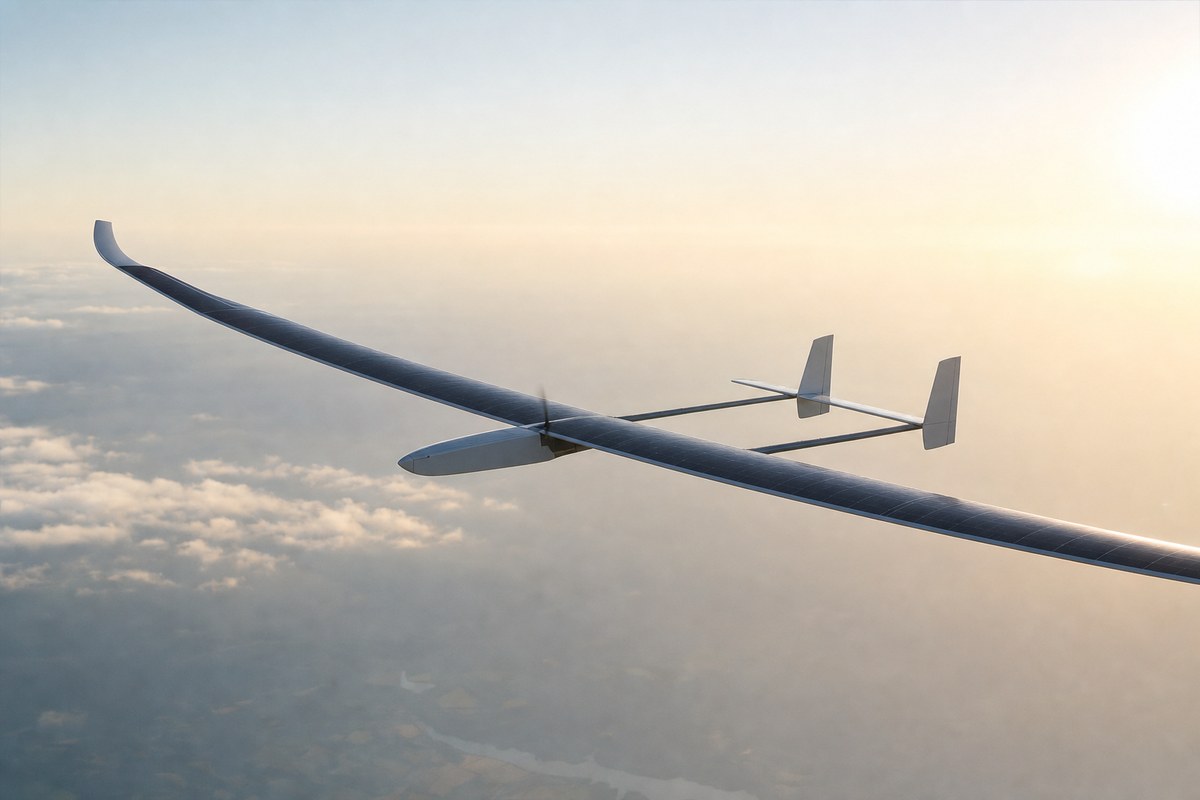
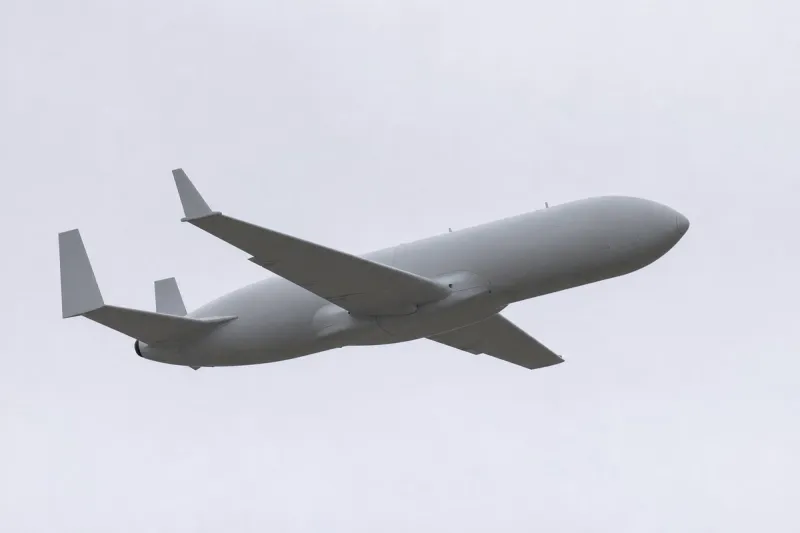
The program will use Prismatic's PHASA-35 uncrewed aircraft as the flight demonstrator. Solar-powered high-altitude pseudosatellites such as PHASA-35 recharge their batteries during daylight to remain aloft overnight, a limitation at higher latitudes during winter when days are short. Prismatic argues that beaming power from the ground to the aircraft would eliminate that constraint, enabling continuous flight for months at a time. Working with British firms Space Solar and MuWave, Prismatic plans to direct a controlled energy beam from a ground station to a receiver integrated into the PHASA-35's wing, which would convert it to electricity to power the aircraft and charge its batteries. The company described the approach as using microwave frequencies already common in aviation, satellite communications, and radar.
The three-stage programme runs 3.5 years and is funded through ARIA's Enduring Atmospheric Platforms effort, which supports long-endurance platforms for high-altitude communications. It concludes with an integrated flight demonstration. PHASA-35 has a wingspan of 35 metres (115 feet), weighs 150 kilograms (330 pounds), and first reached the stratosphere in 2023, climbing above 66,000 feet. The aircraft can carry up to 15 kilograms (33 pounds) of sensors for surveillance, communications, and Earth observation. Beyond enabling year-round flight, the power-beaming system could also reduce the aircraft's onboard battery arrays, freeing payload capacity. "PHASA-35 has already proven its worth in the stratosphere as a low-cost alternative to satellites, and now this exciting project will explore whether we can make it even more capable," said Prismatic CEO Bob Davidson.
Industry impact & what to watch
This effort belongs to a broader push to extend the endurance of high-altitude pseudosatellites, platforms pitched as cheaper alternatives to orbital satellites for communications and Earth observation. The core constraint for solar-powered designs has always been the day-night cycle: battery capacity dictates how long an aircraft can loiter through darkness, and at higher latitudes in winter that math gets worse, not better. Power beaming, if it works, attacks that constraint directly rather than through incremental battery or solar-cell gains.
How this segment actually works is that payload capacity and endurance trade against each other on a fixed airframe weight budget, here 150 kilograms with 15 kilograms for sensors. Reducing onboard battery mass through external power delivery would free that budget for more sensors or communications equipment, which is the commercial argument for pseudosatellites in the first place: persistent coverage without the cost of a satellite launch.
What happens next is that the three-stage, 3.5-year programme has to prove the beam-to-receiver link works reliably enough at altitude before the concluding integrated flight demonstration, since a ground-based microwave link introduces its own dependency on weather, alignment, and ground infrastructure that a purely solar aircraft does not carry.