Panama's AITSA opens prequalification to find private operator for David and Río Hato airports
Why It MattersThe structure shows how airport concessions can separate ownership and traffic risk from operations, with government retaining assets and demand exposure while bidders compete on fee terms alone.
What happened
Tocumen International Airport, S.A. (AITSA) has launched a prequalification process to hire a private operator to run two Panamanian regional airports — the Enrique Malek terminal in David and the Scarlett Martínez terminal in Río Hato — under a 10-year concession endorsed by Panama's Cabinet Council.
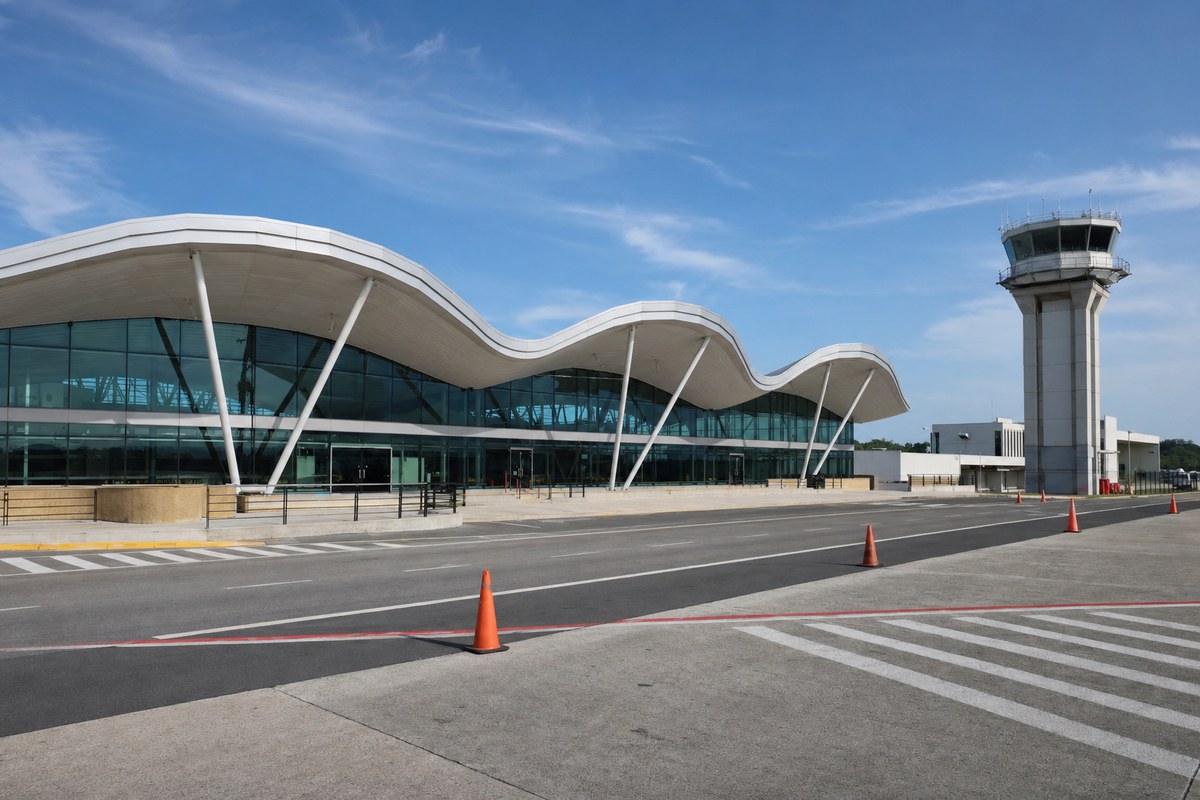
AITSA will retain ownership of both facilities and finance a US$25 million investment package to improve operational capacity, plus a further US$5 million projected for equipment replacement over the concession term. The operator will collect all commercial revenues, an annual operation and maintenance fee to cover the operating gap, and 30% of airport charges tied to new routes it secures. The private sector will not assume traffic demand risk, and air traffic control, immigration, customs and airport security will remain under state control.
Official records show both terminals closed 2025 with combined revenues of US$3.04 million against expenses of US$7.64 million, producing a combined loss of US$4.60 million. Combined passenger traffic at the two airports reached 398,000 in 2025: 333,100 through David on domestic flights and approximately 65,000 through Río Hato, which serves the international market of the Pacific Riviera.
"This authorization allows us to open a competitive process to find an experienced operator able to develop both airports according to the potential of each region," said José Ruiz Blanco, AITSA's general manager. "Ownership will remain with AITSA and our goal is to improve the operation, develop commercial activity and create the conditions to attract new routes," he added.
The tender schedule sets technical site visits for October 2026, credential submission in November 2026, and the launch of a request for proposals in January 2027, with a contract award targeted for March 2027 to the bidder offering the lowest operation and maintenance fee.
Terms of the concession
The structure splits risk and reward in a specific way: AITSA keeps title to both airports and funds the capital program itself, while the winning operator is paid through commercial revenue, an operating-gap fee, and a 30% cut of charges from any new routes it brings in. Awarding the contract to whoever bids the lowest operation and maintenance fee turns the competition into a price contest over that single variable, since the state has already fixed the investment amounts and kept air traffic control, immigration, customs and security functions outside the deal.
Industry impact & what to watch
Separating asset ownership from operating responsibility is a recognizable way for a state aviation authority to bring in private management expertise without transferring the underlying infrastructure or the downside of weak traffic. Here the government absorbs both the US$25 million investment and the demand risk, leaving a would-be operator to compete purely on the fee it will charge to close the gap between commercial income and the airports' cost base, which stood at a combined US$4.60 million loss in 2025.
For this kind of concession, the commercial upside an operator can realistically count on rests heavily on whether new routes materialize, since 30% of route-linked airport charges is the only variable-revenue tool explicitly built into the deal — everything else is a fixed fee structure layered on top of two airports with modest passenger bases of 333,100 and roughly 65,000 in 2025. Whether experienced regional operators see enough margin in that structure to bid aggressively will only become clear once prequalified bidders respond to the request for proposals due in January 2027.
The next milestones to watch are the technical site visits in October 2026 and the credential submissions in November 2026, which will show how many operators consider the Enrique Malek and Scarlett Martínez terminals worth pursuing before the contract award targeted for March 2027.