Private Equity Consolidation Reshapes U.S. General Aviation Parts Market, Raising Competition and Supply Concerns
Why It MattersPrivate-equity roll-ups in niche aftermarket segments can concentrate supply of safety-critical parts, and without a licensing mechanism for STCs, consolidation risks single-source dependencies that shape pricing and availability for aging fleets.
What happened
A report prepared for AOPA and industry stakeholders in April 2026 documents accelerating private equity consolidation in the U.S. general aviation aftermarket, centered on Parts Manufacturer Approvals (PMAs) and Supplemental Type Certificates (STCs) for legacy piston aircraft. Between October 2021 and December 2025, Los Angeles-based Vance Street Capital built the Victor Sierra Aviation Holdings platform through at least six distinct acquisitions in the light GA parts sector.

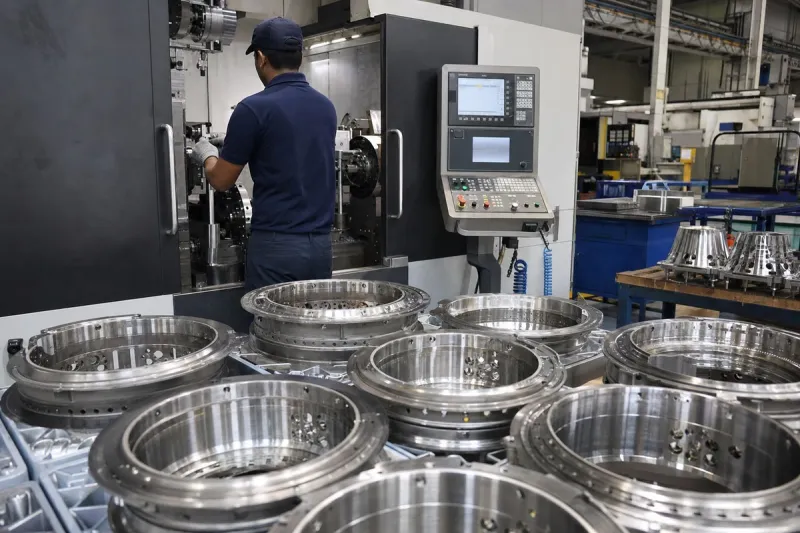
The platform now controls an estimated catalog of more than 3,500 proprietary PMA parts and more than 40,000 total replacement parts distributed to more than 45,000 unique customers, covering Cessna, Piper, Beechcraft, Grumman, and Ag-Cat aircraft across airframe, engine, fuel, ignition, filtration, and wheel/brake systems. The platform began in October 2021 with the acquisition of McFarlane Aviation, Inc., a family-owned business founded in 1970 and headquartered in Baldwin City, Kansas. At the time of acquisition, McFarlane held approximately 3,000 proprietary PMA parts and distributed more than 30,000 consumable parts to over 40,000 customers worldwide.
In 2022, Vance Street added Tempest Aero Group (TAG), a North Carolina-based manufacturer of ignition, filtration, fuel, and pneumatic components. Subsequent acquisitions included Airforms, Inc., a Wasilla, Alaska-based manufacturer of engine baffles and Cessna components. McFarlane has also independently executed bolt-on transactions, acquiring the PMA product lines of South Seas Ventures in December 2025.
The FAA estimates the U.S. GA fleet averages more than 50 years old, and noted in a 2023 publication that the fleet is being operated well beyond the flight hours and years envisioned during original aircraft design. New piston single aircraft now exceed $500,000 in price. The global PMA market was valued at approximately $11.4 billion in 2024, with North America accounting for approximately 40% of market share.
The HEICO comparison
The report cites HEICO Corporation, which grew through serial commercial aviation PMA acquisitions to a market capitalization exceeding $36 billion as of early 2026 and completed its largest-ever acquisition when it purchased Wencor Group for approximately $2.05 billion in 2023, as an industry model showing that scale PMA platforms can also reduce prices rather than exclusively raise them. The report notes that the GA sector lacks a direct equivalent of HEICO's cost-competitive model.
Proponents of consolidation argue it preserves at-risk product lines from founder-led companies with no succession plans. Critics raise concerns including reduced competition on individual PMA part numbers, potential post-acquisition price increases, diminished incentive to develop competing parts, and growing concentration of aftermarket supply in a small number of private equity-backed platforms.
Industry impact & what to watch
This consolidation pattern reflects a wider private-equity strategy of assembling fragmented niche manufacturing sectors into scaled platforms, applied here to a GA parts market shaped by an aging fleet and persistent, inelastic demand for legacy replacement components. Because PMA approvals and STCs attach to specific part numbers and aircraft modifications rather than to a company, a buyer who acquires several small approval-holders can end up as the sole source for parts that once had multiple competing suppliers.
The regulatory gap the report identifies is structural rather than incidental: the FAA has no mechanism to compel an STC holder to license its approval to a competitor, so ownership consolidation can translate directly into supply consolidation without any additional regulatory step. HEICO's trajectory shows that scale in this kind of market does not have to mean higher prices, but the report is explicit that general aviation currently lacks an operator of that scale and cost discipline.
What happens next depends on whether policymakers act on the report's warning before further bolt-on deals extend Victor Sierra's catalog or prompt comparable platforms elsewhere. Absent a licensing mechanism for STCs, the report warns that continued consolidation could reduce part availability, raise prices for lower-income aircraft owners, and accelerate the decline of backcountry and legacy aircraft fleets.