FAA Issues Ground Stop for Washington National Airport Flights Amid Thunderstorms
Why It MattersGround stops tied to destination weather push delay onto departure airports far from the storm, so a single congested airport can disrupt flight schedules across several northeastern and Canadian centers.
What happened
A ground stop for flights to Washington National Airport took effect at 2.55 pm local time (1955GMT) and was scheduled to remain in place until 4.15 pm (2115GMT). In a National Airspace System advisory, the FAA put the chance of an extension at 30% to 60%.

The order applies to flights departing from areas served by the New York (ZNY), Cleveland (ZOB) and Boston (ZBW) air traffic control centers. It also covers six Canadian airports: Halifax (CYHZ), Ottawa (CYOW), Montreal (CYUL), Toronto (CYYZ and CYTZ) and Quebec City (CYQB).
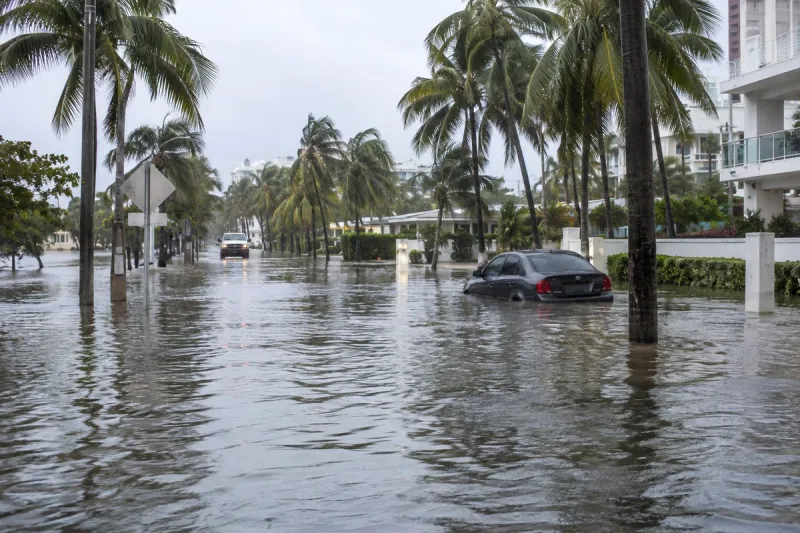
The US National Weather Service forecast a 100% chance of precipitation at the airport on Thursday, with easterly winds of 39 to 42 kilometers per hour (24 to 26 mph) and gusts of up to 72 kph (45 mph). For Thursday night, it forecast rain before 7 pm local time, then scattered showers until 4 am Friday, with an 80% chance of precipitation. Easterly winds of 18 to 27 kph (11 to 17 mph) were forecast to become southwesterly after midnight, with gusts of up to 51 kph (32 mph).
Industry impact & what to watch
A ground stop holds aircraft at their origin airports until the destination can accept arrivals again. The cost therefore lands on departure points well away from the weather. Here that means three US en route centers and six Canadian airports, so a disruption at one airport spreads across a wide part of the northeastern and Canadian network.
For business aviation, the practical effect is that a flight bound for the affected airport can be held on the ground at its departure point even when conditions there are fine. Charter and fractional operators generally plan around this by watching FAA advisories alongside destination forecasts and keeping alternate airports in view.
The next marker is the 4.15 pm local time expiry. The FAA's own 30% to 60% extension estimate frames how likely it is that the hold runs past that time, and the forecast of showers lasting until 4 am Friday shows the weather itself is not expected to clear quickly.