Challenger 350 N443DB Lands at Boeing Field After 2-Hour 22-Minute Flight From Banning
Why It MattersFlight-tracking data on a single owner-operated super-midsize jet shows how private aircraft usage, fuel burn and emissions can be reconstructed from public registration and movement records.
What happened
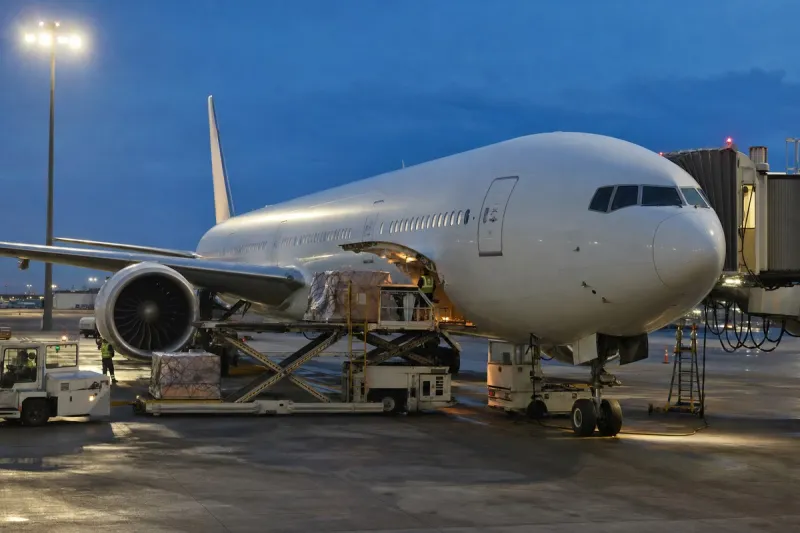
Bombardier Challenger 350 N443DB, a 2015 aircraft, landed at Boeing Field in Seattle on November 24 after a flight from Banning. It departed Banning at 23:52 UTC and touched down at 03:11 UTC, a block of 2 hours 22 minutes. The great-circle distance between the two airports is 865 nautical miles.

The jet reached a top ground speed of 509 knots and a highest altitude of 41,025 feet. Estimates put the flight's fuel burn at about 830 US gallons and its CO2 output at roughly 7,973 kilograms.
The aircraft is registered to Geoduck Aviation II LLC, with Columbia Pacific Management as registered agent and Stan Baty as officer, at 1910 Fairview Avenue East in Seattle, the same address as Columbia Pacific Management. It is associated with Daniel Baty, who chaired Holiday Retirement from 1987 until Fortress Investment Group bought it in 2007 for more than $6 billion, and who founded Emeritus Corporation in 1993, which grew into the country's largest for-profit assisted-living chain before merging into Brookdale Senior Living in 2014.
The aircraft and its home base
The aircraft, serial number 20552, is an upgrade to the Challenger 300 with improved engines and avionics. The Challenger 350 is a super midsize jet with a range of 3,200 nautical miles, a ceiling of 45,000 feet, seating for up to 10 passengers and a top speed of Mach 0.83 (470 knots). Its estimated fuel burn is 250 US gallons per hour.
Boeing Field is the aircraft's home base, about 5 miles from the registered address. Its usual destinations include Palm Springs, Hailey, Santa Ana, Boise, Scottsdale and Reno.
The previous 30 days
This was the 11th tracked landing at Boeing Field in the 30 days before the flight, and the previous Seattle landing came on the same day, about 1 hour earlier.
In those 30 days the aircraft flew 12 flights totaling 28.7 hours in the air, covering about 11,344 nautical miles and producing an estimated 68,828 kilograms of CO2. The longest leg was from Vashon to Teterboro on November 16, covering 2,086 nautical miles.
Industry impact & what to watch
Records like these show how much of an owner-operated jet's pattern can be read from public sources: the registration address, the officer behind the holding company, the home airport and the repeat destinations. For a super midsize aircraft flown out of its home base, the picture is of a short-hop, regional-heavy usage profile, with an occasional transcontinental leg.
The emissions figures illustrate why per-flight CO2 estimates have become a recurring reference point in discussion of private aviation. A single 865-nautical-mile leg at roughly 7,973 kilograms, set against 68,828 kilograms across 12 flights in a month, shows how quickly modest sector lengths accumulate when an aircraft flies often.
The next data point is simply the aircraft's following movements from Boeing Field, which will show whether the recent tempo of roughly one flight every two to three days continues.