Argentina's ANAC Restricts Airspace Nov 8-11 for Pope Leo XIV Visit, With Closure Windows at Aeroparque, Córdoba and Ezeiza
Why It MattersPapal-visit closures show how state security overlays can displace scheduled and general aviation across a metropolitan system for days, with airline routing choices and runway-works timing deciding who absorbs the disruption.
What happened
Argentina's National Civil Aviation Administration (ANAC) published AIP Supplement A 255/2026 on November 1, establishing temporary airspace restrictions in the Ezeiza and Córdoba FIRs from November 8 to 11, 2026. The stated purpose is to "increase airspace defence" during the visit of Pope Leo XIV. The measures were agreed on October 29 at the request of the Foreign Ministry.
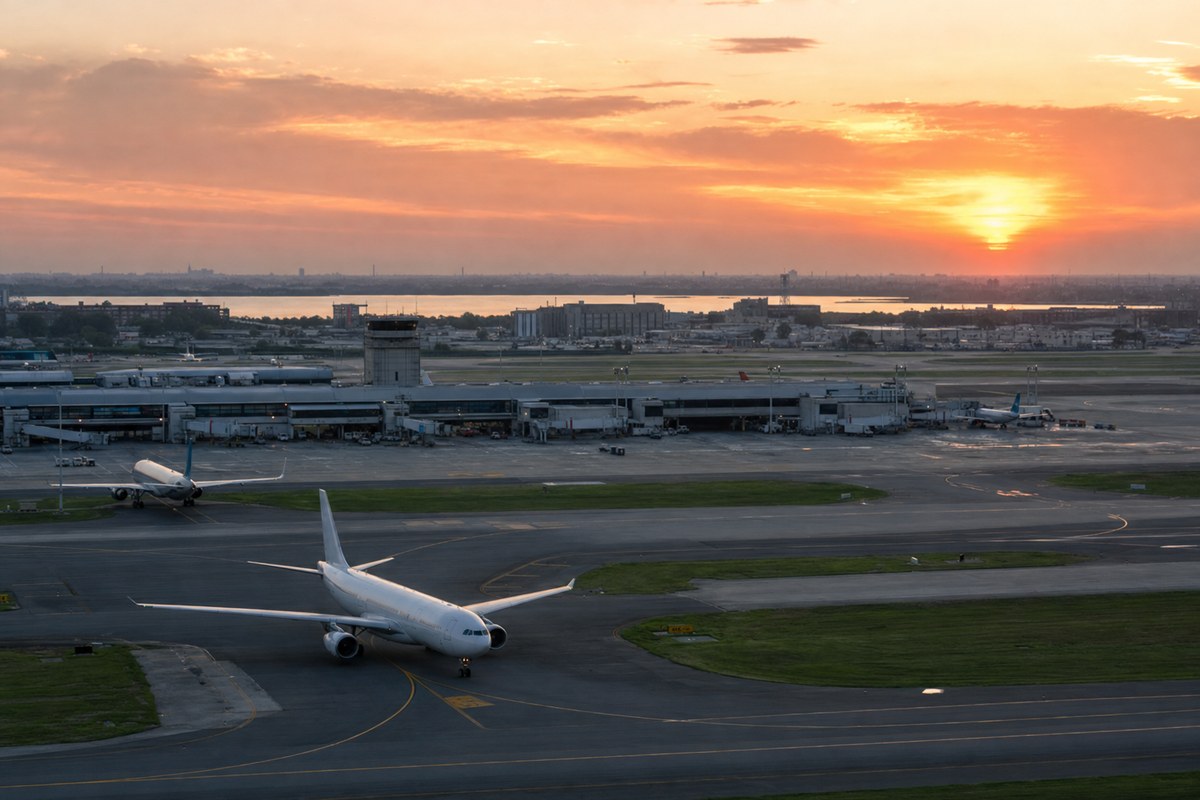
The supplement sets two-hour closure windows at Aeroparque Jorge Newbery (SABE), Córdoba International Airport (SACO) and Ezeiza (SAEZ), tied to each movement of the papal flight or to mass gatherings. Aeroparque accumulates 8 hours of closure over three days, and Córdoba 4 hours on Tuesday, November 10. The schedule includes Aeroparque 15:50–17:50 on Sunday 8 for the pope's arrival from Montevideo, Aeroparque 11:15–13:15 on Monday 9 for the Mass at the Monumento de los Españoles in Palermo, and Aeroparque 06:30–08:30 plus Córdoba 07:30–09:30 on Tuesday 10 for the flight between the two cities.
Takeoffs and landings are suspended at all uncontrolled public and private aerodromes, heliports and declared suitable sites (LAD/LADH) within the BAIRES and Córdoba TMAs. Drones (UAS/RPAS), flight schools, instruction and training flights, paragliders, paramotors, gliders, balloons, parachuting and other recreational or sporting flying are banned in those sectors during the restriction periods. Only controlled flights with ATS authorisation and an assigned transponder code, with origin or destination at SABE, San Fernando (SADF), SAEZ or SACO, may operate in the uncontrolled airspace of the TMAs.
The supplement adds to SUP A 249/2026, published October 24 and replacing A 248, which keeps in force restricted zones (ROZ) from the ground to unlimited height, where only aircraft of the Armed Forces, security forces and government agencies may operate at set times. ROZ BUE covers Ezeiza, Aeroparque, San Fernando and Morón; Córdoba lies within ROZ CBA. Authorised aircraft must file a flight plan, carry a transponder and keep two-way contact with ATC. Non-compliant aircraft are treated as Irregular Air Traffic (TAI) and may be intercepted.
The visit and its calendar
Leo XIV (Robert Francis Prevost, elected May 8, 2025) is making the first papal visit to Argentina in 39 years, since John Paul II in 1987. Main Masses are planned at the Monumento de los Españoles in Palermo, at the FAdeA grounds and the Military Aviation School in Córdoba, and in front of the Luján Basilica.
Public holidays apply nationally on Monday 9, in the City of Buenos Aires and Córdoba on Tuesday 10, and in Buenos Aires province on Wednesday 11.
Airline and runway impact
Ezeiza's Wednesday closure falls on the last day of works on the secondary runway and its intersection with the main one, which run from October 25 to November 11. During those works the main runway has 1,850 m usable instead of 3,300 m.
Aerolíneas Argentinas announced technical stops in Rio de Janeiro for its Madrid and Rome services. American, Iberia and British Airways cancelled operations on those dates.
Industry impact & what to watch
State-security airspace measures of this kind work as a layered overlay: permanent restricted zones stay in force while a time-boxed supplement adds closure windows at the three airports the papal movements touch. For scheduled carriers the cost lands where capacity is already thin. A shortened main runway at Ezeiza combined with a closure window on the same day leaves little room to absorb long-haul rotations, which is why routing and cancellation decisions diverge between carriers.
For general and business aviation the effect is broader than the closure hours. Suspending operations at uncontrolled aerodromes and landing sites across two TMAs, and limiting remaining traffic to ATS-authorised flights with a transponder code and a link to SABE, SADF, SAEZ or SACO, removes most discretionary flying from the region for the period. Operators with positioning, crew or passenger movements in that corridor need the supplement's time windows and the ROZ rules checked against each leg rather than against the airport alone.
The next fixed markers are the dates themselves: the Sunday 8 arrival window at Aeroparque, the Tuesday 10 Córdoba window, and November 11, when both the Ezeiza closure and the runway works end.