ICAO Air Navigation World 2026 to Address Mandatory Air Traffic Flow Management Requirements
Why It MattersThe shift signals that flow management is becoming a baseline compliance item across air navigation services, pushing states and ANSPs toward common digital and procedural standards rather than locally optimized practices.
What happened
The International Civil Aviation Organization has announced that its Air Navigation World (ANW) 2026 conference will include a dedicated session on Air Traffic Flow Management (ATFM). ICAO describes this as reflecting a policy shift in which ATFM is treated as an operational necessity for all states, air navigation services providers (ANSPs) and airspace users, rather than an optional practice.

The session is organized around five thematic areas. 'Setting the Scene' covers implementation expectations and challenges, including ICAO's net-zero carbon emissions target for 2050, the Global Air Navigation Plan (GANP, Doc 9750), and regional ATFM developments affecting state regulators, ANSPs and airspace users. 'Milestones towards ATFM' addresses the establishment of ATFM, airspace and airport capacity assessments, airport collaborative decision-making (A-CDM), total airport management (TAM), and Aviation System Block Upgrade (ASBU) threads related to ATFM.
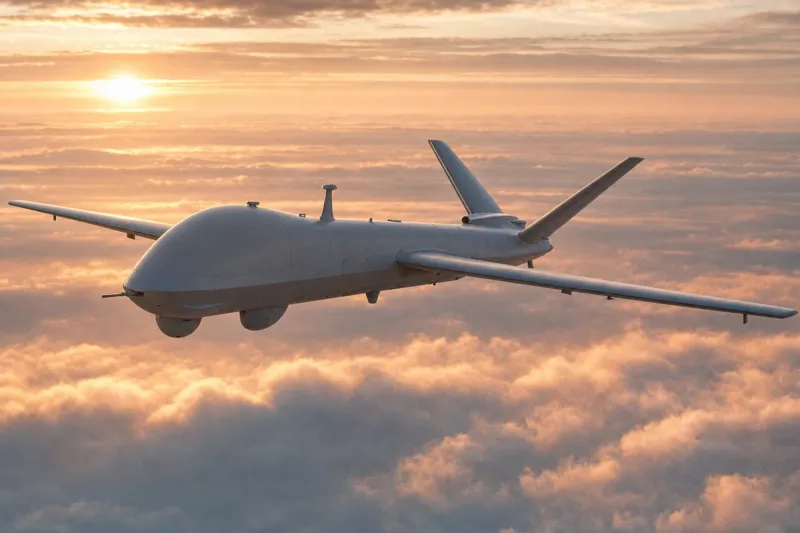
A third block, 'Flight Planning and Information Enablers,' will examine air-ground and ground-ground ATS data link operations, the Flight and Flow Information for a Collaborative Environment (FF-ICE) concept, System-Wide Information Management (SWIM), Aeronautical Information Management (AIM) including NOTAM and the Digital Operational Reporting Information Service (DORIS), connected aircraft, and aeronautical meteorological information. 'Operational Enablers' will cover contingency management frameworks, civil-military cooperation, flexible use of airspace (FUA), free route airspace, performance-based navigation (PBN), continuous climb and descent operations, Project 30/10 and en-route separation minima, and terminal-area separation minima including wake turbulence. 'A Look Towards the Future' will explore the Global ATM Operational Concept (GATMOC), Trajectory Based Operations (TBO), space transport operations, higher airspace operations, and unmanned aircraft systems.
Organizers state that participants will gain practical guidance to support timely implementation of ICAO ATFM requirements and will be better positioned to ensure resilient and optimized services across the aviation system. Enquiries about the session can be directed to anw-atfm@icao.int.
Industry impact & what to watch
This session belongs to a broader push by ICAO to standardize how states and ANSPs manage traffic flow as airspace demand grows, moving ATFM from a patchwork of regional practices toward a common operational baseline. Flow management today works through a chain of capacity assessments, collaborative decision-making between airports and airlines, and data-sharing concepts like FF-ICE and SWIM that let flight and flow information move between stakeholders before and during operations; folding ATFM into that framework means ANSPs and airport operators will need to align contingency planning, civil-military airspace coordination and separation standards with the same expectations.
What remains to be seen is how ICAO translates the session's five thematic areas into binding requirements versus guidance material, and how states with differing ANSP capacities absorb tools such as A-CDM, TAM and trajectory-based operations on a common timeline. The net-zero 2050 target and the Global Air Navigation Plan referenced in the first thematic block suggest ATFM will be positioned as part of ICAO's wider environmental and capacity agenda, which is worth watching as the conference proceedings and any resulting guidance are published.