Embraer E195-E2 Emerges as Credible Rival to Airbus A220 in the 100–150-Seat Narrowbody Market
Why It MattersThe 100–150-seat narrowbody segment is no longer a one-aircraft field; operators now choose between two modern geared-turbofan designs on acquisition and maintenance cost versus range and capacity.
What happened
Airbus took a majority stake in the Bombardier CSeries program and renamed the aircraft the A220 in July 2018. More than 500 A220s now fly with commercial operators including Delta Air Lines, JetBlue Airways, airBaltic, Air France and Breeze Airways, and more than 550 have been produced in total. Delta is the largest operator.
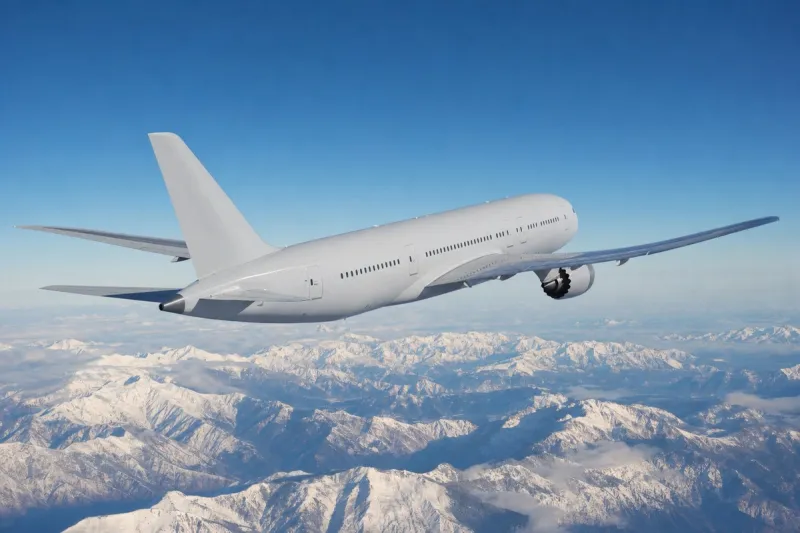
The A220 is a single-aisle, five-abreast design for the 100–150-seat market. The A220-100 has a range of 3,600 nautical miles and the stretched A220-300 3,400 nautical miles; both cruise at 483 knots with a 41,000-foot service ceiling. Two Pratt & Whitney PW15000G geared turbofans, each rated up to 24,400 pounds of thrust, power it, and the flight deck uses Rockwell Collins Pro Line Fusion avionics. Maximum cabin capacity is 135 or 160 passengers depending on the variant.
Embraer launched its E-Jet E2 program in June 2013 as an upgrade of the E-Jet family, aimed at the A320neo, the 737 MAX and the Bombardier CSeries. The E190-E2 entered service with Widerøe in April 2018 and the larger E195-E2 with Azul Linhas Aéreas in September 2019. More than 210 E2 aircraft have been delivered across the two variants, and Embraer has halted production of the shorter E175-E2 because of weak demand.
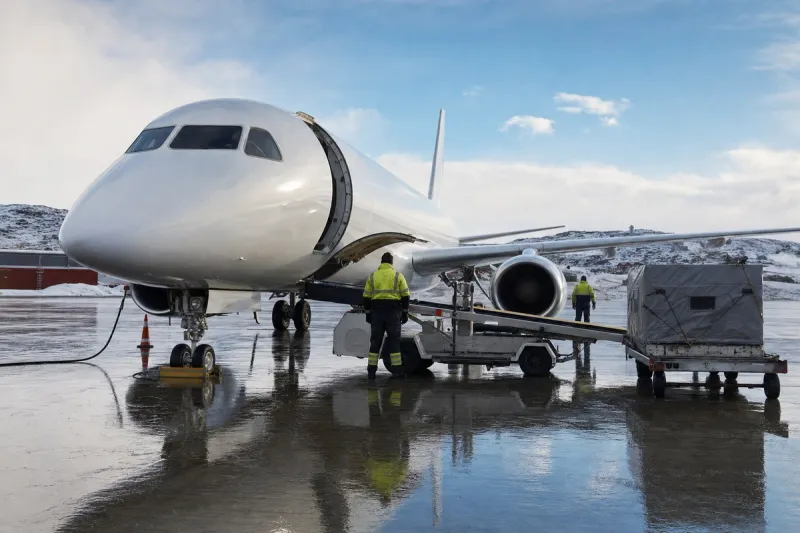
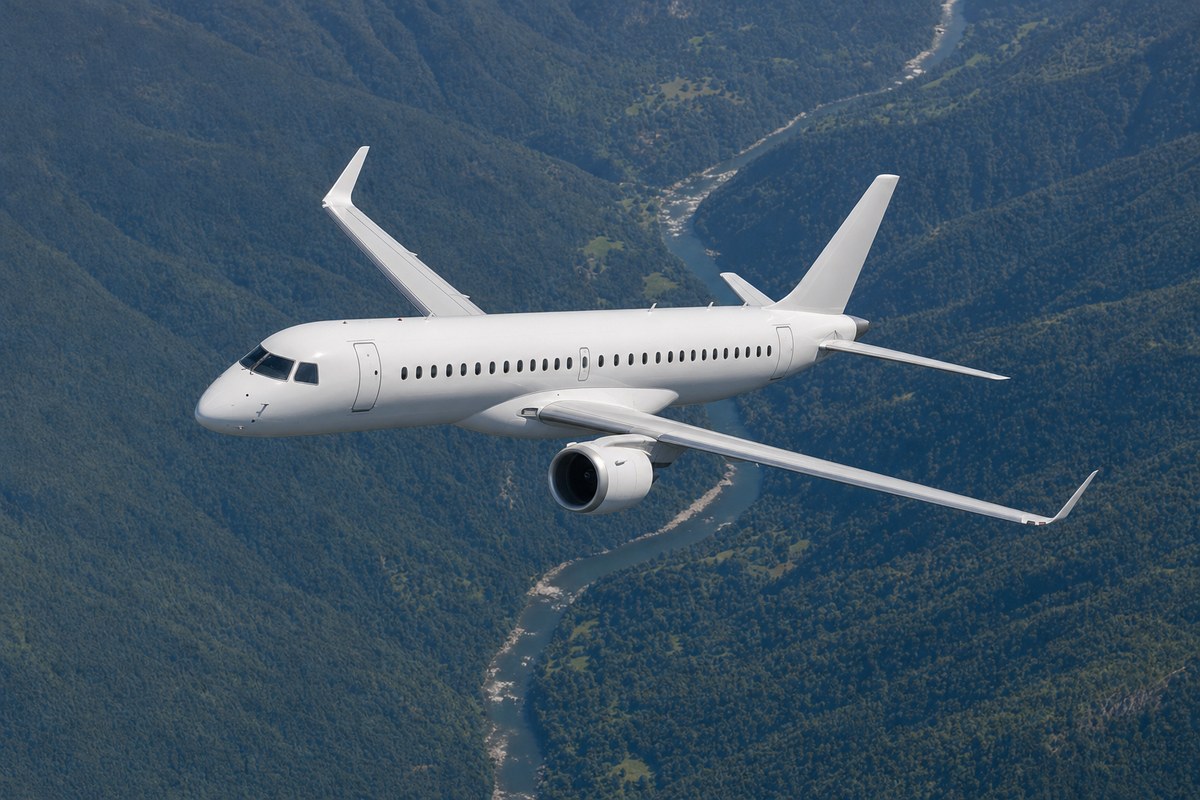
The E195-E2 seats about 120 passengers in a typical layout and up to 150 in a dense one. It has a range of 3,000 nautical miles, a cruise speed of 450 knots and a maximum takeoff weight of 137,800 pounds. Two Pratt & Whitney PW1900G engines of around 23,000 pounds of thrust each power it, with Honeywell Primus Epic 2 avionics and a closed-loop fly-by-wire system. Porter Airlines is the largest operator with more than 50 aircraft, joined by Air Peace, Mexicana de Aviación and Helvetic Airways. Porter Airlines, Azul and KLM Cityhopper are using the type to launch or expand premium regional services.
Industry impact & what to watch
The comparison shows two different answers to the same seat band. The A220 offers more range and a higher maximum capacity, with a larger installed base and a deep bench of major-carrier customers. The E195-E2 trades some of that range and capacity for lower purchase and maintenance cost, and a lighter airframe that favours cost-per-trip economics. For a smaller regional operator, that trade usually decides the question before any marketing does.
The E2 family's own record points to where its demand sits. The E190-E2 and E195-E2 have been delivered in numbers above 210, while the E175-E2 was halted for weak demand, which suggests buyers in this segment are concentrating on the larger of the E2 variants. Porter's fleet of more than 50 aircraft is the clearest sign that one committed launch-scale customer can anchor a type.
In markets such as Europe and Canada, the A220 may be seen as the next step up from the E195-E2 as operators grow premium regional networks. The practical test for any operator is to line up route length, seat count and per-trip cost against both aircraft rather than reading either spec sheet alone.