FAA Issues Wind Ground Delay at Boston Logan, 52-Minute Average Through 1:59 a.m. Tuesday
Why It MattersGround delay programs show how airports manage wind by metering departures at origin rather than absorbing congestion on arrival, trading planning-mean delays against wider individual hold times.
What happened
The FAA placed Boston Logan International Airport (KBOS) under a ground delay program on October 5 due to wind, listing a 52-minute average delay for arrivals. The program ran from 1:30 p.m. Eastern Time on October 5 through 1:59 a.m. Tuesday. A separate figure of 2 hours and 12 minutes also appeared alongside the 52-minute average on the FAA National Airspace System status board; the 52-minute figure represents the planning mean, while the longer figure reflects that some individual arrivals may be held well above the average.
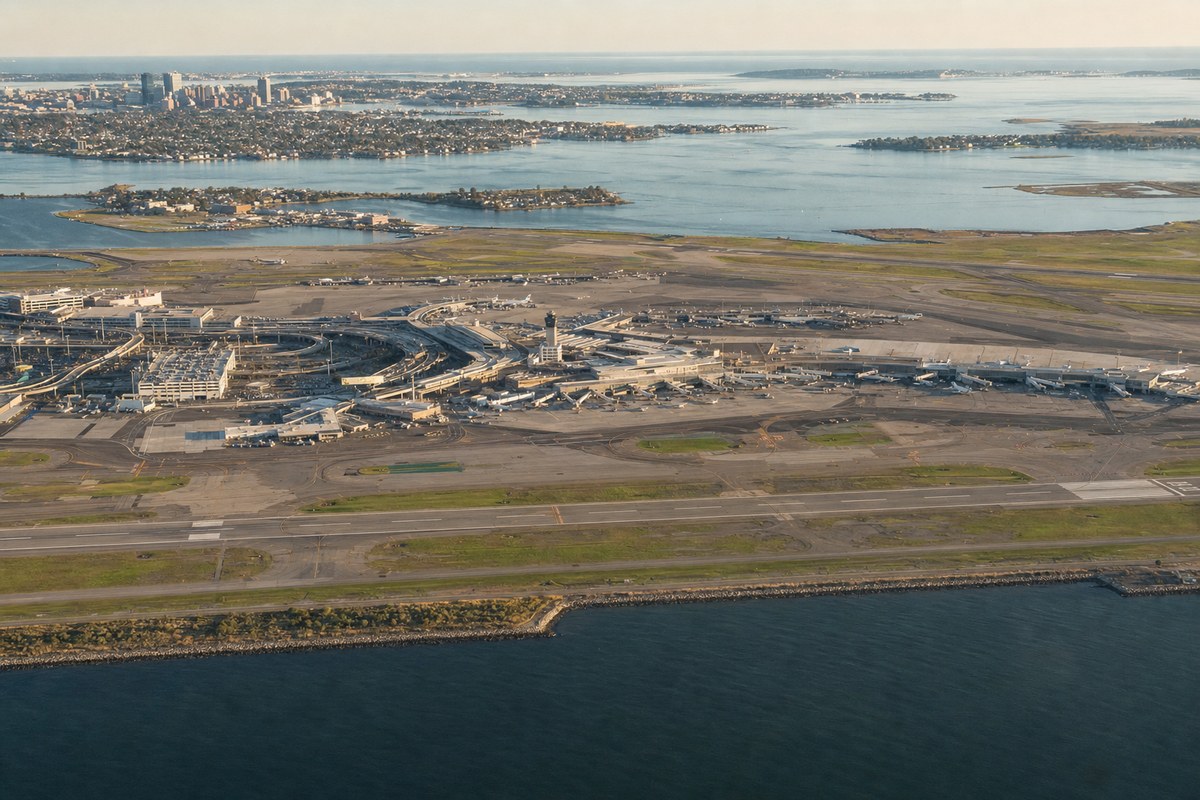
The National Weather Service forecast office in Boston/Norton attributed the delays to a cold front bringing breezy west to west-northwest winds. Its Logan point forecast called for west winds of 9 to 16 mph and gusts as high as 28 mph under sunny skies on October 5, with a high near 66°F. The aviation forecast discussion, issued at 12:01 UTC on October 5, cited west-northwest gusts of 20 to 30 knots expected around 16Z (noon Eastern), with the higher end more likely between 2 p.m. and the evening hours. Observed conditions at KBOS as of 5:54 p.m. EDT showed west winds at 17 mph gusting to 31.
The ground delay program meters departures at origin airports so that aircraft arrive at Logan at a rate the airport can accept. Outbound flights from Logan could depart close to schedule while inbound aircraft were held. The program window covered the afternoon bank, evening transcontinental arrivals, and the last East Coast connections of the night. For Tuesday, the National Weather Service forecast sunny skies with a high near 58°F and west gusts as high as 23 mph, a step down from Monday afternoon's aviation gust range. The FAA had not posted an airline-wide change-fee waiver for Boston as of late Monday morning. This program is separate from the August 23 Logan wind ground delay, which carried a 124-minute average, and from the September 22 runway-work delay.
Industry impact & what to watch
Wind-driven ground delay programs are a routine traffic-management tool: rather than letting aircraft stack up in holding patterns near a congested airport, the FAA slows the flow at the departure end, absorbing the delay on the ground at origin stations instead of in the air over Boston. The gap between the 52-minute planning average and the 2-hour-12-minute figure illustrates how these programs work in practice — most flights clear close to the mean, but a smaller set of arrivals, often those scheduled into the peak gust window between early afternoon and evening, can be held substantially longer.
The comparison with the August 23 program, which carried a 124-minute average, shows that the same wind-related trigger can produce very different delay magnitudes depending on gust strength and timing relative to the airport's arrival banks. Tuesday's forecast, with gusts dropping to 23 mph under sunny skies, points toward conditions easing after the program's 1:59 a.m. end time. Whether airlines issue any change-fee waiver for affected Boston itineraries, which had not been posted as of late Monday morning, is the next detail travelers and schedulers will be watching for.