Runway Length Rules: Why a Charter Jet Can Land Where a Scheduled 737 Cannot
Why It MattersRunway-access economics in charter and fractional flying rest less on published field length than on which dispatch rule and approved airport analysis an operator holds, shaping where each segment can legally fly.
What happened
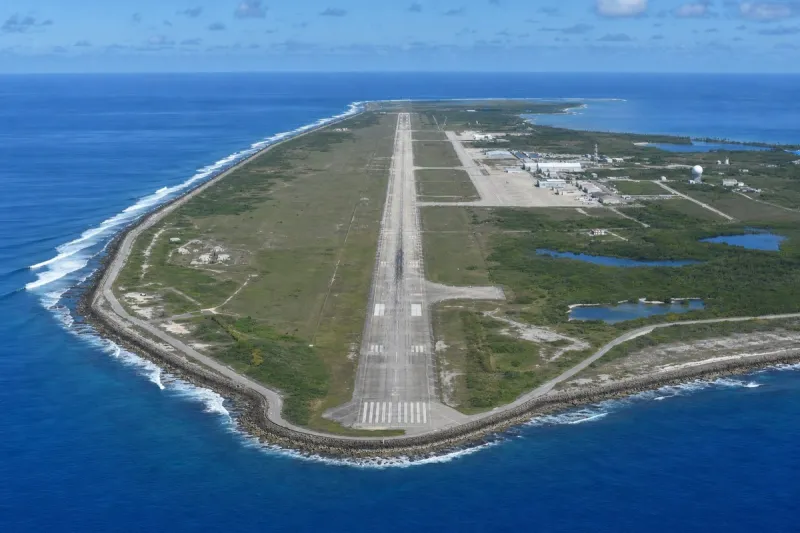
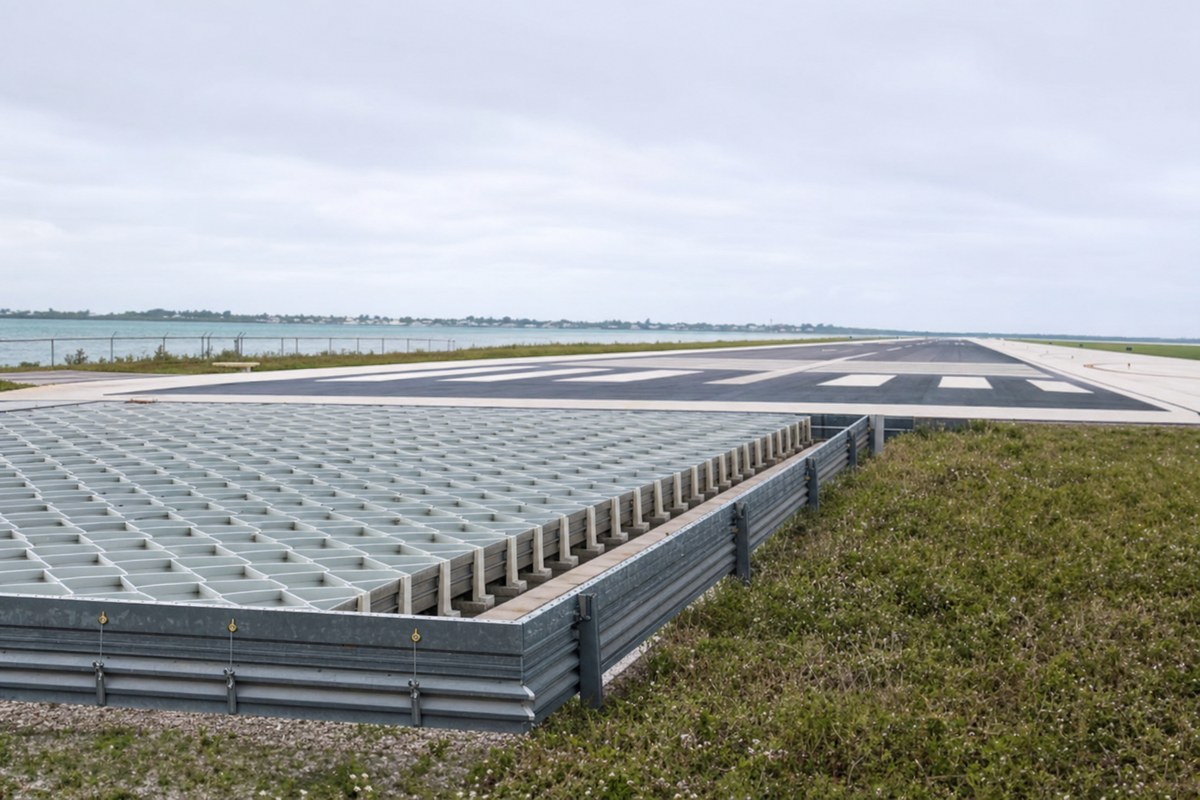
Published runway-length figures routinely diverge from the distance an aircraft is legally permitted to use, a gap that explains why business jets can operate into airports closed to scheduled narrowbody traffic. Key West International (EYW) has a single runway, 09/27, measuring 5,076 ft × 100 ft at a field elevation of 3 ft, with an Engineered Materials Arrestor System (EMAS) bed at each end; its landing distance available (LDA) is 4,801 ft in both directions, 275 ft less than the published runway length. London City Airport (EGLC) lists its runway as 1,508 m (4,948 ft), but take-off run available on both runway 09 and runway 27 is only 1,199 m (3,934 ft), while LDA is 1,494 m on runway 09 and 1,508 m on runway 27 — making departure the binding constraint there rather than arrival.
Under 14 CFR 121.195(b), a scheduled turbojet must be able to stop within 60 percent of the effective runway length, a factor of 1.667 applied to certificated landing distance; paragraph (d) adds a further requirement that, if a wet runway is forecast, the effective length must be at least 115 percent of that already-factored figure, bringing the combined multiplier to approximately 1.917. An aircraft with a demonstrated dry stopping distance of 3,000 ft therefore needs 5,000 ft of runway to be legally dispatched, and 5,750 ft if rain is forecast. By contrast, 14 CFR 135.385(f)(2) permits an eligible on-demand Part 135 operator of a large turbine transport to plan a full stop within 80 percent of effective runway length — a factor of 1.25 — provided the operation is covered by an approved Destination Airport Analysis in the operator's manual and authorised by its operations specifications. On a 5,000-ft runway that is the difference between needing to stop in 3,000 ft and needing to stop in 4,000 ft. European Part-CAT rules apply a similar factoring approach.
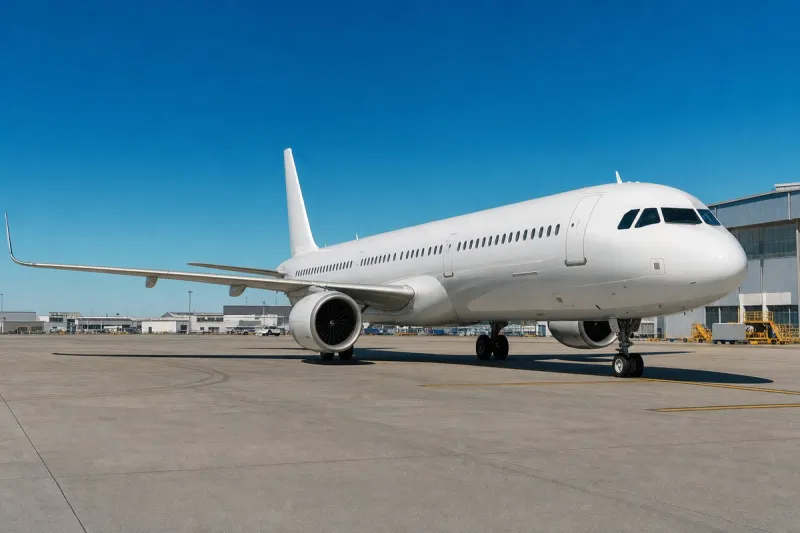
Manufacturer-published figures add a further layer of inconsistency. De Havilland publishes take-off field length for the Dash 8-400 as 1,277 m (4,188 ft) and landing field length as 1,268 m (4,160 ft), both at ISA, sea level, maximum weight. ATR publishes 1,315 m take-off and 915 m landing for the ATR 72-600 at maximum weights but labels these 'distance' rather than 'field length' — a different quantity. Embraer lists take-off field length at maximum weight, ISA, sea level as 1,615 m (5,299 ft) for the E190-E2 and 1,775 m (5,823 ft) for the E195-E2. Boeing and Airbus do not publish a single runway-length figure for types such as the 737 or A320; their airport-planning documents present performance as a function of weight, altitude, temperature and wind, so no single number exists to quote for those types.
Industry impact & what to watch
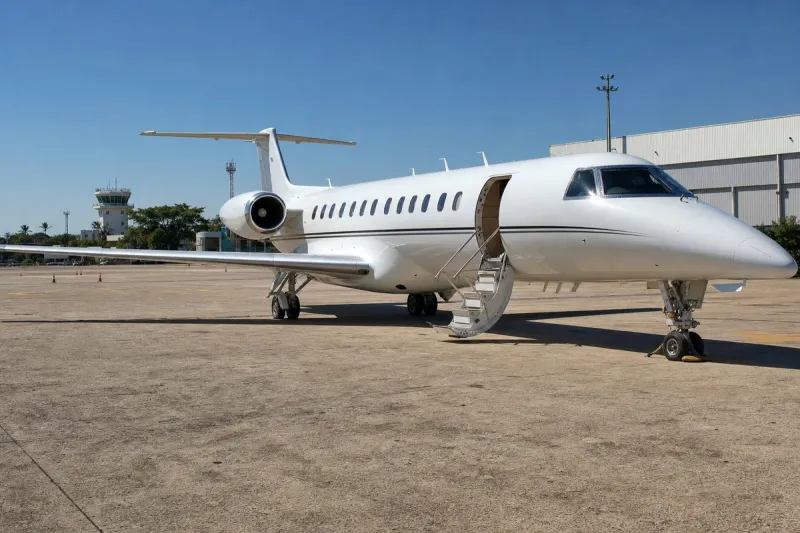
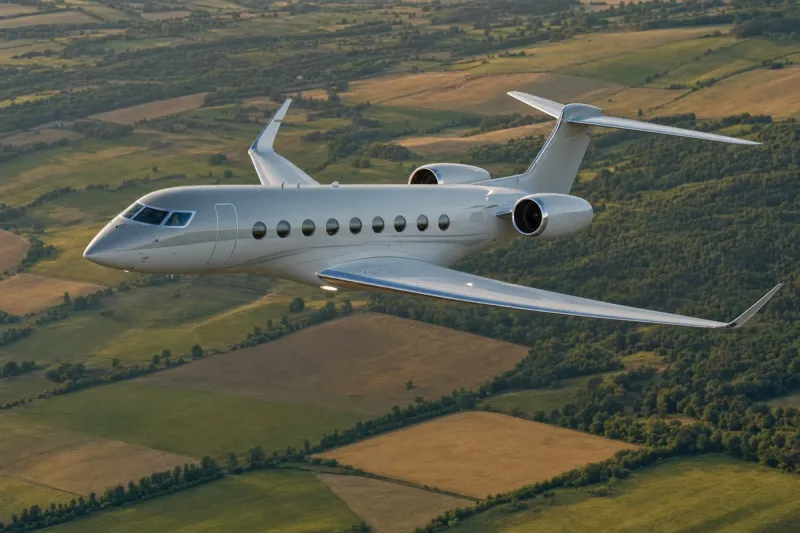
This is a case of regulatory category, not aircraft capability, deciding where a flight can land. A Part 135 charter operator and a Part 121 scheduled carrier flying comparable turbine equipment face different legal thresholds for the same physical runway, because the dispatch math — 60 percent versus 80 percent of effective length — is written into the operating rule each carries, not into the airframe.
The approved Destination Airport Analysis is the mechanism that makes the 80 percent allowance usable: without it in the operator's manual and authorised ops specs, the Part 135 operator reverts to the more conservative standard. That paperwork, not the runway chart, is what ultimately determines airport eligibility for a given operator and tail.
Manufacturer data compounds the uncertainty on the performance side. De Havilland, ATR and Embraer each publish different quantities under similar-sounding labels, and Boeing and Airbus publish no single figure at all for types like the 737 or A320, instead tying landing and take-off distance to weight, altitude, temperature and wind. Anyone comparing published runway figures across types or against an airport's LDA needs to confirm which quantity, which weight assumption and which regulatory basis each number represents before treating it as comparable.