US Aviation Disruption: 6,750 Delays and 283 Cancellations Hit Chicago and New York Hubs
Why It MattersThe episode shows how thin controller staffing and capacity caps at a handful of hub airports can propagate delays across an entire connecting network well beyond the affected cities.
What happened
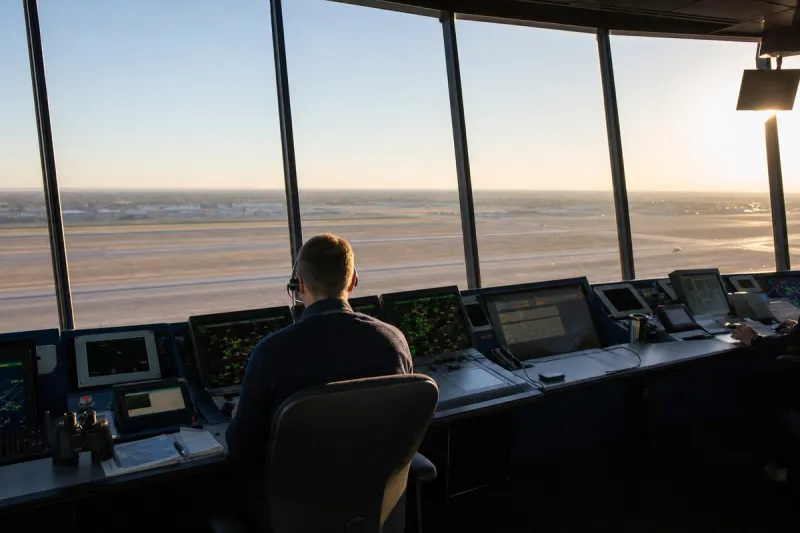
Severe weather, airspace congestion, and air traffic controller staffing shortages combined to produce 6,750 flight delays and 283 cancellations centered on Chicago and New York's major airports in early September 2026, according to aviation tracking data and industry reports. Ground delay programs and temporary ground stops were put in place at Chicago O'Hare and New York-area airports, backing up scheduled services throughout the day.
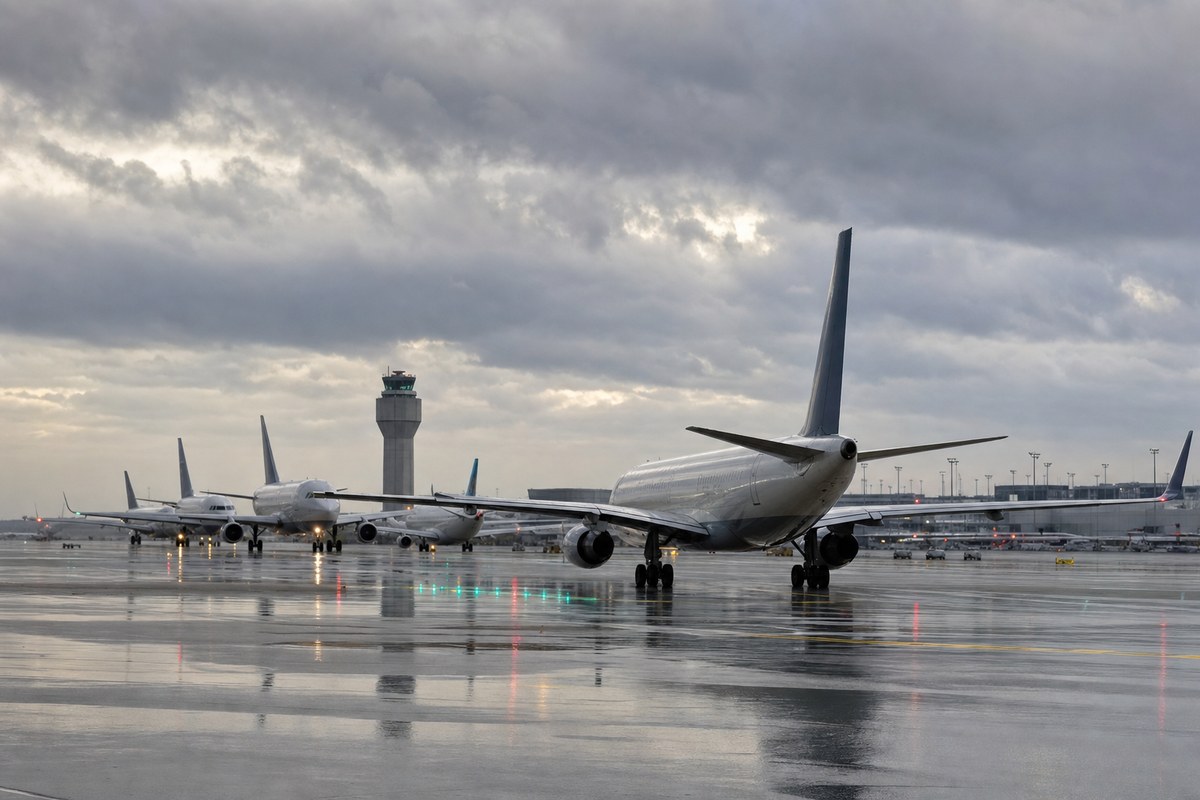
On September 3, FAA advisories indicated that O'Hare was subject to prolonged ground stops linked to thunderstorms and airspace congestion, while New York airports operated under multiple simultaneous delay programs at once. The affected airports were O'Hare and the three primary New York City airports — Newark Liberty, LaGuardia, and John F. Kennedy International.
A 2025 disruption analysis cited by airport planners found O'Hare recorded one of the nation's highest percentages of delayed operations, while all three New York-area airports appeared in the top tier for both delays and cancellations. Public filings and regulatory notices have repeatedly flagged shortages of fully trained air traffic controllers at facilities handling New York airspace. For the 2026 summer season, the FAA set an upper limit on daily operations at O'Hare below theoretical runway capacity, citing surface congestion and past large-scale delay episodes, and at New York airports regulators extended temporary slot relief and encouraged carriers to reduce flights to match staffing conditions at regional air traffic control centers.
Industry impact & what to watch
This episode illustrates how a hub-and-spoke network concentrates disruption risk: when weather or staffing shortfalls hit a small number of high-traffic connecting airports, delays and cancellations ripple outward to secondary-city routes whose aircraft or crews were staged through Chicago or New York. Because O'Hare and the New York airports already carry chronically high delay and cancellation rates, any added stress — a storm system, a ground stop, a staffing gap — has less slack to absorb before it cascades system-wide.
The FAA's response of capping O'Hare's daily operations below theoretical runway capacity and offering temporary slot relief in New York shows how regulators now manage chronic controller shortages by constraining scheduled capacity rather than relying on real-time traffic management alone. That approach trades some schedule reliability for a lower risk of acute meltdowns, but it also means published schedules may understate how tight capacity really is during peak travel periods like Labor Day, when scarce rebooking seats amplify the effect of any cancellation.
Regulatory filings point to newly trained controllers and infrastructure modernization as the mechanisms for eventual relief, while the same filings caution that staffing shortfalls in the Northeast corridor and upper Midwest are expected to persist for several years. Whether the FAA's operational caps at O'Hare and the slot relief measures in New York get extended, tightened, or lifted as controller staffing improves is the next concrete signal to track.