Cessna 152 Costs About $575 Per Flying Hour at 20 Hours a Year, $177 at 100, MiGFlug Study Finds
Why It MattersLight-aircraft ownership cost is driven by fixed charges spread over annual hours, which shows why low-utilisation private ownership is structurally expensive and why shared ownership and the cheaper regulatory categories exist.
What happened
A MiGFlug (Postcombustión) analysis dated Nov 7, 2026 estimates that a Cessna 152 flown 20 hours a year costs its owner about $575 per hour in the air once the capital tied up in the aircraft is counted. Flown 100 hours a year, the same aircraft costs about $177 per hour. The study priced six ways to own an aircraft, from a backpack paramotor to a four-seat Cessna 172, using manufacturer fuel-burn data, published TBOs, real listings and November 2026 fuel prices.
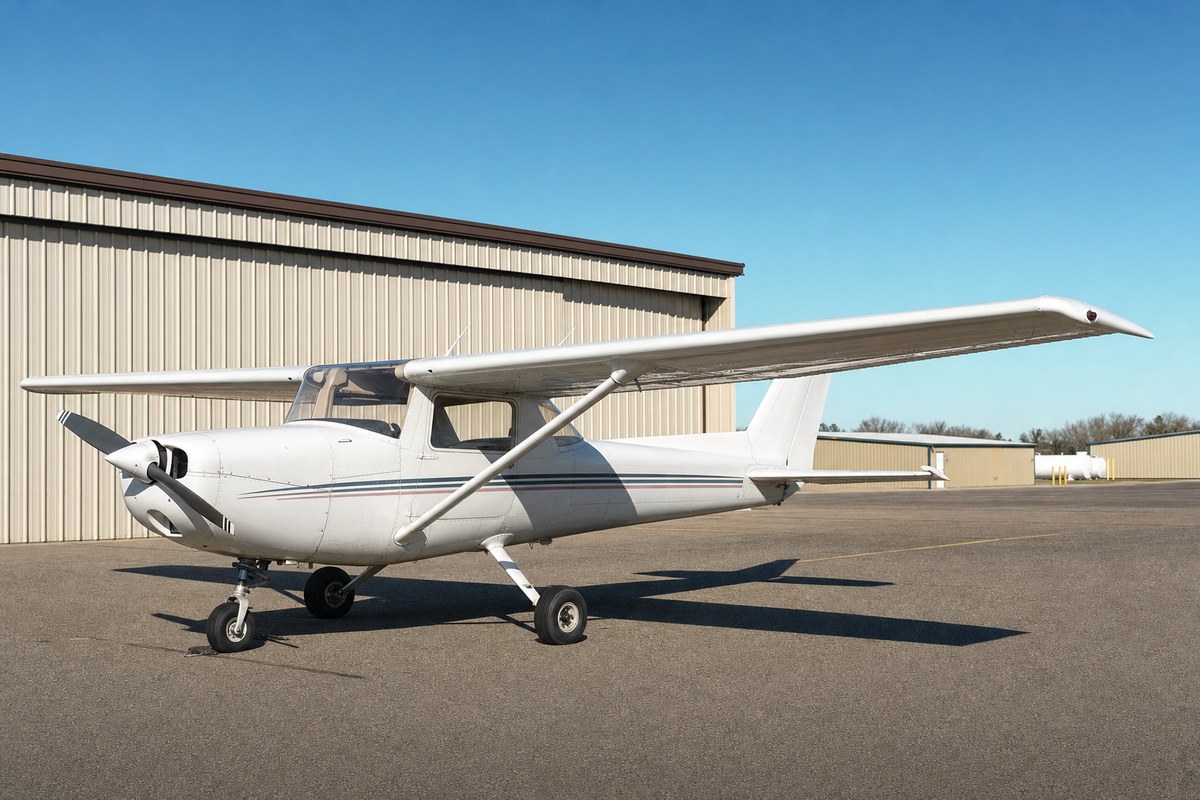
The analysis splits costs into fixed items (storage, insurance, annual inspection, registration, navigation subscription and a capital charge of 5% of purchase price per year) and variable items (fuel, oil, an engine reserve calculated as overhaul cost divided by TBO, and a maintenance allowance). At 20 hours a year, the fixed share of cost is 87% for the Cessna 152 and 92% for the light sport aircraft (LSA). A paramotor is the cheapest to own, at about $790 a year at 20 hours and $18 per hour at 100 hours (estimate). A four-way partnership in a Cessna 152 comes to about $202 per hour at 20 hours (estimate).
Variable cost per hour: Vittorazi Moster 185 paramotor, $12.81; Aerolite 103 Part 103 ultralight with Hirth F-33, $21.26; Flight Design CT LSA with Rotax 912 ULS, $47.43; Ikarus C42 European microlight, €69.84 (about $78.38); Cessna 152, $77.57; Cessna 172N, $101.46. Fixed cost per year: paramotor $534; Part 103 ultralight $2,839; LSA $10,456; C42 €6,122 (about $6,871); Cessna 152 $9,956; Cessna 172N $14,231.
Fuel, engine and rule inputs
On fuel, the AirNav survey of 3,472 FBOs put the US 100LL average at $7.40 per US gallon on Nov 5, 2026. AAA's national average was $4.10 for regular and $5.02 for premium. Fuel burn figures are 6.1 US gal/h for the Cessna 152 and 8.4 US gal/h for the 172N (75% power, 4,000 ft), and 18.5 L/h (4.9 US gal/h) for the Rotax 912 ULS.
Lycoming Service Instruction 1009BF gives a 2,400-hour TBO for qualifying O-235 engines and the O-320-H, while Rotax rates the 912 ULS at 2,000 hours.
Under 14 CFR 103.1, a powered ultralight must be single-seat, weigh under 254 lb (115 kg) empty, carry no more than 5 US gal (18.9 L) of fuel, fly no faster than 55 kt and stall at 24 kt or less. Section 103.7 removes the pilot certificate, medical and registration requirements.
The study adds no separate depreciation for used certified aircraft, which have held their value, while new kit ultralights or LSAs may lose value faster, making their figures a floor. Conversions use the European Central Bank reference rate of €1 = $1.1224 = £0.83393.
Industry impact & what to watch
The spread between $575 and $177 per hour for the same Cessna 152 comes almost entirely from how many hours absorb the fixed bill. Storage, insurance, inspection and a 5% capital charge are owed whether or not the aircraft leaves the ground, so at 20 hours a year they make up 87% of the cost. For the segment, this is the arithmetic behind flying clubs, partnerships and rental: spreading the same fixed charges across more pilots or more hours is the main lever, and the four-way Cessna 152 partnership at about $202 per hour at 20 hours shows how much of it that lever recovers.
The other pattern is how sharply cost falls as the aircraft gets lighter and less regulated. A paramotor's variable cost of $12.81 per hour and $534 in annual fixed cost sit far below the Cessna 172N's $101.46 and $14,231, and Part 103 ultralights add the removal of pilot certificate, medical and registration requirements. That is a cost structure, not just a price difference, and it explains why entry-level flying splits into very different ownership models.
Two inputs would move these numbers most. The study's own fuel basis is the $7.40 per gallon 100LL average from Nov 5, 2026, and fuel and engine reserve together make up the Cessna 152's $77.57 variable hour. Any change in 100LL pricing, or in the TBO hours behind the engine reserve, feeds straight into the per-hour figures, while the fixed side is driven by storage and insurance quotes that vary by airfield.