VSE Raises 2026 Outlook After Record Q3 as Revenue Climbs 91% to $541 Million
Why It MattersThe results show that engine aftermarket repair capacity, bolted on through acquisition, is where aviation aftermarket margin is accruing, while bearing shortages persist in repair shops even as demand stays firm.
What happened
VSE Corporation (VSEC) raised its 2026 revenue growth and profitability outlook after reporting third-quarter results it described as record, driven by demand for aircraft engine repairs, acquisition contributions and margin gains in its core aviation business.
Third-quarter revenue rose 91% year over year to $541 million, including approximately 17% organic growth. Adjusted EBITDA increased 126% to $107 million, and adjusted EBITDA margin expanded by approximately 310 basis points to 19.8%. Adjusted net income rose 128% to $64 million, and adjusted diluted earnings per share increased 49% to $2.01.
VSE now expects full-year revenue growth of 65% to 66.5%, up from a previous forecast of 61% to 64%, and raised its adjusted EBITDA margin outlook to 18.9% to 19.1% from 18.7% to 19%. Management expects fourth-quarter revenue to decline sequentially from the third quarter. CFO Adam Cohn said this reflects seasonality and quarterly variability rather than a change in demand, noting that PAG and Aero 3 tend to be more seasonal. President and CEO John Cuomo noted that December 2025 was unusually strong, creating a difficult year-over-year comparison.
Maintenance, repair and overhaul revenue rose 198% year over year, including acquisition contributions, while distribution revenue increased 27%; Cohn said organic growth was similar across both. PAG was the largest acquisition contributor to revenue growth. Cuomo said commercial engine aftermarket growth exceeded the company's overall organic growth rate, while business and general aviation engine growth was slightly below that rate but still in the double digits. Non-engine core businesses generally grew at high-single-digit to low-double-digit rates.
Atech acquisition and integration
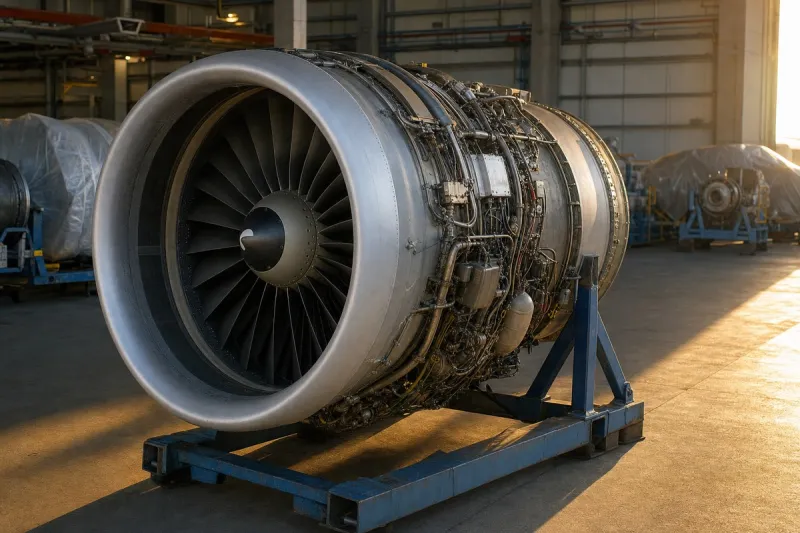
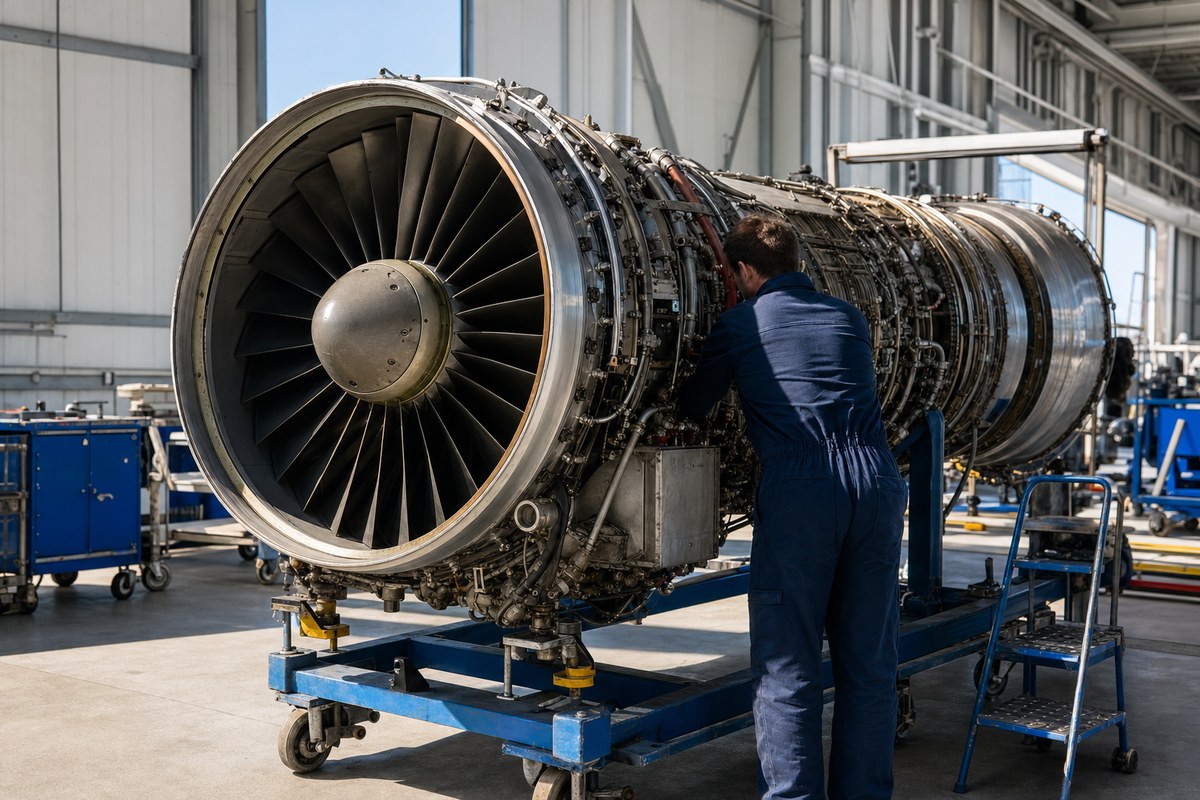
During the quarter, VSE acquired Atech Turbine Components, which specializes in hot-section repairs for aircraft turbine engines, primarily on Pratt & Whitney Canada platforms. Cuomo said Atech adds OEM-approved repairs covering more than 300 part numbers and described its margin profile as well above VSE's current performance.
VSE expects benefits from joint commercial opportunities, insourcing and operating efficiencies involving PAG to build through 2027, and plans to launch its complete integration plan in the first quarter of that year.
Cash flow, leverage and supply chain
Third-quarter operating cash flow was $56 million and free cash flow was approximately $47 million, up from $18 million a year earlier. Adjusted net leverage fell to 2.3 times from 2.4 times at the end of the second quarter, even as VSE completed the Atech acquisition. Net debt stood at approximately $894 million, with $66 million in cash and $479 million available under the revolving credit facility. Cohn said VSE expects another strong quarter of free cash flow but declined to predict it would exceed the third-quarter result.
Cuomo said higher oil prices had not meaningfully affected customer demand or order patterns, and that VSE was not seeing signs of inventory destocking across the market, though sustained high fuel prices and inflation could eventually affect consumer decisions. He said some product pipelines had improved but the overall supply chain had not, with bearings a recurring concern, particularly in VSE's repair shops.
Industry impact & what to watch
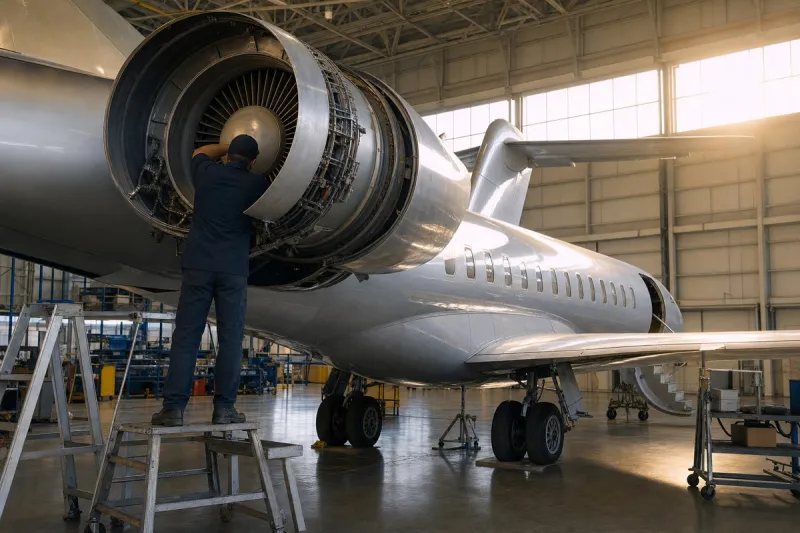
Engine repair is where this company's growth and margin are concentrated, and the pattern of buying specialist repair capability to add approved repair scope is how aftermarket providers deepen that position. Atech's OEM-approved hot-section repairs on Pratt & Whitney Canada platforms are the kind of capability that lets a repair provider keep work in-house rather than send it out, which is why management ties part of the margin story to insourcing and PAG-related efficiencies.
Demand signals in the quarter were firm: no destocking was seen, and business and general aviation engine growth stayed in the double digits. The constraint described is supply rather than orders, with bearings a recurring problem in repair shops. For repair-shop economics, that means turnaround depends on parts availability as much as on labor and capacity, and a higher volume of repair work raises exposure to any single scarce component.
The next dated milestone is the Dec. 9 investor day in New York City, where VSE plans to discuss its 2027 guidance and longer-term outlook. That session should show how much of the post-acquisition margin gain management expects to hold once the fourth-quarter seasonal dip and the tough December comparison have passed.