Five Aircraft That Reached Advanced Development or Certification Before Their Programs Were Canceled
Why It MattersRegional aircraft programs face compounding financial, regulatory and market-timing risk that can unravel a project even after prototypes fly and certification is secured, showing that funding durability outweighs technical progress alone.
What happened
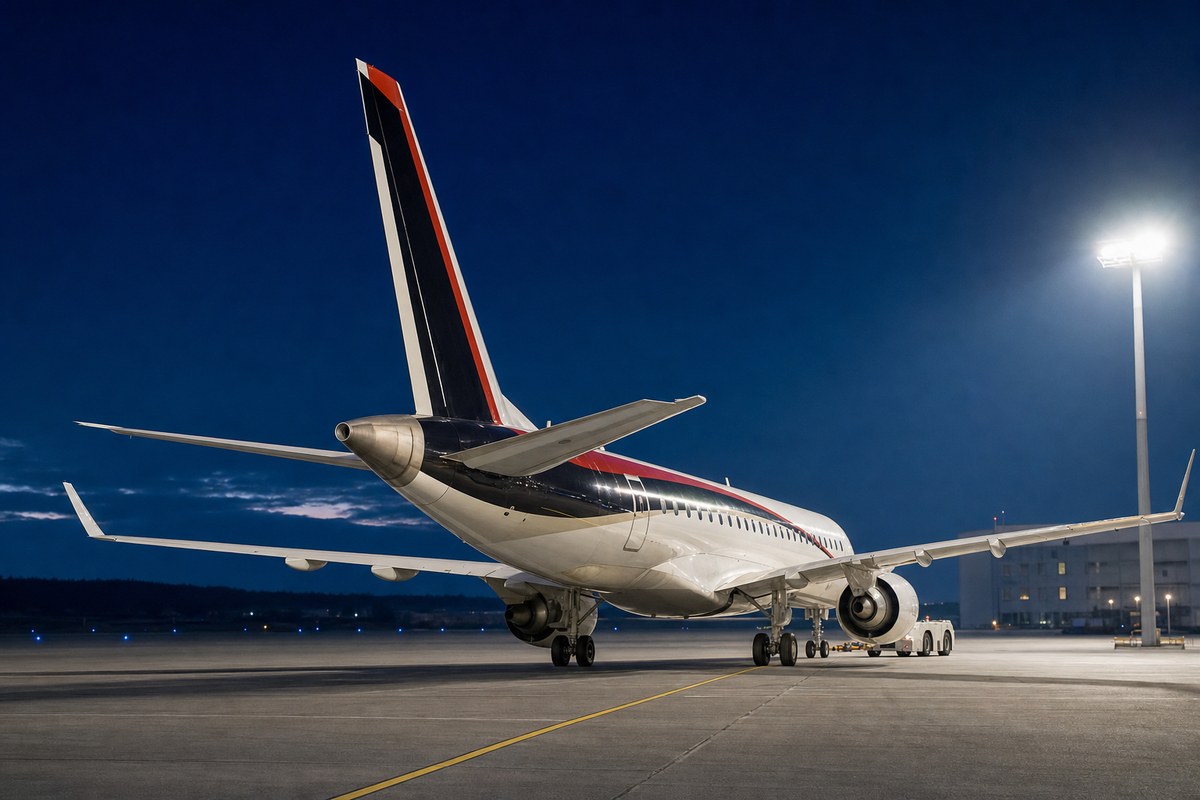
Five commercial aircraft programs advanced to prototype flight, firm orders, or type certification before being abandoned without entering scheduled service. The Mitsubishi SpaceJet, launched in 2008 as the Mitsubishi Regional Jet after All Nippon Airways ordered 15 aircraft with 10 options, first flew on November 11, 2015 and logged more than 3,900 flight-test hours before Mitsubishi Heavy Industries canceled it in February 2023, citing funding needs, North American scope-clause restrictions, design revisions, supplier difficulties, and regional jet market uncertainty.
The Tupolev Tu-334, developed as a Tu-134 replacement for Aeroflot, first flew on February 8, 1999, with a second prototype flying in November 2003; a Kyiv factory received an order for five aircraft for two Russian carriers in December 2003 but none were built, and the aircraft received a provisional Russian type certificate on December 30, 2003, that did not authorize passenger operations. Competing with the Sukhoi Superjet 100 and Antonov An-148, the program was effectively abandoned in 2009. The Fairchild Dornier 728 was rolled out in Germany on March 21, 2002, with maiden flight planned for that summer and deliveries to Lufthansa CityLine expected in 2003; by March 2002 it held 125 firm orders and 164 options from eight customers, but Fairchild Dornier filed for insolvency on April 2, 2002, less than two weeks after rollout, and the aircraft never flew.
Indonesia's IPTN flew the first 50-seat N250 turboprop prototype on August 10, 1995, a date later designated Indonesia's National Technology Awakening Day, followed by a stretched 64-to-68-seat second prototype in December 1996 shown at the 1997 Paris Air Show. The program was roughly halfway through a planned 1,400-hour flight-test schedule when the Asian financial crisis of 1997–1998 led Indonesia to seek an international bailout and withdraw government funding, and the N250 never achieved certification. The British Aerospace Jetstream 61, an enlarged version of the 64-seat BAe ATP, first flew from Glasgow Prestwick International Airport on May 10, 1994; British Aerospace built four examples, two of which flew, and it received UK type certification on June 16, 1995, with seating for about 70 passengers and Pratt & Whitney PW127D engines. British Aerospace had already agreed earlier in 1995 to align its regional aircraft marketing with the ATR consortium, making the Jetstream 61 a direct competitor to the ATR 72, and the program was abandoned.
Industry impact & what to watch
Each case shows technical achievement running ahead of the commercial and financial conditions needed to sustain a program. Prototypes flying, certificates issued, and even firm orders in hand did not protect these aircraft once funding dried up, a parent company failed, or corporate strategy shifted toward a competitor's platform instead.
Regional aircraft development runs on multi-year timelines during which market conditions, currency crises, or a manufacturer's own solvency can change faster than a certification process can complete. The SpaceJet's scope-clause exposure and the Jetstream 61's collision with its own manufacturer's ATR alignment illustrate that even large firms can walk away once a program stops fitting the broader corporate strategy, regardless of flight-test progress already logged.
What remains open across these examples is whether any successor program learns from the specific failure mode involved — funding gaps, insolvency, government withdrawal, or internal competitive conflict — since each aircraft was stopped by a different one of those causes rather than by a shared technical shortfall.