Jay Leno Flies the Cirrus Vision Jet: $3.5M Single-Engine Carbon Fiber Jet With Emergency Autoland Button
Why It MattersThe Vision Jet's carbon-fiber airframe, parachute system and autoland button show how single-engine light jets compete on certified safety features rather than raw performance to attract owner-pilots.
What happened
Jay Leno took to the skies above Los Angeles aboard a Cirrus Vision Jet, accompanied by Matt Bergwall, Executive Director of Vision Jet Product Line, for the latest episode of Jay Leno's Garage. Bergwall had Leno fly at 10,000 feet at speeds between 180 knots (207 mph) and 240 knots (276 mph) with the autopilot engaged before disengaging it to let Leno handle the controls, and Bergwall performed the landing. The team had flown the jet from Tennessee to California — a distance of over 2,000 miles — in under seven hours for the filming.
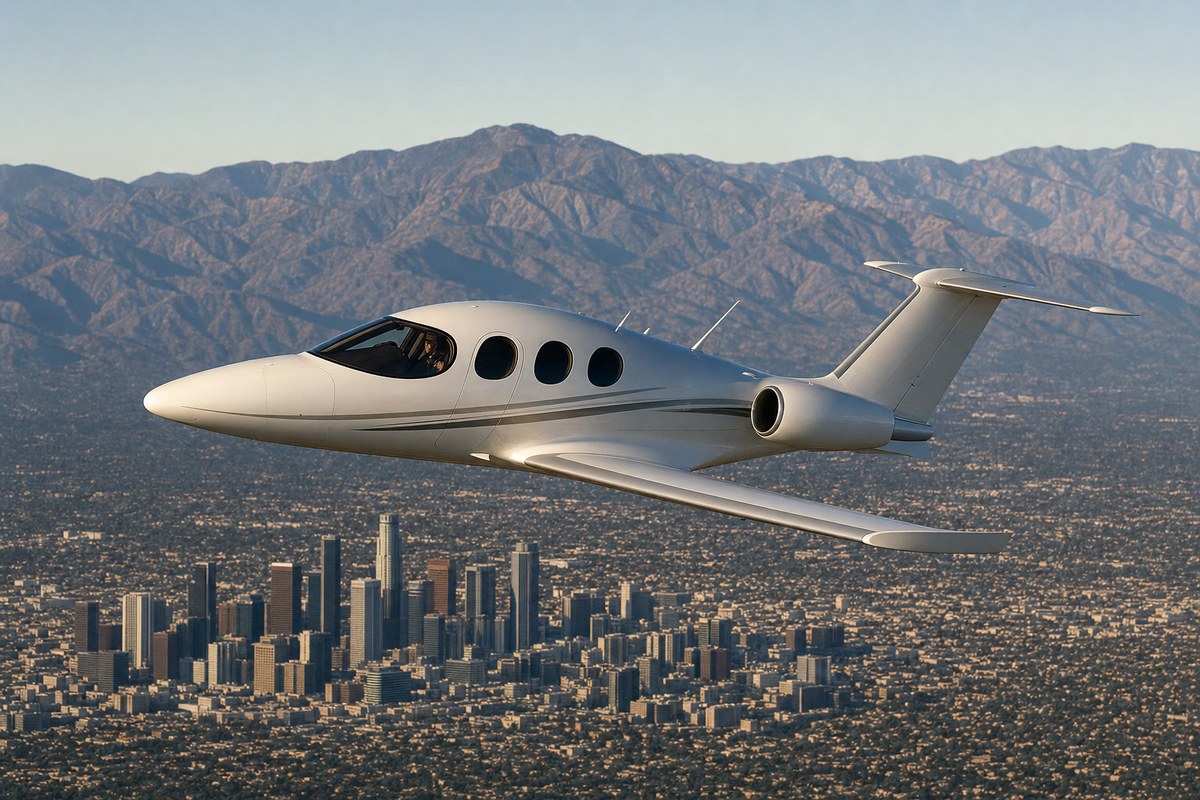
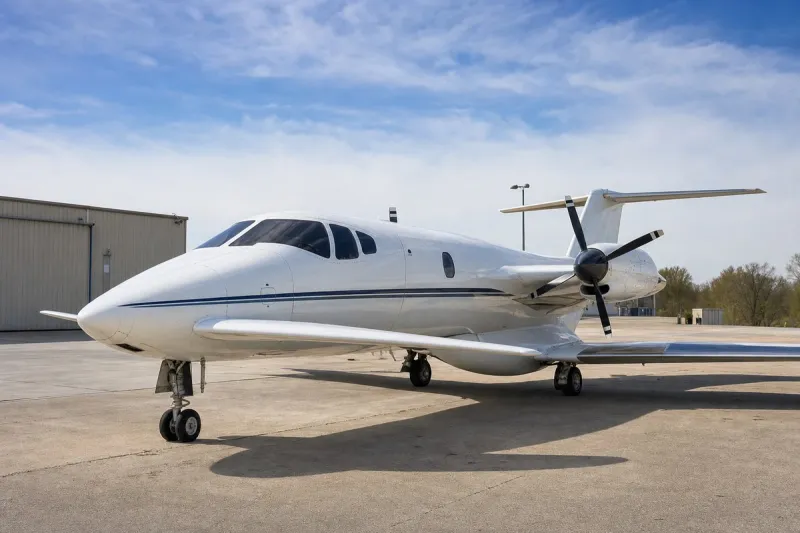
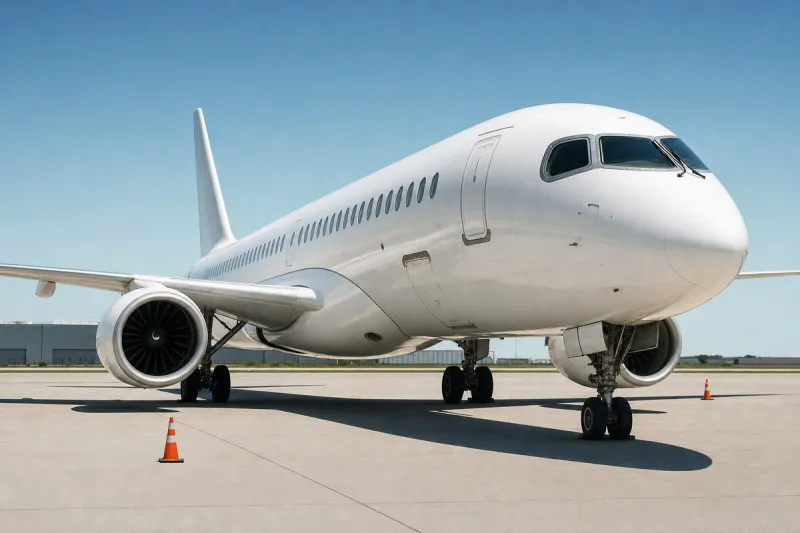
The Cirrus Vision Jet is priced at $3.5 million and is marketed as "The Supercar of the Skies." It is powered by a single Williams International FJ33-5A turbofan engine producing 1,846 pounds of continuous thrust, enabling a maximum cruise speed of 311 knots (358 mph / 576 kph) at a service ceiling of 31,000 feet (9,449 meters). The aircraft burns 59 gallons of Jet-A fuel per hour and has a maximum range of approximately 1,000 miles. Its basic empty weight is 3,550 pounds (1,610 kg) and its maximum takeoff weight is 6,000 pounds (2,727 kg), and it can seat up to seven occupants.
The Vision Jet was the world's first single-engine private jet constructed entirely from a carbon fiber composite monocoque structure, with a distinctive V-tail, also called a butterfly tail, as its most recognizable design feature. The aircraft received its type certification from the FAA on October 28, 2016. Two safety systems are fitted to it: the Cirrus Airframe Parachute System (CAPS), which deploys a parachute to lower the entire aircraft safely to the ground in an emergency and, as of late August 2026, has officially saved 303 lives across 151 successful emergency deployments, and the Safe Return emergency autonomous autoland system, certified by the FAA in August 2020 and activated by a red button on the cabin ceiling that lets the system take control, communicate with air traffic control, select a suitable airport and land the plane. To legally operate the Vision Jet, pilots must hold an FAA SF50 Type Rating, which requires prior single-engine and instrument flight certification and completion of a 10-to-14-day full-motion simulator training course.
Industry impact & what to watch
The Vision Jet's pitch rests on making single-pilot jet ownership feel manageable rather than on outright speed or range, since 311 knots and roughly 1,000 miles are modest figures next to twin-engine light jets. That trade-off works because the segment's buyers are frequently owner-pilots rather than charter operators, so certified safety redundancy — a whole-airframe parachute plus an autoland button anyone in the cabin can press — substitutes for the reassurance a second engine or a professional crew would otherwise provide.
CAPS' tally of 303 lives across 151 deployments functions as a track record that a newer autoland feature cannot yet match on its own, and it is the kind of cumulative safety data that shapes both insurance terms and resale value in this niche of the market. The SF50 type-rating requirement, with its 10-to-14-day simulator course, signals that regulators still treat single-pilot jet operation as a distinct risk category even with these systems on board.
What remains to be seen is whether Safe Return's usage data, once it accumulates over years of service, will be cited alongside CAPS figures as evidence for expanding single-engine jet operations into new markets or training pathways.