How Offset Localizers, Steep Glideslopes, DME Arcs, and RNP AR Curved Approaches Allow Aircraft to Land at Mountain Airports
Why It MattersAccess to terrain-constrained airports increasingly depends on which carriers have certified aircraft, trained crews, and specific authorizations for advanced approach procedures, not just runway infrastructure.
What happened
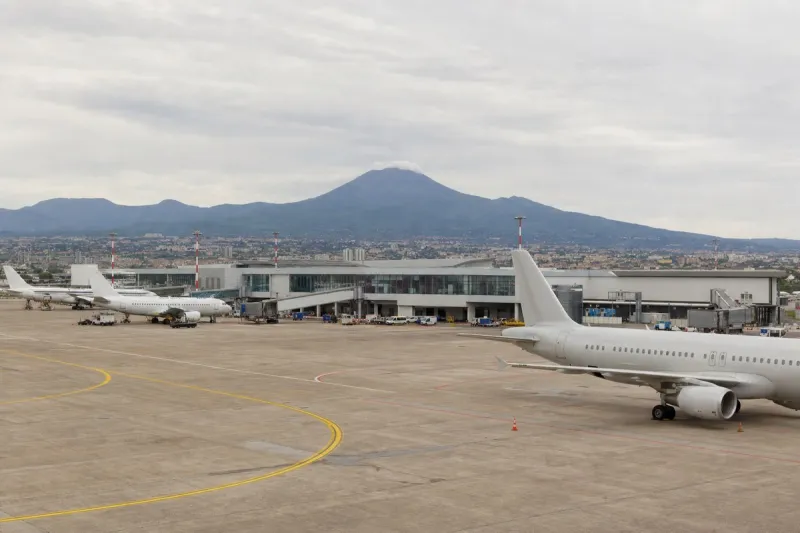
Mountain airports including Aspen-Pitkin County Airport (ASE) and Eagle County Regional Airport (EGE) in Colorado sit at elevations of 7,820 feet and 6,547 feet respectively, surrounded by terrain rising to 11,000-12,000 feet, which prevents use of a standard straight-in final approach on a 3-degree glideslope. At Aspen, the localizer antenna serving Runway 15 is offset from the runway centerline, making the procedure a circling approach with a descent of approximately 6.5 degrees, multiple step-down fixes, and a missed approach point 2.6 nautical miles from the runway threshold. A separate Special LOC-DME Runway 15 approach at Aspen offers lower minimums but requires a specific FAA Letter of Authorization and OpSpec approval; in 2024 the FAA issued a Letter to Airmen warning that some flight management systems display both approaches without clearly distinguishing them, risking crews loading the special approach without holding the required authorization. United, American, and Delta, which operate into Aspen during ski season, require crews to complete Aspen-specific familiarization training before flying the approach.
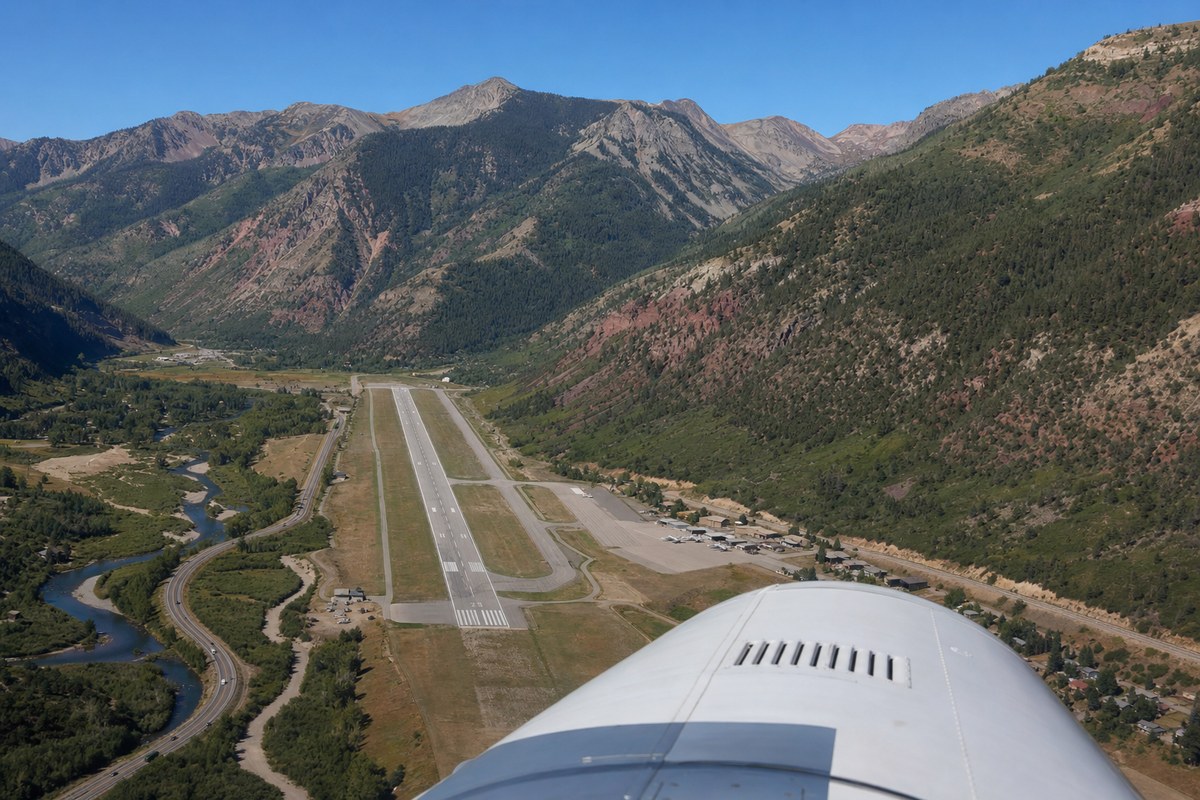
At Eagle County, an LDA (Localizer Type Directional Aid) provides lateral guidance on a course offset from the runway centerline, with an optional glideslope for vertical guidance, because terrain prevents a standard ILS localizer from being aligned with the runway. Before GPS, approach designers used DME arcs flown at a constant distance, typically 10-30 nautical miles, from a ground-based Distance Measuring Equipment station to route aircraft around terrain. Eagle County's RNP AR approaches use GPS-guided radius-to-fix legs to curve aircraft around ridgelines at an RNP value of 0.1 nautical miles, meaning the navigation system must keep the aircraft within that containment corridor 95 percent of the time with integrity monitoring active. Flying an RNP AR approach requires specific aircraft certification, an FMS capable of flying RF legs with the required accuracy, crew completion of an FAA-approved RNP AR training program, a facility-specific briefing package for Eagle County, and an FAA Letter of Authorization.
Industry impact & what to watch
This is a case of approach design adapting to terrain rather than terrain being managed away: offset localizers, LDAs, DME arcs, and RNP AR procedures each trade off protected-airspace width against how close a path can be routed to high ground, with RNP AR's narrower containment corridor allowing lower minimums than a DME arc can support. The pattern shows how access to a mountain airport is gated less by the runway itself than by which aircraft are certified, which crews are trained, and which authorizations a carrier holds — not every jet in a fleet, and not every pilot, can fly the same approach into the same field.
Eagle County's RNP AR approaches reduce diversions and cancellations during low-ceiling and reduced-visibility conditions, particularly winter snowstorms, by keeping the airport usable when conventional procedures would require higher minimums. The FAA's 2024 Letter to Airmen about Aspen's two overlapping Runway 15 procedures points to an operational risk that sits alongside the geometry problem: flight management systems that fail to distinguish a standard approach from an authorization-only special approach can let a crew load a procedure it isn't cleared to fly. How airlines update FMS databases and crew briefings in response to that warning is the detail worth tracking next.