Manas International Airport Restricts Daytime Passenger Flights Aug. 31 and Sept. 1 for SCO Summit and Concurrent Events
Why It MattersAirport authorities hosting concentrated head-of-state travel routinely prioritize delegation aircraft over scheduled commercial slots, pushing carriers toward overnight rescheduling rather than outright network cuts.
What happened
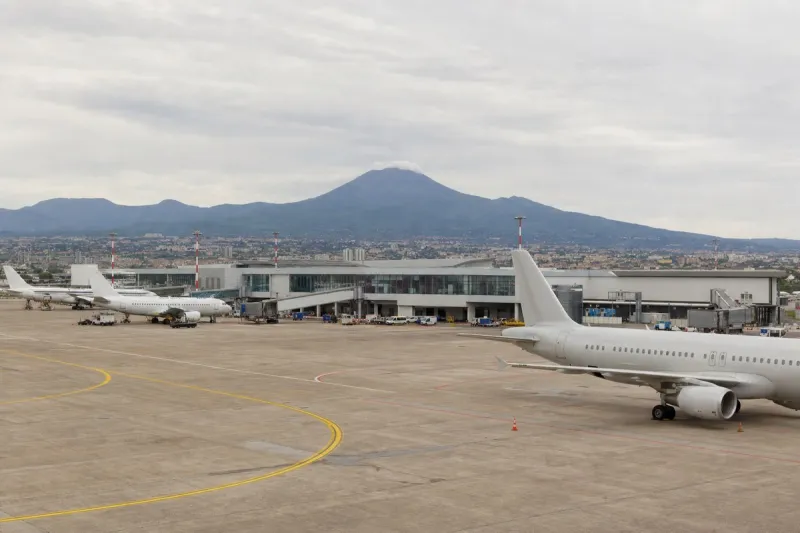
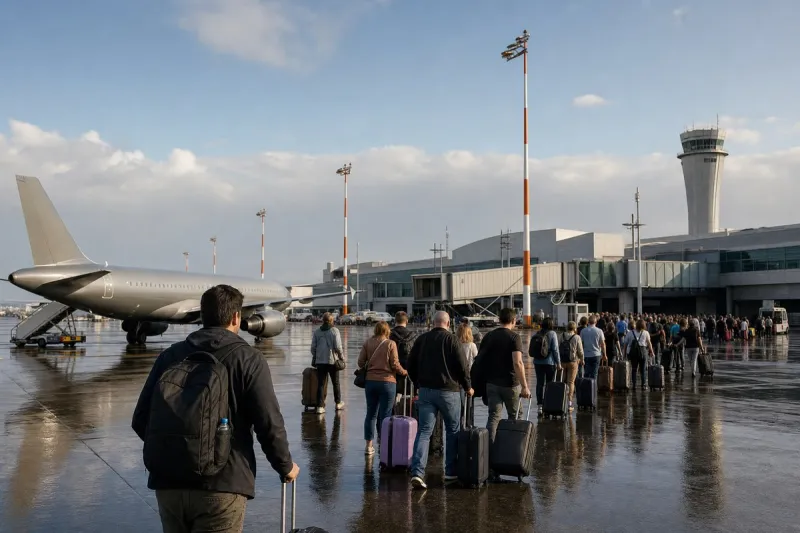
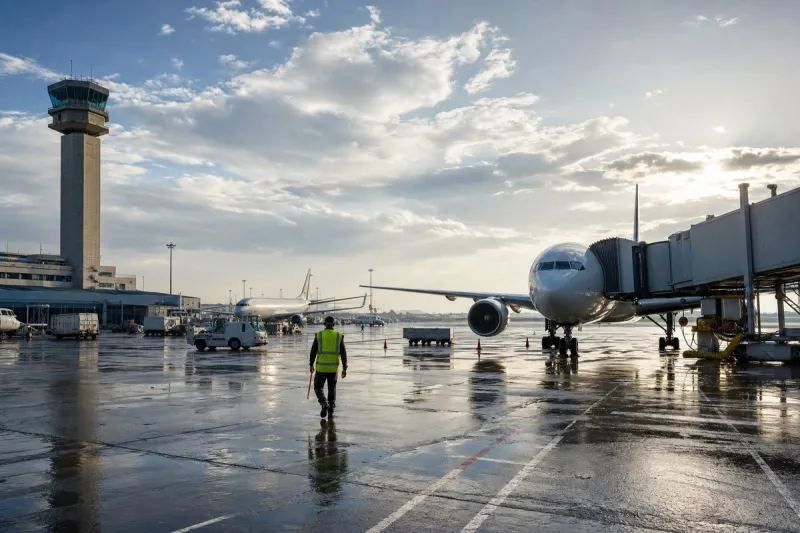
Manas International Airport (IATA: BSZ) in Bishkek, Kyrgyzstan restricted daytime scheduled passenger arrivals and departures on Aug. 31 and Sept. 1, 2026, according to operator Kyrgyzstan Airports OJSC. The Aug. 31 window began at 9 a.m. Bishkek local time and ran for 11 consecutive hours, clearing airspace and terminal capacity for aircraft carrying heads of state and official delegations. Night operations continued outside the restricted windows, and some daytime flights were accommodated in rescheduled overnight slots. Terminal facilities remained accessible throughout; only scheduled passenger aircraft arrivals and departures were affected during the designated hours.
The restrictions coincided with three simultaneous events: the 26th Shanghai Cooperation Organization heads-of-state summit, Kyrgyzstan's 35th Independence Day, and the opening of the sixth World Nomad Games. Government spokesman Askat Alagozov said as many as 21 heads of state were expected in Kyrgyzstan over the course of the week. The SCO heads-of-state session was scheduled for Sept. 1 in Bishkek and was expected to produce the Bishkek Declaration marking the bloc's 25th anniversary, with the SCO's ten member states — Belarus, China, India, Iran, Kazakhstan, Kyrgyzstan, Pakistan, Russia, Tajikistan, and Uzbekistan — plus partner and observer delegations attending. The World Nomad Games opened the same day at Bishkek's newly inaugurated Azattyk Arena with delegations from 89 countries, and its main competitions run through Sept. 6 at Lake Issyk-Kul, roughly three hours east of Bishkek by road.
Kyrgyzstan Airports OJSC said it began coordinating with airlines in mid-August, giving carriers roughly two to three weeks of advance notice. Airlines were directed to move affected flights to overnight slots or, where not possible, to temporarily cancel services, and the authority apologized to passengers for the disruption. At least 29 airlines operate scheduled flights into and out of Bishkek, serving more than 50 airports worldwide; none had issued a public English-language passenger advisory specifically about the restriction windows as of publication, and Kyrgyzstan Airports had not published a list of specific canceled or rescheduled flights. The airport's IATA code changed from FRU to BSZ in August 2025.
Industry impact & what to watch
This is the recurring case of a national airport absorbing a short, dense burst of head-of-state traffic: when 21 leaders and their delegations converge on one city for one week, the host airport's scheduled commercial timetable becomes the variable that flexes, not the summit calendar. Overnight rescheduling is the standard release valve — it preserves most of an airline's frequency while freeing daytime slots and apron space for VVIP movements, and it explains why the authority framed this as a shift in timing rather than a closure.
The absence of airline-issued advisories in English is itself a feature of how these events are managed locally: national carriers and civil aviation authorities coordinate schedule changes directly with the airport operator, often leaving individual passengers to discover disruption only when they check their booking. That gap matters most for connecting itineraries routed through Bishkek during the two affected days.
What settles the practical impact is whether Kyrgyzstan Airports or individual carriers eventually publish the specific flights moved to overnight slots or cancelled outright. Until that list appears, the scale of disruption to any individual passenger's plans depends entirely on which airline they booked and how that carrier chose to absorb the two-day window.