Prospect Heights Clears Way for Sky Harbour Hangar Development at Chicago Executive Airport
Why It MattersHangar developers increasingly rely on municipal zoning concessions and cross-jurisdiction land swaps to assemble buildable airport-adjacent acreage for private-aviation infrastructure projects.
What happened
The Prospect Heights City Council approved zoning measures at its Aug. 24 meeting that clear the way for developer Sky Harbour to build new hangars and facilities at Chicago Executive Airport, located at 1090 S. Milwaukee Ave. on the airport's easternmost edge, just south of the main terminal building. The council passed a city map amendment incorporating newly annexed territory under a special-use designation for airport use, along with setback and building height variations, and waived both required readings on the measures.
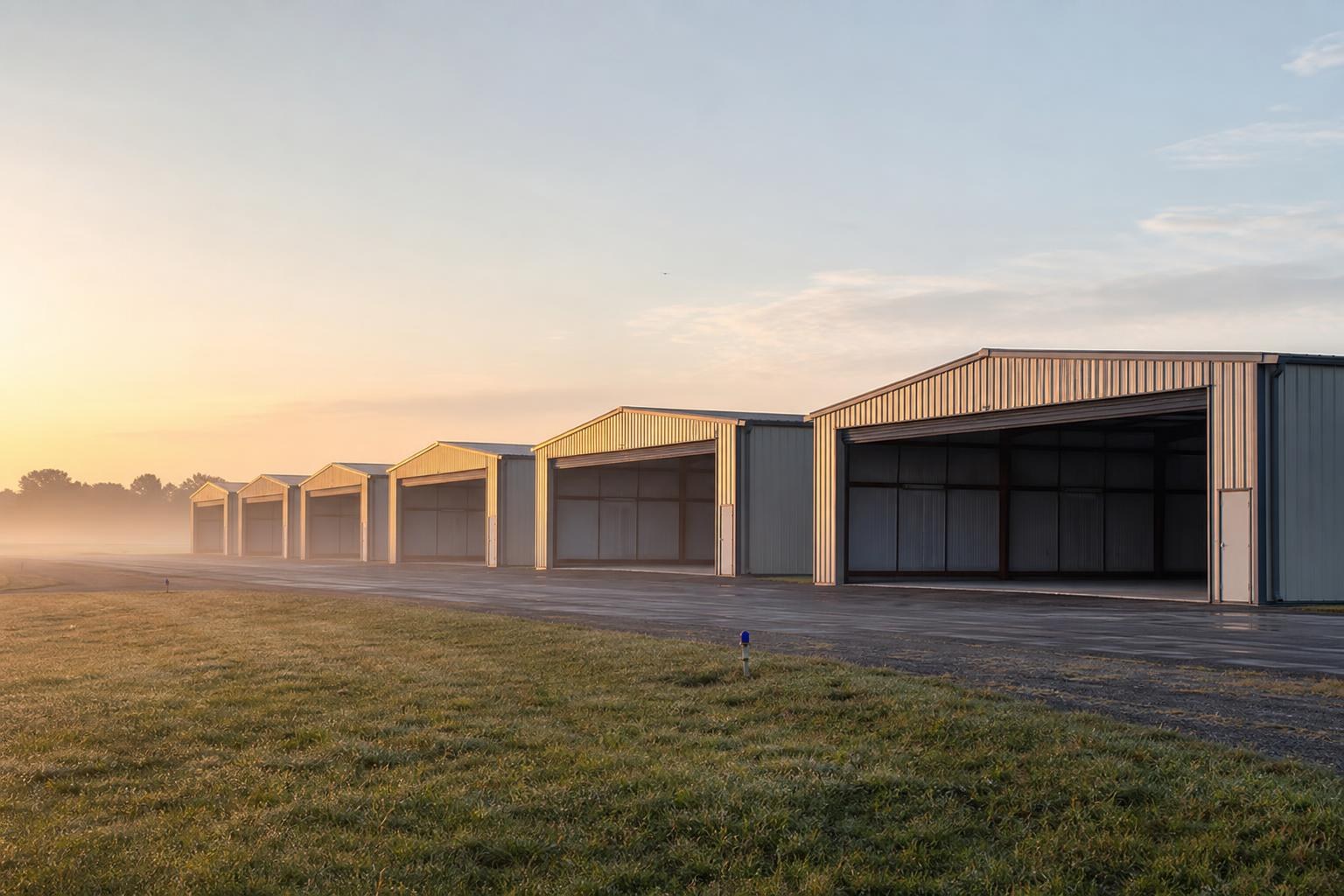
The council approved a height variation allowing hangars to reach 48 feet, exceeding the city's standard 36-foot limit, and reduced a required 60-foot setback to zero between hangars straddling the Prospect Heights–Wheeling municipal boundary. Members also approved a flood control compensatory storage agreement. Building and Development Director Dan Peterson presented a layout showing nine proposed hangars, and noted that a former Ramada Inn property parcel — Lot 2 — previously fell outside airport approval authority and was incorporated into the special-use designation alongside the newly annexed land.
The approvals follow a land exchange between Prospect Heights and Wheeling in which parcels were annexed and de-annexed, placing most of the planned development within Prospect Heights city limits and leaving only one hangar on the Wheeling side. The swap netted Prospect Heights approximately 2.25 acres for airport development. Under a pre-existing agreement, Chicago Executive Airport will cover construction costs and fees for both municipalities, though because most of the development sits within Prospect Heights city limits, that city is responsible for enforcing building codes. The airport, jointly owned and operated by Prospect Heights and Wheeling, plans to develop 35 acres for hangar space and parking over the next five years.
Sky Harbour's footprint
Sky Harbour currently operates facilities in Houston, Nashville, and Miami, and has projects under development in Denver, Phoenix, and Dallas. Chicago Executive is now added to that list, making it the developer's latest addition to a multi-market build-out of hangar campuses.
Industry impact & what to watch
This case shows how private-hangar developers depend on local zoning bodies as much as on the airports themselves: the height variance, setback reduction, and special-use designation were all city-level approvals, not airport authority decisions, and a jurisdictional boundary running through the airfield meant two municipal councils rather than one had to align before construction could begin. The land swap between Prospect Heights and Wheeling illustrates a mechanism increasingly relevant where airport property straddles municipal lines — annexation and de-annexation can concentrate a development's footprint and its regulatory burden within a single city, simplifying code enforcement even when cost-sharing agreements between the two owner-municipalities remain in place.
How the remaining 35 acres earmarked for hangar space and parking gets built out over the next five years will indicate whether Chicago Executive intends further zoning requests of this kind as it works through its development pipeline. With projects also underway in Denver, Phoenix, and Dallas, Sky Harbour's ability to replicate this zoning path in other multi-jurisdiction airport settings is worth watching as it scales its hangar network.