Royal Class hosts Medical Aviation Day at Aeroparque, showcasing 3,000-flight medical transport record
Why It MattersTime-critical organ and patient transport depends less on any single aircraft than on a certified, regulator-aligned chain linking hospitals, retrieval teams, operators and airports without delay.
What happened
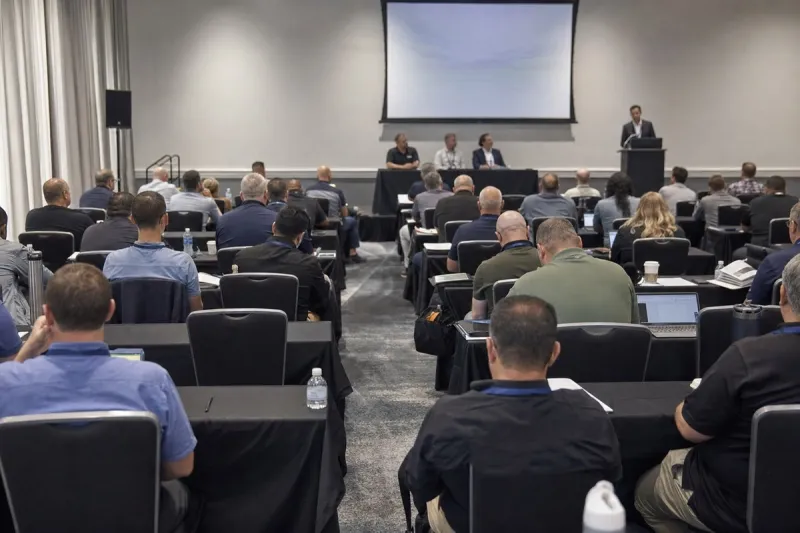
Royal Class held its Medical Aviation Day on Friday, September 11, at Hangar 8 of Aeroparque Jorge Newbery in Buenos Aires, drawing journalists, aviation authorities and industry representatives to review the company's medical flight operations for patient and organ transport. Commercial Manager Bettina Bonafini led a tour of the equipment and aircraft used on medical missions, including a Cessna Citation II configured in medical mode, with the stated aim of improving coordination among the departure airport, aircraft, medical team and destination when time is critical.

Royal Class has operated from Aeroparque since 1993 and maintains a 3,000-square-metre hangar there. The company says it has surpassed 3,000 medical flights carried out under a dedicated unit serving Argentina's National Central Coordinating Institute for Ablation and Implantation (INCUCAI), with 24/7 activation and a typical wheels-up time of one to two hours. Its mixed fleet includes Citation, Falcon and Gulfstream jets, a Metroliner and a Robinson 44 helicopter.
Oscar Villabona, administrator of Argentina's National Civil Aviation Administration (ANAC), attended the event. Medical air operations fall under RAAC Part 91, section 91.27, which covers the commercial Medical Air Transport Service, emergency medical evacuation and organ transport; flight plans in this segment carry STS priority codes, and commercial operators are certified under RAAC Part 135. INCUCAI coordinates national logistics under Law 27,447 and Decree 16/2019 and does not operate its own aircraft, instead activating agreements with carriers such as Royal Class. Bonafini said the day was designed not to showcase an aircraft but to make visible a network that spans procurement organisations, donor hospitals, retrieval teams, air operators, regulators, airports, ambulances and implant centres, where any delay puts an organ or patient at risk.
Industry impact & what to watch
Medical air transport sits apart from routine charter because the product being sold is coordination under a deadline, not just a seat or a cargo hold. A Citation II configured for medical use is only as useful as the retrieval team, the destination hospital and the ground ambulance links that connect to it, which is why Royal Class framed its own event around the network rather than the aircraft.
The regulatory architecture reinforces that logic: RAAC Part 91.27 and Part 135 certification set the operating standard, STS flight-plan codes give these flights priority handling, and INCUCAI's role as coordinator without its own fleet means the entire system runs on standing agreements with certified operators like Royal Class. ANAC's presence at the event signals that regulators treat this as an oversight priority rather than a routine commercial activity.
What remains to be seen is whether other operators in Argentina publish comparable activation-time and flight-volume figures, which would let regulators and hospitals benchmark performance across the network rather than relying on a single company's disclosure.