Boeing Engineers Vote to Authorize Strike That Could Halt 737 MAX Production at 42 Jets Per Month
Why It MattersNarrowbody production ramps now hinge as much on engineering headcount and union contracts as on factory throughput, since certification sign-off cannot be outsourced or accelerated on short notice.
What happened
Nearly 17,000 Boeing engineers and technical workers represented by the Society of Professional Engineering Employees in Aerospace (SPEEA) voted in late August to reject the company's contract offers and authorize a strike that could begin as early as October 7. The vote was decisive: 88% of the Professional Unit and 90% of the Technical Unit authorized a walkout, with over 92% of eligible members casting ballots. By unit, 64.25% of the roughly 13,000-member Professional Unit and 71.87% of the approximately 4,000-member Technical Unit voted down Boeing's proposed agreements. Members cited stagnant baseline salary progression, mandatory overtime allowances of up to 112 hours per quarter, and rigid on-site work policies that they say fail to account for rising regional living costs.
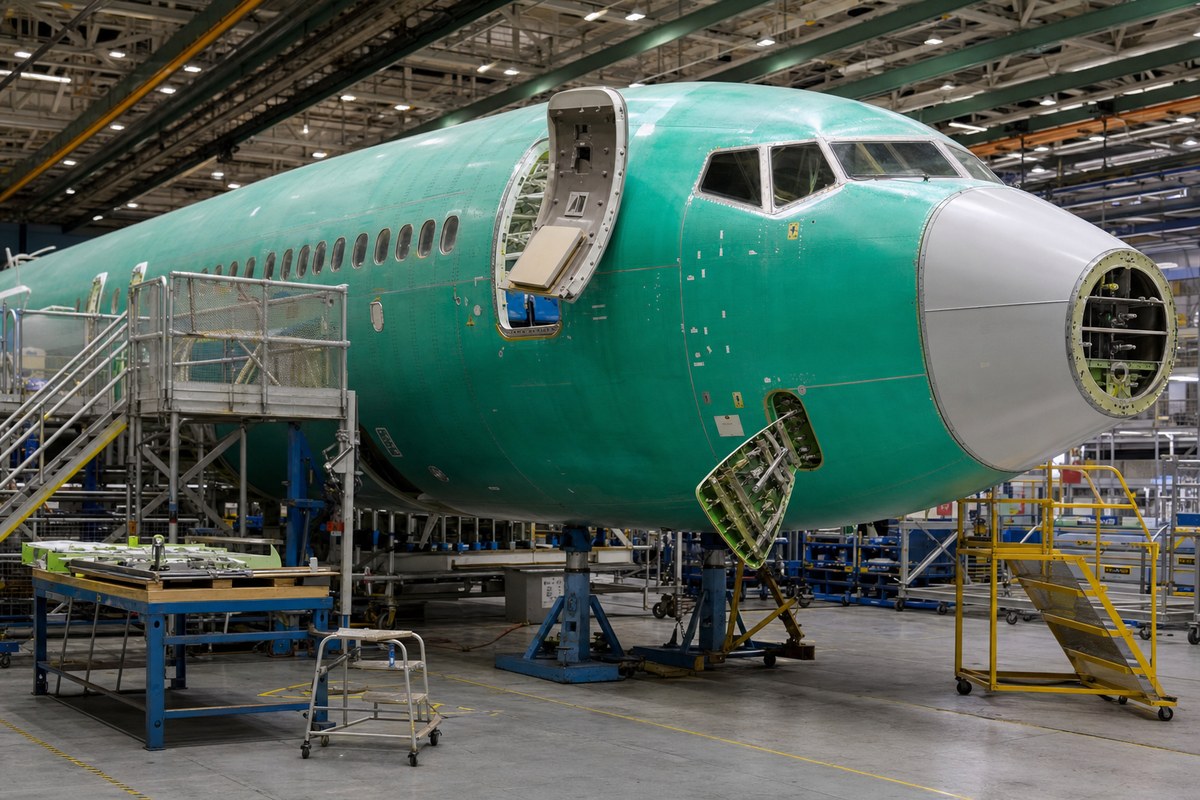
The contract expires October 6. Following the January 2024 door-plug blowout on an Alaska Airlines 737 MAX 9, the FAA capped 737 MAX output at 38 aircraft per month; Boeing spent nearly two years working through regulatory requirements before receiving approval in October 2025 to raise production to 42 jets per month, with plans to reach 47 per month by mid-2026. Boeing activated a fourth 737 assembly line at its Everett facility, the first 737 line outside Renton. The 737 MAX 10 completed its final certification flight on July 28 after 976 test flights and has moved into the paperwork phase, while the MAX 7 received FAA approval on August 3.
Boeing's functional chief engineer Ben Nimmergut announced activation of a strike contingency plan, the company withdrew previously promised early-ratification incentives — including a 3% retroactive pay boost and a 40% increase in annual incentive targets — and began posting contractor job listings for replacement engineers. Both sides returned to the bargaining table in late August to survey membership demands, with formal contract talks resuming September 8 ahead of the October 6 deadline. Union surveys indicate that immediate, guaranteed base wage increases and larger performance-based raise pools are the top priorities among responding members. The standoff arrives roughly two years after a 53-day machinist strike disrupted Boeing's factory assembly lines.
Why engineers hold the production line
Under FAA Organization Designation Authorization (ODA) rules, Designated Engineering Representatives (DER) must certify structural and system compliance, and federal regulations prohibit non-delegated managers from signing airworthiness documents. When factory technicians encounter a build discrepancy — such as a structural gap exceeding 0.03 inches (0.76 mm) — work freezes at that station until a liaison engineer issues a Non-Conformance Report disposition. Because SPEEA engineers write compliance reports and manage ODA files, a work stoppage would also freeze regulatory processing for both the MAX 10 and the upcoming 777-9.
Spirit AeroSystems, which fabricates approximately 70% of the 737 structure including the fuselage, ships completed sections on railcars to Boeing's Washington facilities. Without engineering sign-offs to clear completed airframes, fuselages would fill storage tracks, forcing Boeing to throttle or halt supplier shipments. CFM International, which supplies LEAP-1B engines, and other Tier-1 suppliers have calibrated capital investment and component production rates to Boeing's build schedule.
Customer exposure
United Airlines holds firm orders for 167 MAX 10 aircraft and has already stored more than $10 million in lie-flat seats because of prior delays. Southwest Airlines depends on Boeing maintaining a steady 42-to-47 monthly production pace for MAX 7 and MAX 8 deliveries to retire aging 737-700s, while Alaska Airlines relies on MAX 10 arrivals for its transcontinental route expansion.
Industry impact & what to watch
A narrowbody ramp measured in jets per month is only as reliable as the paperwork behind it. Certification sign-off under ODA authority cannot be delegated to non-qualified managers on short notice, which is why a walkout by 17,000 technical staff threatens output even though none of them touch a rivet gun; the bottleneck sits in Non-Conformance Report dispositions and DER certifications, not on the factory floor itself.
That dependency also explains why management's talk of replacement contractors is not credible at scale: FAA delegation authority attaches to qualified individuals, and standing up new DERs takes far longer than a single production quarter. The supply chain built around Boeing's cadence — Spirit AeroSystems' fuselage shipments, CFM International's engine deliveries — is calibrated to a steady monthly rate, so any stoppage propagates upstream within weeks rather than months.
The next dated marker is September 8, when formal contract talks resume ahead of the October 6 expiration. Whether SPEEA and Boeing settle before then, or the strike proceeds on October 7, will determine whether the MAX 10 and MAX 7 certification files keep moving and whether United, Southwest and Alaska receive aircraft on the schedules they have built fleet and route plans around.