Aircraft Structures Series Concludes: From Fabric-Covered Skeletons to Carbon Composites, With Cost Still the Open Problem
Why It MattersComposites have delivered on strength and fatigue life, but their unexpectedly high production cost keeps manufacturers pursuing new fabrication programs and thermoplastic matrices to close the gap with aluminum.
Aerospace analyst Bjorn Fehrm has wrapped up his 22-part, five-month series on aircraft structures with a summary of its main lessons. Early gliders and powered aircraft used skeleton structures covered in fabric, a method that lasted through the First World War and until just before the Second World War. High-strength Duralumin then allowed a skin that could be reinforced and carry aerodynamic, engine and other loads.
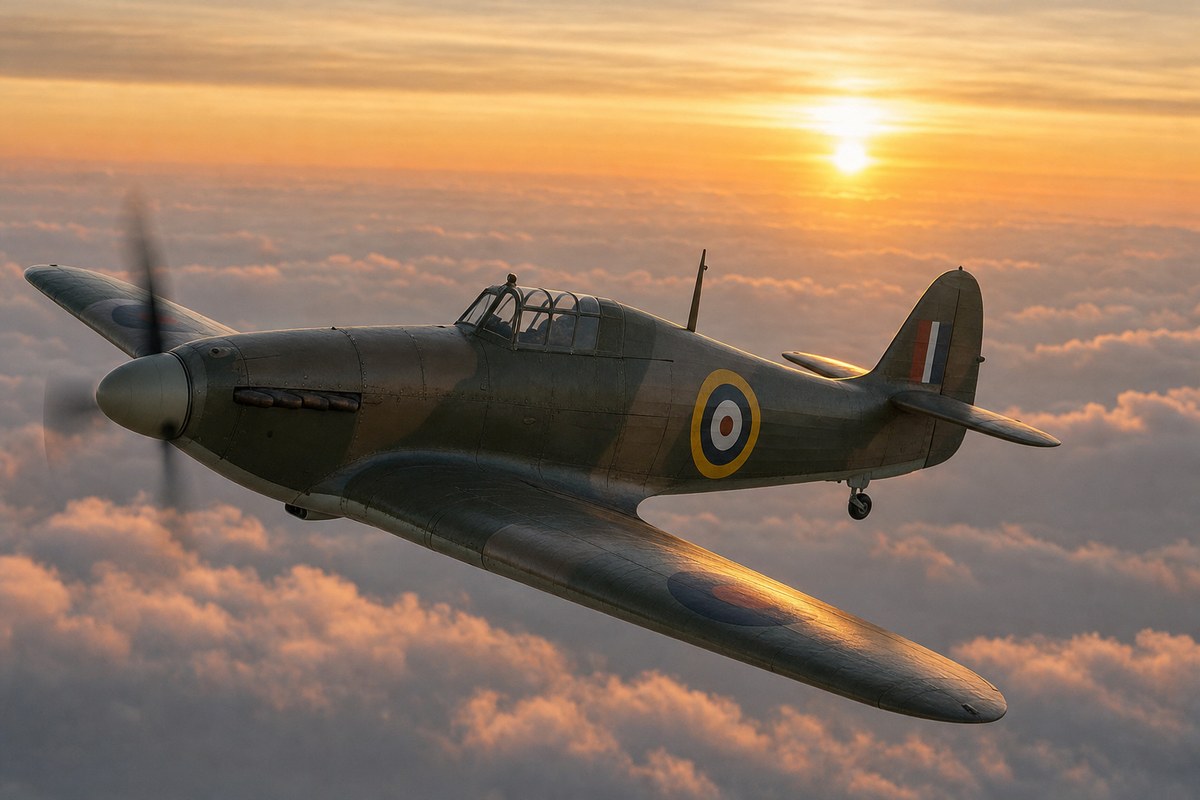
The Hawker Hurricane, designed just before the war, combined a braced skeleton fuselage and wing with a stressed-skin leading edge, and its wing became progressively more stressed-skin with each version. The all-stressed-skin Duralumin Supermarine Spitfire outlasted it because the stronger structure could accept engines producing more than 2,000 hp by the end of the war; both aircraft began with Rolls-Royce Merlin engines of less than 1,000 hp. The Douglas DC-3, designed in the 1930s with Alclad 2024-T3 Duralumin, is cited as the standard example of a stressed-skin aircraft.
Wartime scarcity of copper led engineers to a zinc-based alloy, now the 7000 series, which proved stronger but carried hidden stress-corrosion problems that caused wings to fall off aircraft in the late 1940s and early 1950s. Pressurized cabins, which enabled higher cruise altitudes, introduced metal fatigue as the aluminum fuselage was stress-cycled on every flight. Crashes of the De Havilland Comet, the first commercial jet airliner, in the mid-1950s led to an investigation finding that the airframe's fatigue life was about a tenth of the estimated and tested life.
The search for materials with better fatigue characteristics led to composites, made of a polymer matrix reinforced with fibers. Epoxy resin has been the dominant matrix. Combined with fiberglass it is still used for radomes and moderately stressed structures such as wing-join fairings; combined with aramid (Kevlar) fibers it forms a tough composite used around the fan case in engine nacelles for fan-blade-out protection. Epoxy reinforced with carbon fibers has dominated since the 1980s, and airliner composite content rose from 10% to 20% in the Airbus A330 and Boeing 777 generation to 50% in the later designs.
Carbon-fiber epoxy composites have met expectations for strength, durability, corrosion resistance and fatigue life, with no unknown problems like the corrosion-fatigue sensitivity of zinc-based aluminum alloys. The disappointment is cost: the 787 and A350 composite structures are significantly more expensive to produce than aluminum equivalents, rather than modestly more expensive as hoped. Efforts to cut cost include Airbus' Wing of Tomorrow and MFFD and Boeing/NASA's HICAM projects. For the fuselage, much of the hope rests on thermoplastic PAEK-family matrices, which are even more expensive.