Hormuz Deadline, Rolling Gulf Airspace Closures and Widening Alert Zones Drive Middle East Charter Risk
Why It MattersCharter and long-haul planning across the Gulf corridor now hinges on rapid airspace-status shifts rather than fixed closures, forcing continuous alternate-airport and fuel-tankering contingencies instead of one-time route changes.
What happened
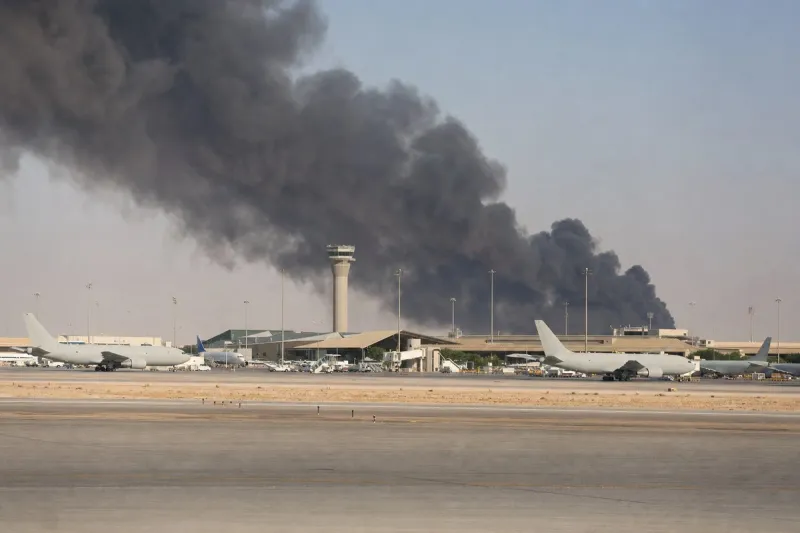
A fragile 14-point ceasefire framework known as the Islamabad Memorandum, signed in June, has not stabilised the Iran–United States conflict, according to an operational risk assessment. Mid- and late-September reporting describes a stalemated war still in progress, with two ships attacked in the Strait of Hormuz, Iranian strikes causing damage at US positions, and at least two American drones downed. Iran's security chief has publicly set a five-day deadline for Washington to meet Tehran's conditions for opening the Strait of Hormuz, and Iran's president used a UN address to reject a US threat.

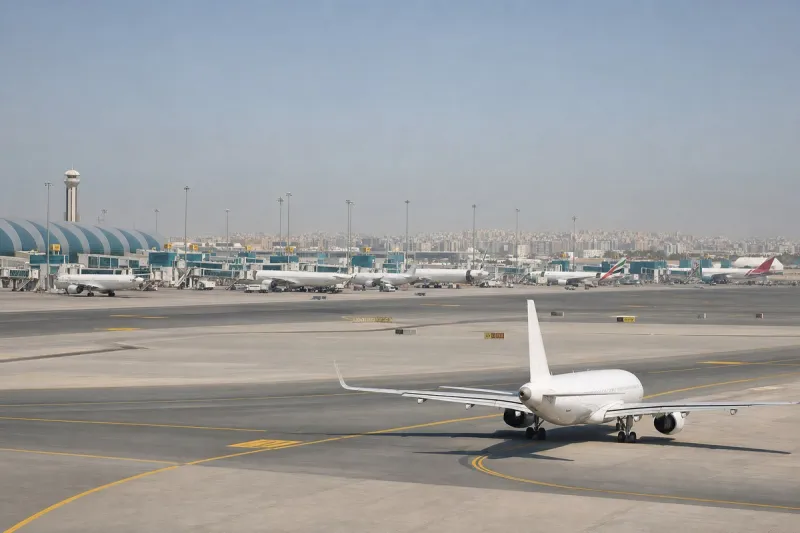
Air France, Wizz Air and British Airways have extended suspensions of Middle East services, with restrictions affecting routes into the UAE, Dubai and Abu Dhabi. On the Red Sea front, Saudi authorities say they intercepted six Houthi missiles, including one aimed at Riyadh, with fighting continuing around the Jabal Kahbub high ground above the Red Sea coastal plain. Houthi commanders have warned they could attack international vessels if Washington backs Riyadh militarily, support the United States has so far declined to provide. US government security alerts issued on 19 and 20 September cover Israel, Lebanon, Jordan, Iraq, Saudi Arabia, Kuwait, Bahrain, Qatar, the UAE and Oman, warning of potential flight cancellations and airspace closures.
Separately, on 19 September a general aviation aircraft was intercepted near Camp David, Maryland by a NORAD F-16 that deployed flares before escorting the aircraft out of the permanent no-fly zone, with the president present at Camp David at the time. Japanese defence data records at least 16 sorties by Chinese special mission aircraft and unmanned systems east of Okinawa and south of Kyushu since February, including five Y-9Z sorties in the first six days of September. A reported North Korean test of a new hypersonic missile variant was also noted. The Niño 3.4 region was running 2°C above average in mid-September, forecast to peak near 3.4°C this winter, and August 2026 was the second-largest global temperature anomaly on record, with large positive anomalies across the Arabian Peninsula, the Middle East, the Mediterranean, southern Europe and East Asia. In Japan, Typhoon Dujuan killed at least six people and left six missing.
Operational guidance for crews and routing
Practical consequences for charter operators include longer routings around affected sectors, fuel and tankering penalties, loss of Gulf alternates on long-haul sectors between Europe or Africa and South and Southeast Asia, and the need to nominate alternates outside the exposed arc. Crew duty planning should build in augmentation or a planned technical stop rather than rely on discretion, and passengers should be notified before departure.
Crews are reminded to tune 121.5 or 243.0 immediately on interception near restricted zones such as Camp David, and reverse course until instructed otherwise. The elevated regional temperatures are flagged as a direct performance issue for hot-and-high departures and payload calculations on Gulf and Mediterranean sectors.
Industry impact & what to watch
This assessment describes a risk environment defined by volatility of access rather than a single closed corridor: airspace status across the Gulf, Red Sea and adjoining regions can move from usable to unusable on short notice, which is a materially different planning problem than a fixed NOTAM closure. Charter and long-haul operators routing between Europe or Africa and South and Southeast Asia depend on Gulf alternates and overflight corridors as core contingency capacity, so a shrinking usable arc compresses fuel margins, alternate options and crew duty flexibility simultaneously.
Scheduled-carrier behavior functions here as a leading indicator for the wider industry: continued or renewed suspensions by Air France, Wizz Air and British Airways into Dubai and Abu Dhabi signal how corridor confidence is trending, since these carriers have visibility and legal exposure that smaller charter operators often lack independently.
The next dated trigger is whether Iran's five-day Hormuz deadline passes without escalation, alongside whether the June ceasefire framework holds, further Houthi missile launches toward Riyadh, any US decision to provide Saudi Arabia military support, and whether European carriers reinstate or further extend their Dubai and Abu Dhabi suspensions.